Introduction
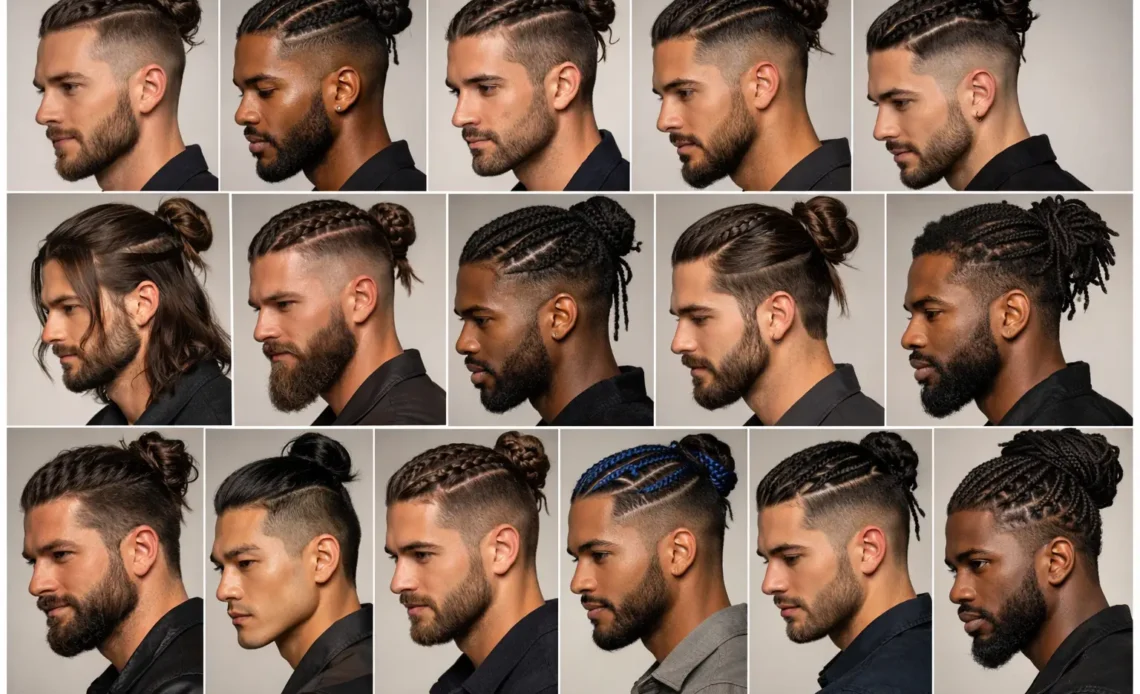
Long hair on men has never carried more creative possibility than it does right now. The combination of braids and man buns represents one of the most visually compelling directions in contemporary men’s hairstyling, bringing together two styles that each command attention individually and produce something genuinely extraordinary when combined. Whether you are working with naturally thick straight hair, wavy locks, coily texture, or even dreadlocks, the intersection of braids and man buns offers a design idea that suits your texture, your face shape, and your personal sense of style.
This is not a temporary trend. Braids and man buns have roots that go back centuries across multiple cultures, from Samurai warriors to African braiding traditions to Viking culture, and their current popularity reflects a growing appreciation for the depth and history behind these techniques rather than simply their visual appeal. This article presents 17 distinct design ideas organized around 7 key style categories, giving you the full creative range of what stylish braids and man bun looks for guys can look like today.
The Classic French Braid Man Bun
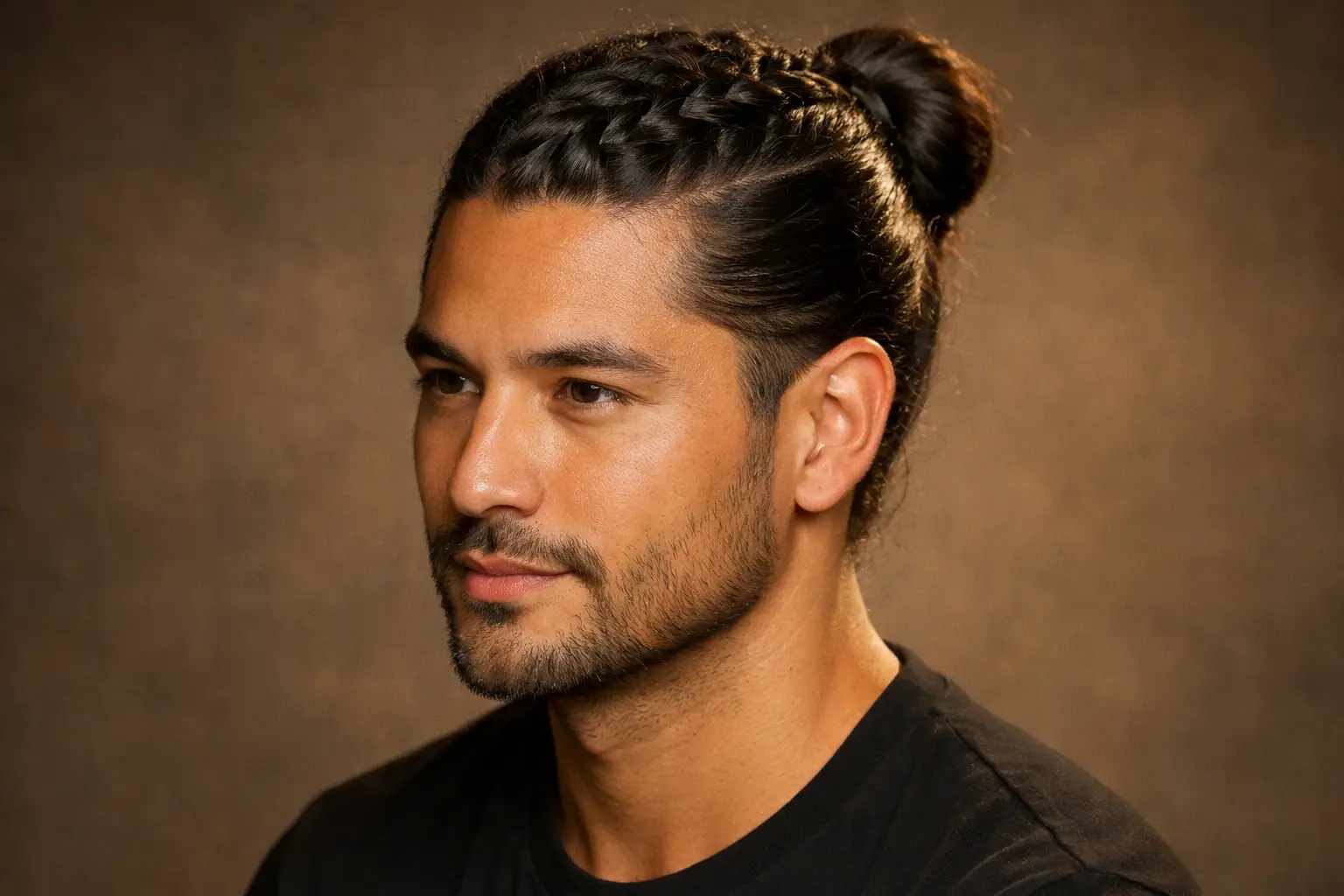
The French braid man bun is the foundational style in the braided bun category and the one that most clearly demonstrates why these two techniques belong together. The hair is gathered at the crown and braided in a French braid technique, incorporating sections from either side as the braid progresses from the forehead toward the nape. Once the braid reaches the back of the head it is gathered and coiled into a bun secured with a snag-free hair tie. The result is a style with genuine visual structure at every stage from the scalp to the bun, creating a cohesive, finished appearance that a plain bun cannot replicate. This style works best on men with straight to wavy hair of at least medium length and suits oval and square face shapes with particular strength.
The Cornrow Bun with Fade
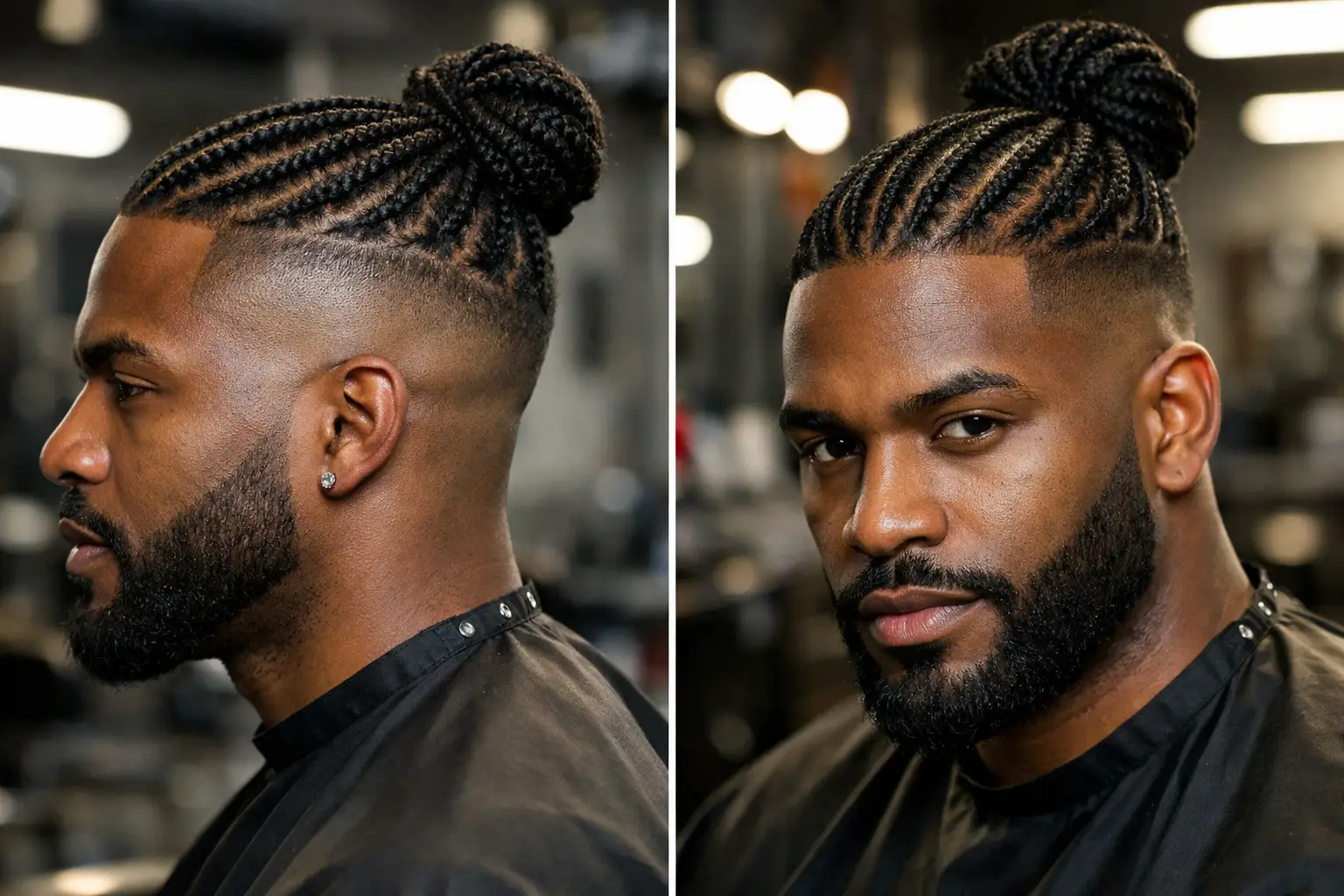
The cornrow bun with a fade is one of the most striking and culturally rich styles in the braided man bun category. Multiple tight cornrows are braided flat to the scalp from the front hairline toward the crown, where they gather together and are coiled or secured into a clean bun at the top or back of the head. A skin or taper fade on the sides and back provides high-contrast framing that directs all visual attention toward the braided top and the bun. The fade also reduces daily maintenance on the sides, making this style highly practical for men who want a fashion-forward result without the full-head length commitment. This style suits men with type 3 and type 4 hair textures most naturally and works particularly well when paired with a well-maintained beard.
The Double Side Braid Man Bun
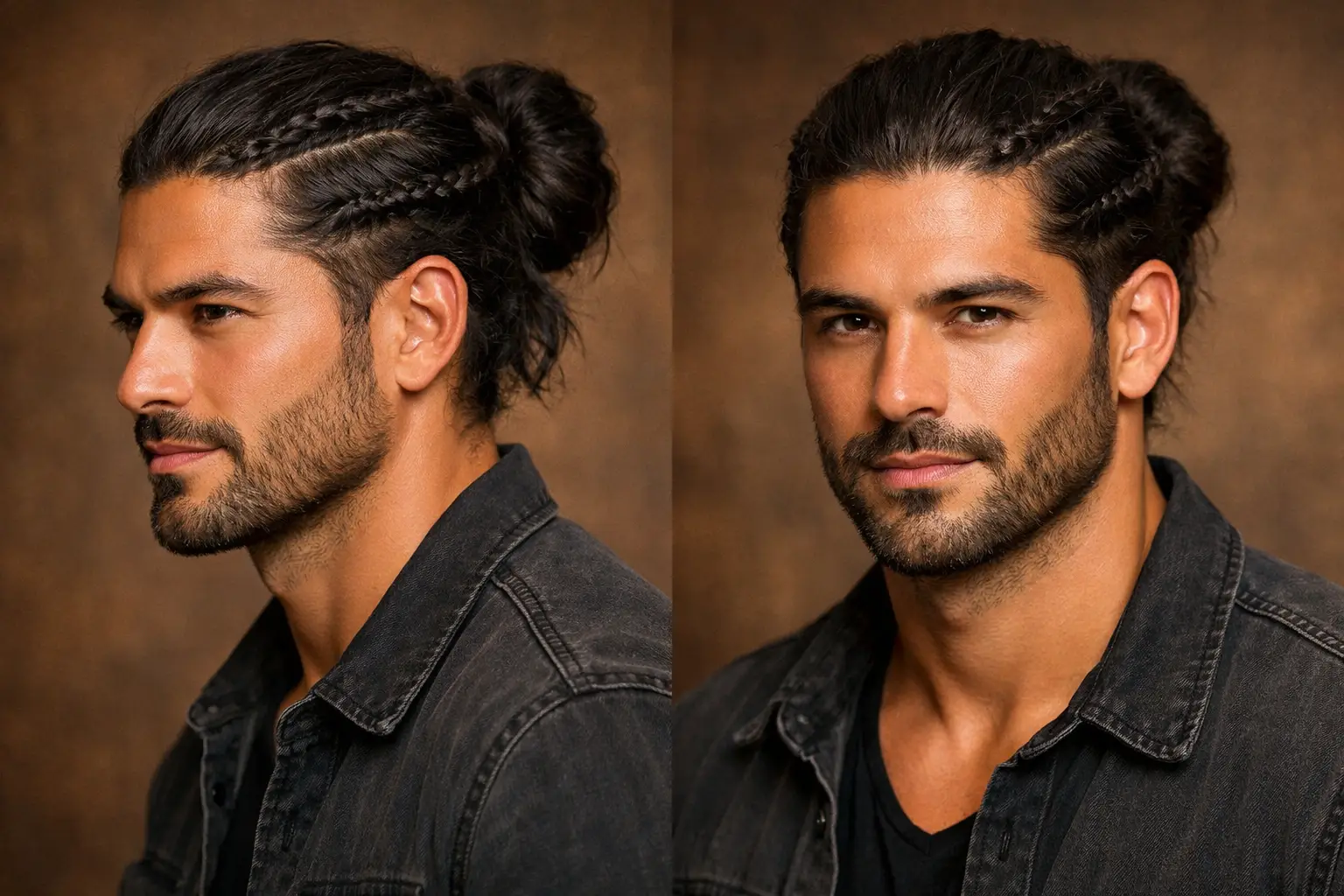
The double side braid man bun takes the braiding out of the crown and repositions it on the sides of the head, creating a design that frames the face in a way that crown-focused braided styles cannot achieve. Two braids are created on either side of the head beginning at the temples and braiding back toward the ears before the remaining hair, including the braids themselves, is gathered at the back and secured into a bun. The symmetry of the two side braids gives the style a structured, intentional appearance that looks considerably more complex than it actually is to create. This is an excellent option for men who want the visual interest of braids in their bun style without committing to a full head of cornrows or a lengthy French braid process.
The Low Man Bun with Braided Section
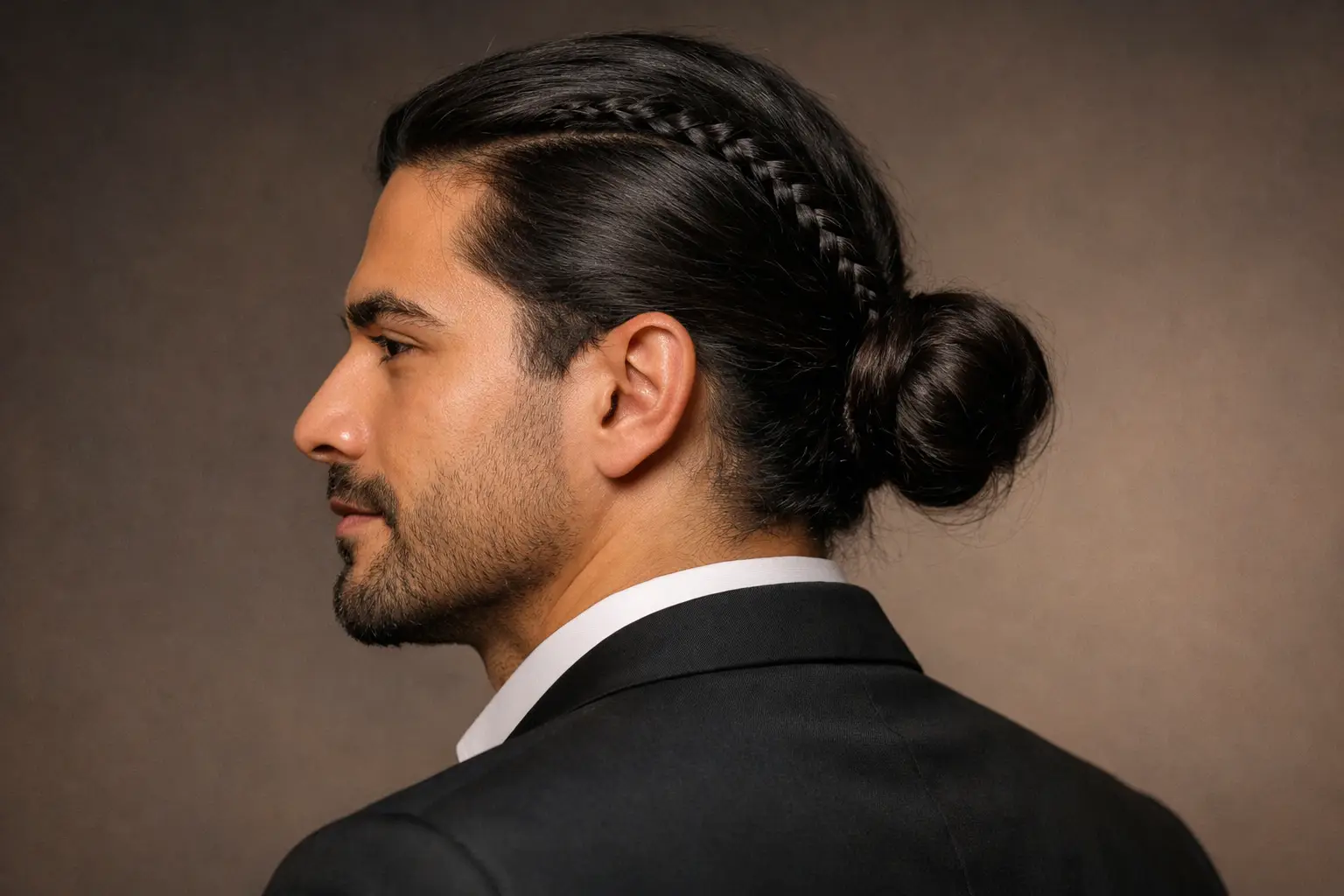
The low man bun with a braided section positions the bun at the nape of the neck rather than the crown, giving the style a more relaxed and understated character than the high versions while introducing braiding as a design element through one or two braids running from the crown down into the gathered bun. The lower position of the bun suits men who want a professional-adjacent style that reads as polished without the height and formality of a high bun. A single French braid or two flat braids running down the center of the head and terminating in the low bun give the style a surface texture that prevents it from looking like a simple pulled-back knot. This design is particularly effective for men with longer hair who want to wear it up without the visual heaviness that a high bun can create on very long hair.
The High Top Knot with Undercut and Braids
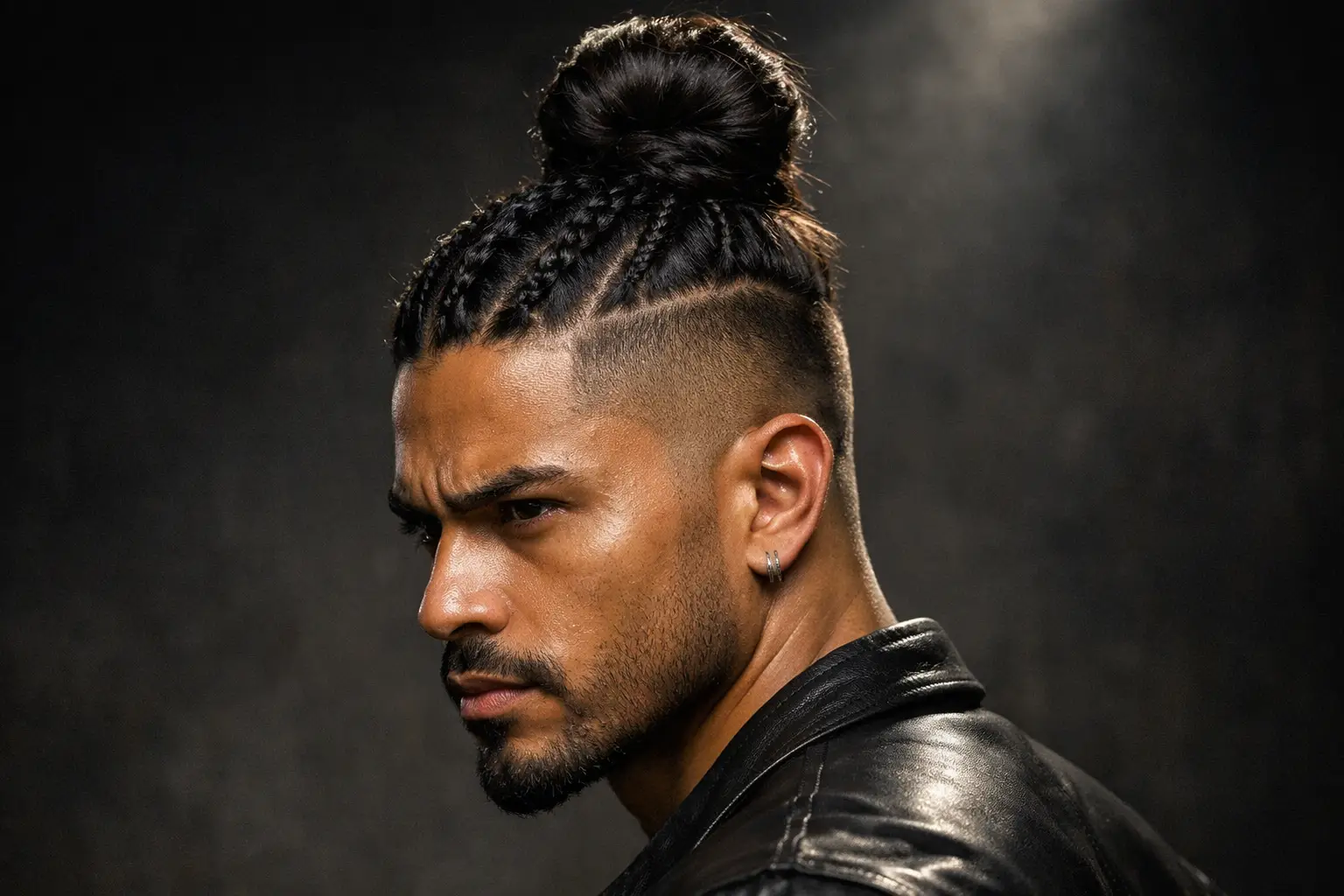
The high top knot paired with an undercut and braids is one of the boldest and most fashion-forward design ideas in the braided man bun category. The sides and back are undercut or skin faded, creating a clean, highly contrasted foundation for the longer hair on top. The top section is then braided in one or multiple styles before being gathered into a high top knot that sits at the very crown of the head. The combination of the close sides, the visible braiding, and the elevated bun creates a three-element design that has an almost architectural quality. This style is ideal for men who want their hair to be an unambiguous personal statement and works best on men with naturally thick hair that has enough density to give the top knot visible height and presence.
The Half-Up Half-Down Braided Bun
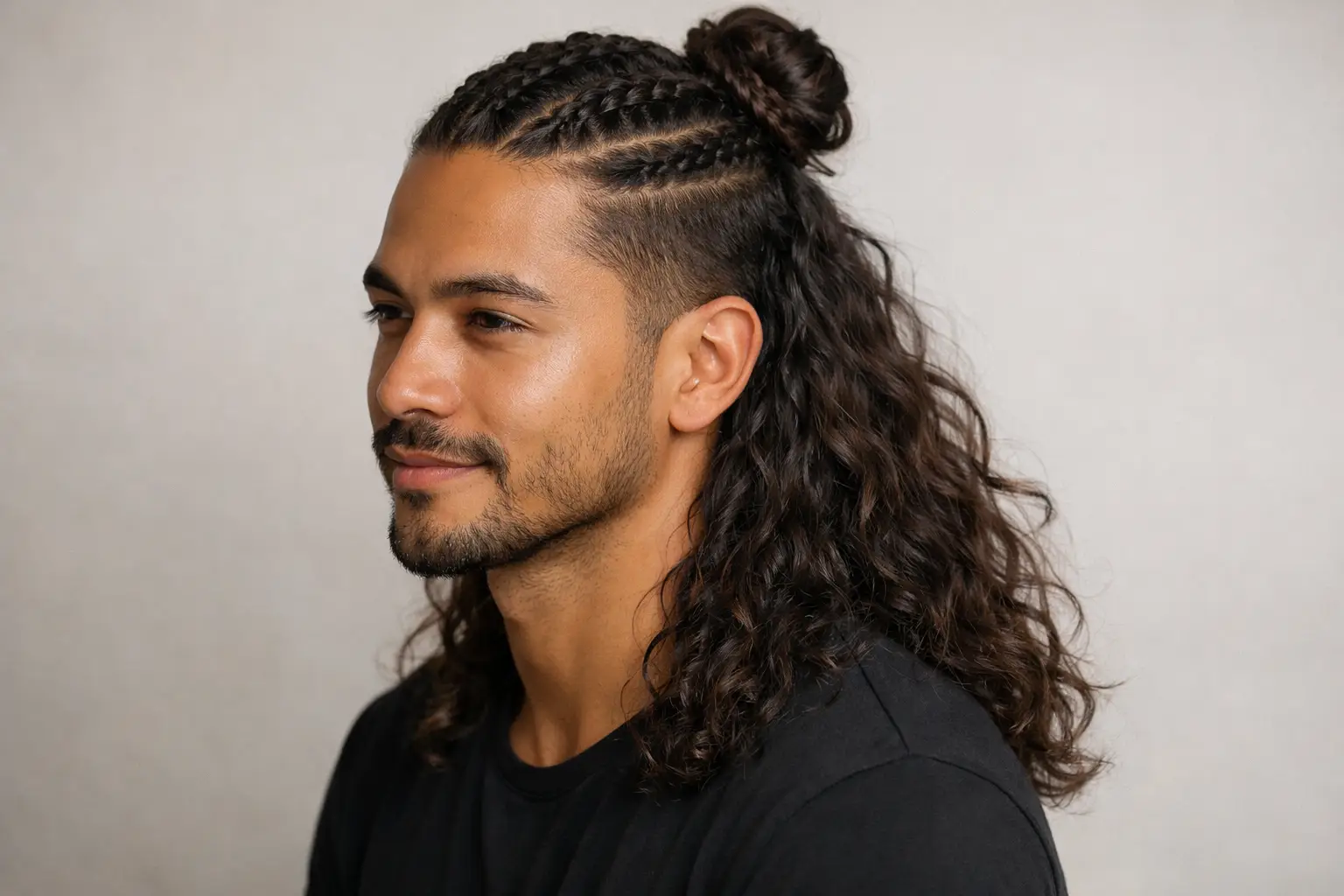
The half-up half-down braided bun is one of the most versatile and universally wearable design ideas in this category because it does not require the full length commitment of a complete man bun. The top section of the hair from temple to crown is gathered and either braided before being coiled into a small bun or secured into a bun while the sides are braided back and incorporated into the gathered section. The remaining hair below the bun falls loose, creating a style that showcases the natural texture of the hair while keeping the face clear. Men with naturally wavy or curly hair particularly benefit from this approach because it allows the loose lower section to display the hair’s natural movement and character while the braided bun portion provides structure and visual interest at the crown.
The Viking Braid Man Bun
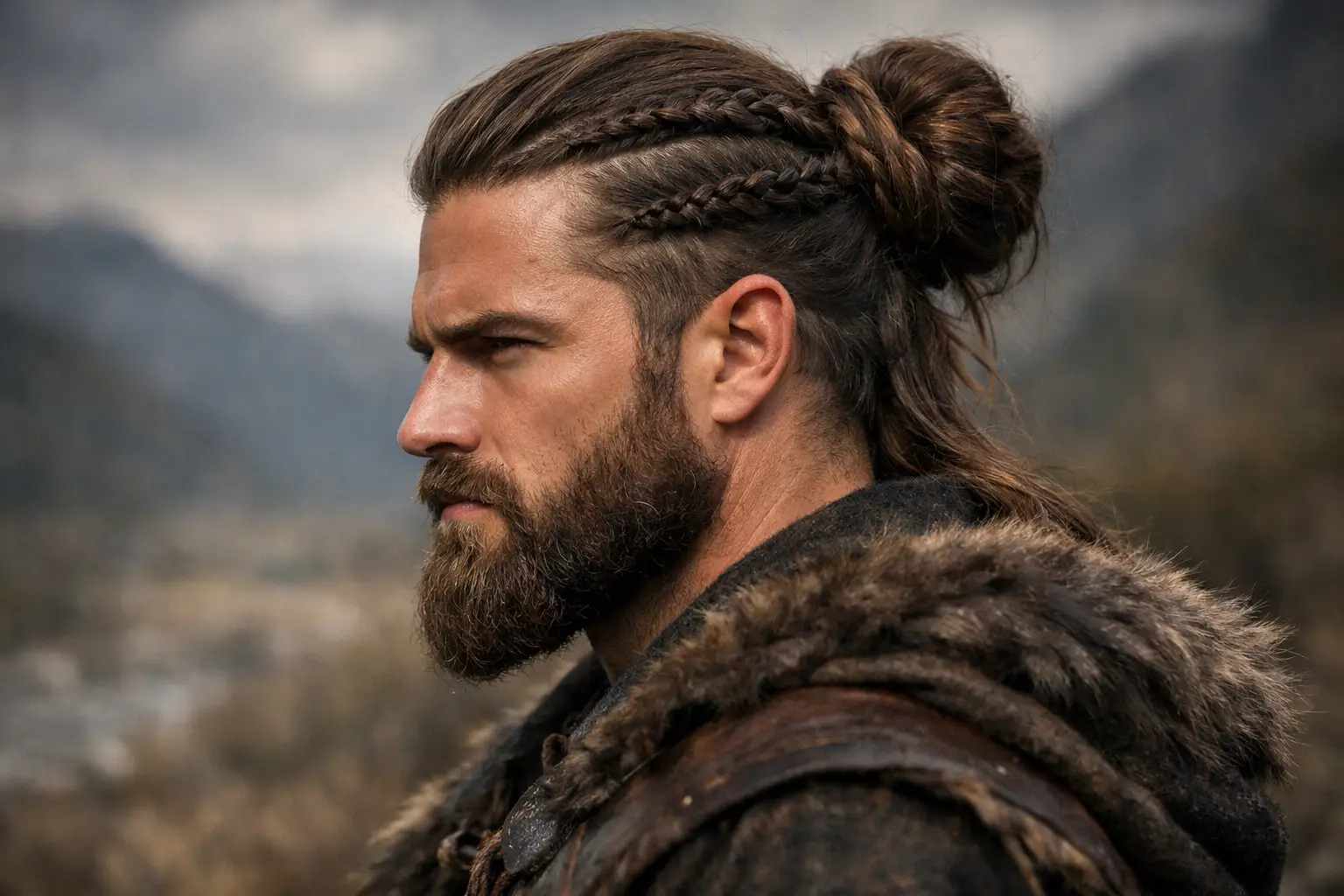
The Viking-inspired braid man bun draws on the historical aesthetic of Nordic warriors who combined braids with gathered hair in styles that communicated strength and cultural identity. The modern interpretation features two prominent braids beginning at the temples and running back along the sides of the head, often incorporating hair from the nape, before meeting at the back where they join with the remaining central hair gathered into a bun or knot. The Viking braid man bun works best on men with naturally thick hair that has enough body to carry the multiple braiding directions simultaneously, and it pairs naturally with a full beard that reinforces the rugged, powerful character of the overall aesthetic. This is one of the most admired designs for men who want a historical reference in a completely contemporary style.
The Knotless Box Braid Bun
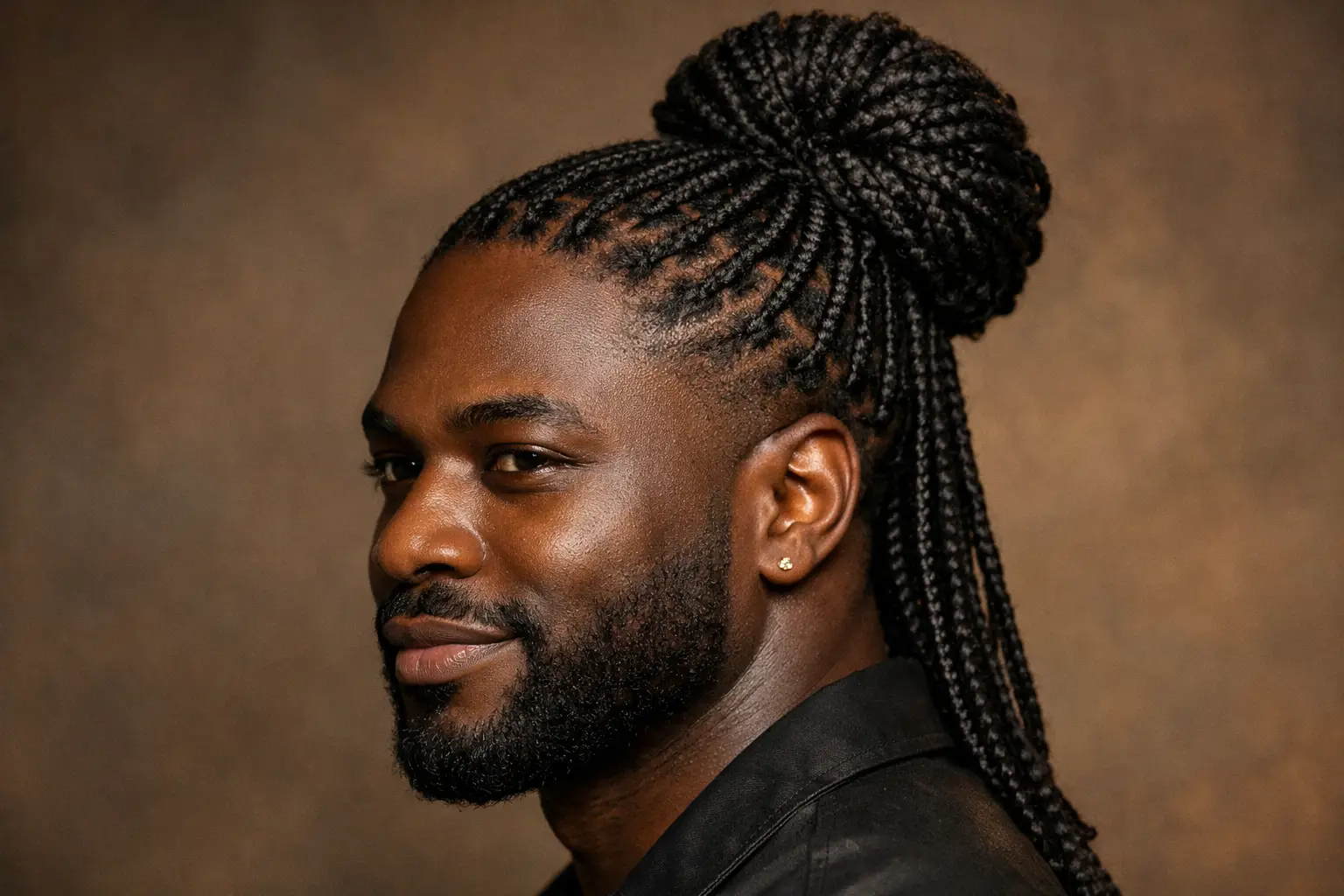
The knotless box braid bun is a design that combines one of the most celebrated modern braiding techniques with the practical elegance of a gathered bun. Knotless box braids eliminate the tight knot at the base of each braid that traditional box braids create, distributing the tension more evenly across the scalp and significantly reducing the risk of traction damage at the roots. Multiple knotless box braids across the entire head are then gathered at the crown or nape and secured into a bun, creating a style with extraordinary visual texture and considerable protective benefit. This design is ideal for men with type 4 coily hair who want a style that looks genuinely impressive while allowing the natural hair beneath to rest from daily manipulation and environmental exposure.
The Fishtail Braid Man Bun
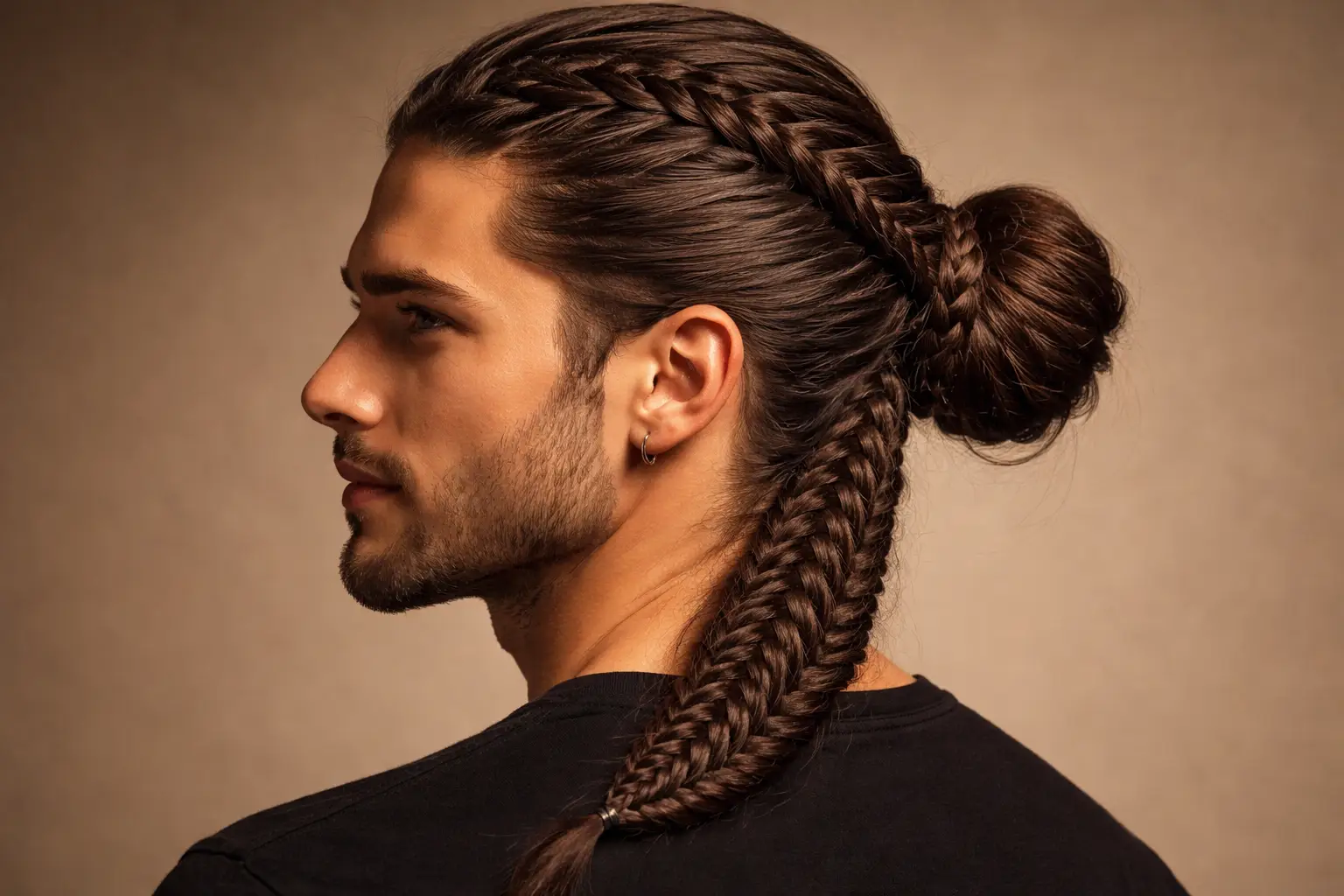
The fishtail braid is among the most visually intricate of all braiding techniques and incorporating it into a man bun design creates a result that draws immediate attention and significant admiration. The fishtail technique divides the hair into two sections and alternately passes small portions from the outer edge of each section to the other, creating a tight, herringbone-like pattern along the length of the braid. A single fishtail braid running from the forehead to the nape and then gathered into a low or high bun produces a style with remarkable surface detail. This design takes more time to create than simpler braided bun styles but produces a result that is genuinely difficult to replicate, making it one of the most distinctive looks available to men with long hair.
The Dreadlock Man Bun
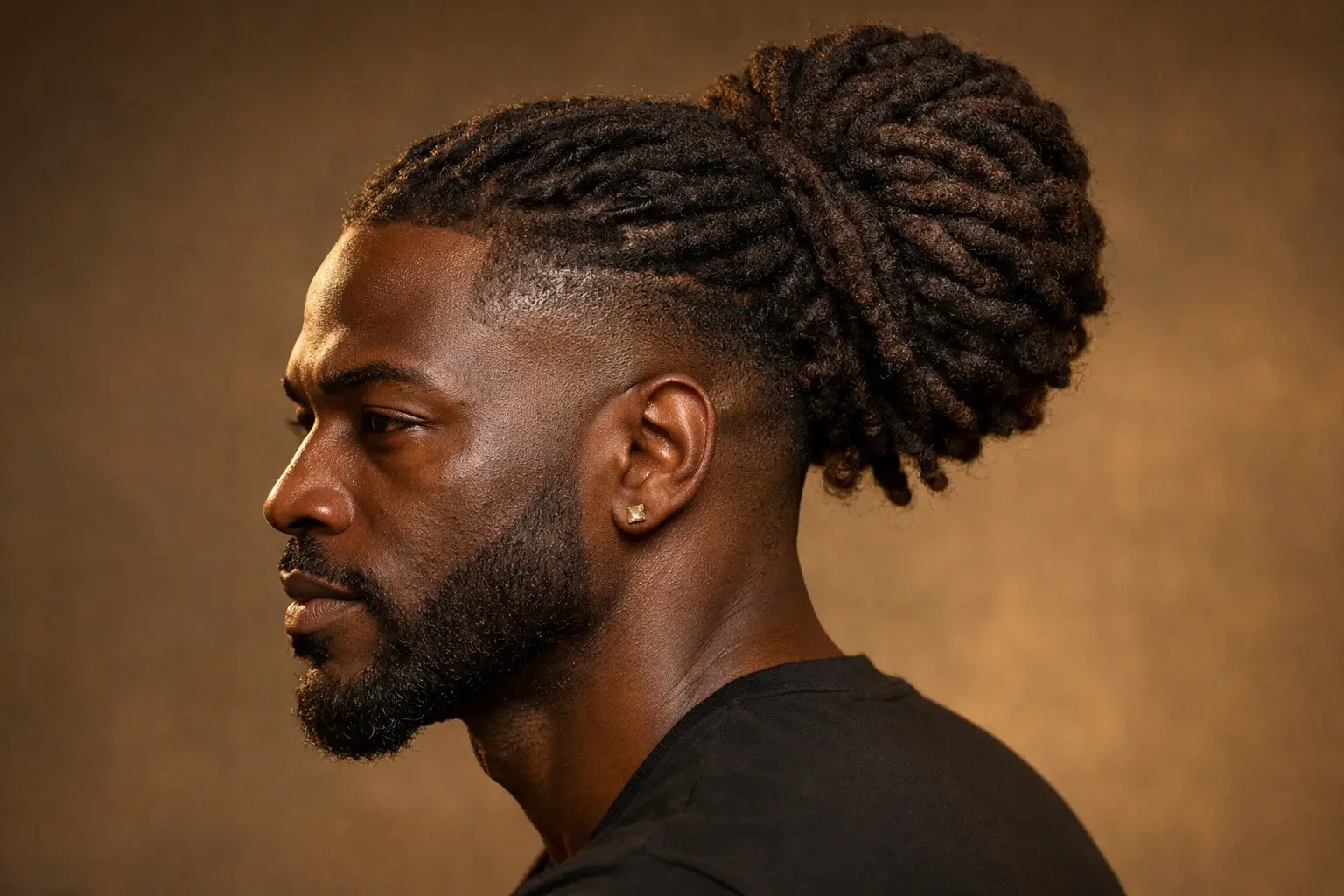
The dreadlock man bun combines one of the most culturally significant hair forms with the practical and stylish gathering technique of the bun. Long dreadlocks coiled and secured at the crown or upper back of the head create a style with significant visual weight and a natural, organic quality that no other braided bun can replicate. The dreadlock bun works across all dreadlock sizes from thin, neat locks to thick, voluminous ones, and suits men at every stage of the dreadlock journey. A taper fade on the sides around the base of the dreadlocks creates a sharper, more contemporary framing that contrasts beautifully with the organic texture of the locs themselves. This style suits men who want a look that carries deep cultural resonance alongside genuine visual impact.
The Braided Man Bun with Beard Combination
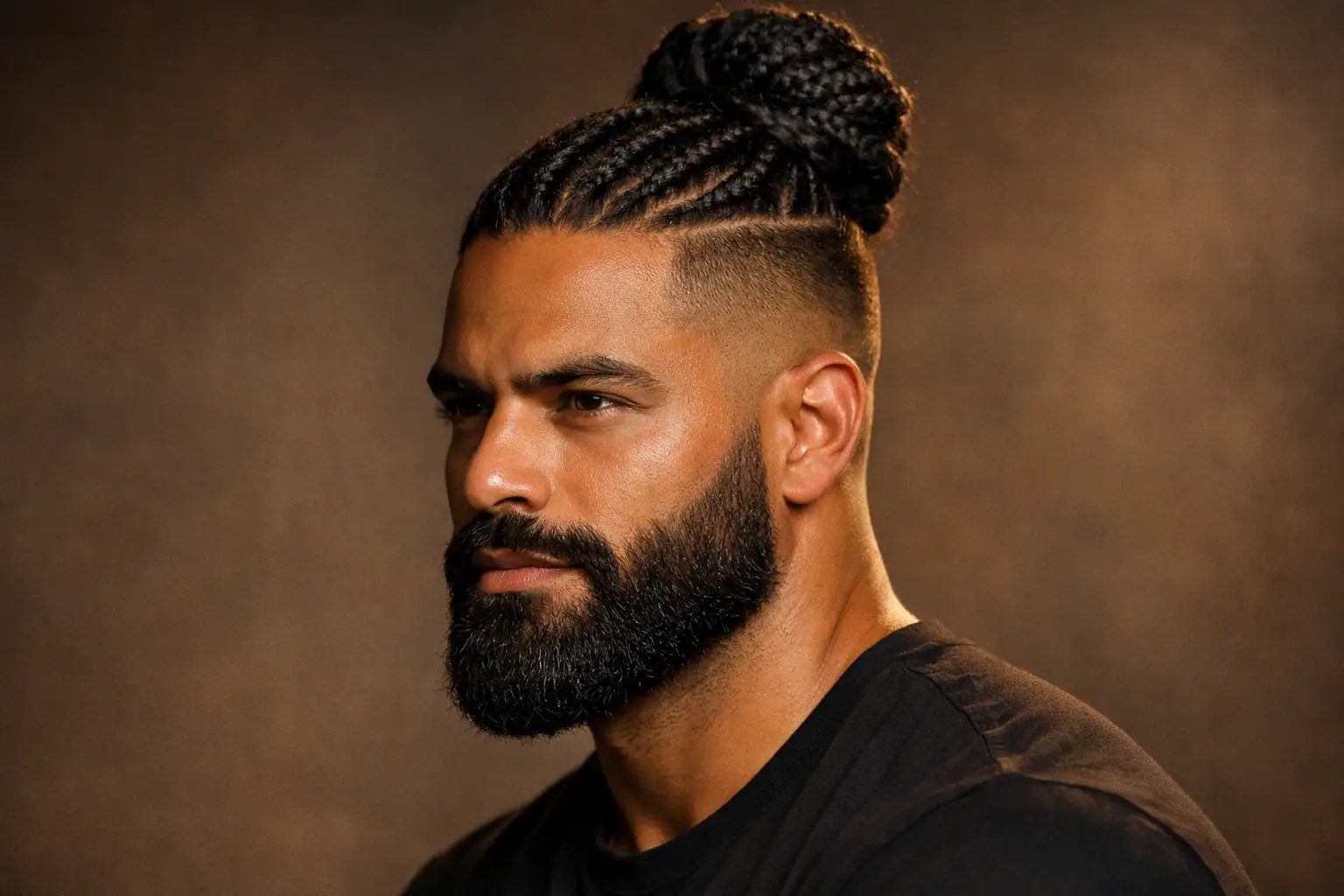
The braided man bun paired with a full or styled beard is one of the most complete and visually powerful looks available to men with long hair. The beard anchors the lower half of the face with texture, weight, and masculine presence while the braided bun on top provides visual structure and height. Together, they create a balanced composition that draws the eye through the entire profile from the bun at the crown to the beard at the jaw. The most effective combinations pair a medium to long beard with a high braided bun or cornrow bun with fade, as the contrast between the clean sides and the full beard creates an appealing visual tension. A light beard oil applied daily keeps the beard in the same condition as the well-maintained hair above it.
The Messy Braided Man Bun
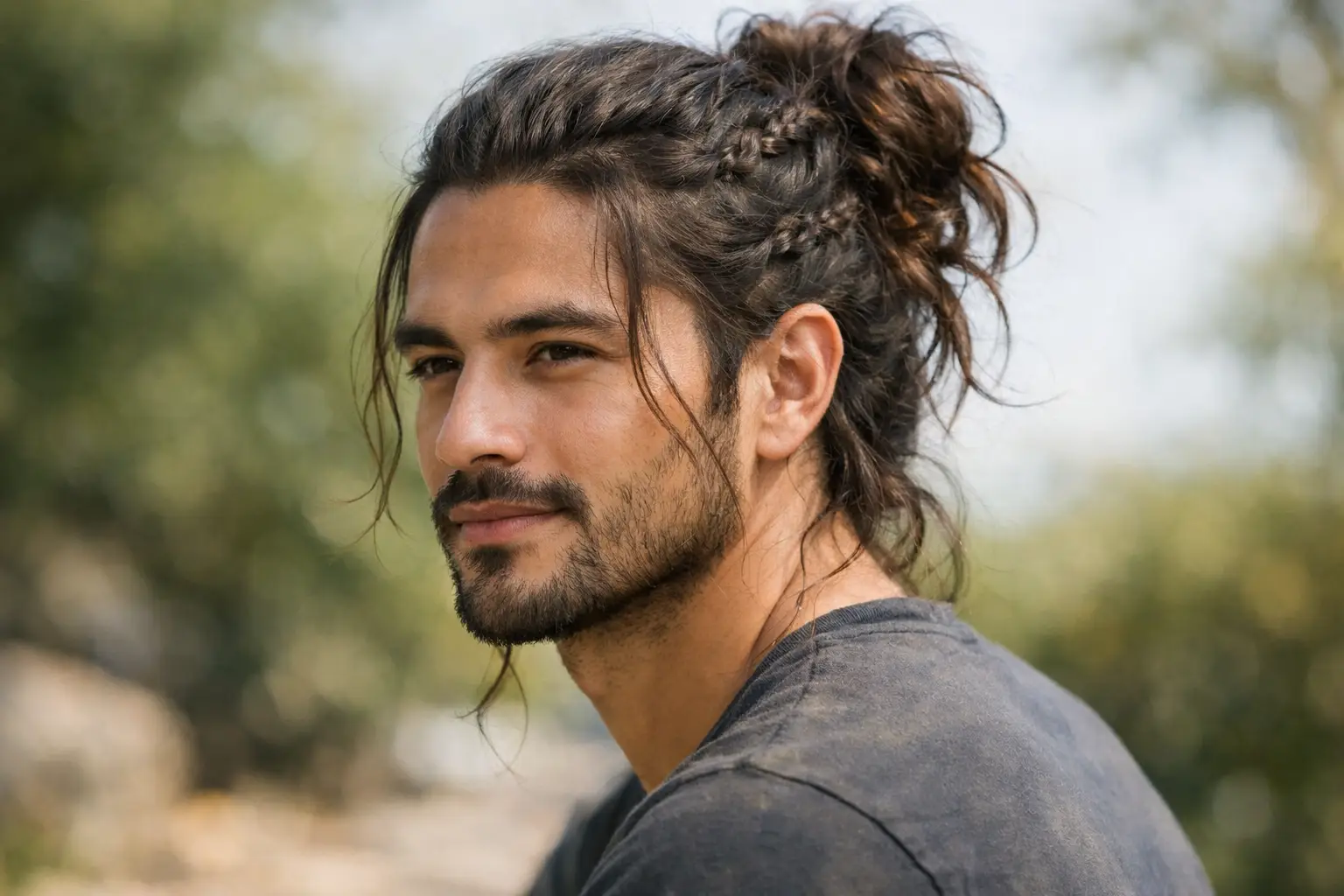
Not every braided man bun needs to be perfectly executed to look genuinely good, and the messy braided man bun proves this point with considerable style. One or two loosely executed braids incorporated into a tousled, deliberately imperfect bun create a style that communicates a relaxed, lived-in confidence that the more polished versions do not. Face-framing pieces left loose around the temples and a few strands allowed to fall from the bun itself reinforce the intentionally undone quality of the look. This design suits men who want the visual interest of braids without the formality of a precisely executed style and works well for casual environments, creative workplaces, and social settings where the tighter, more structured versions might feel out of place.
The Samurai Bun with Braided Base
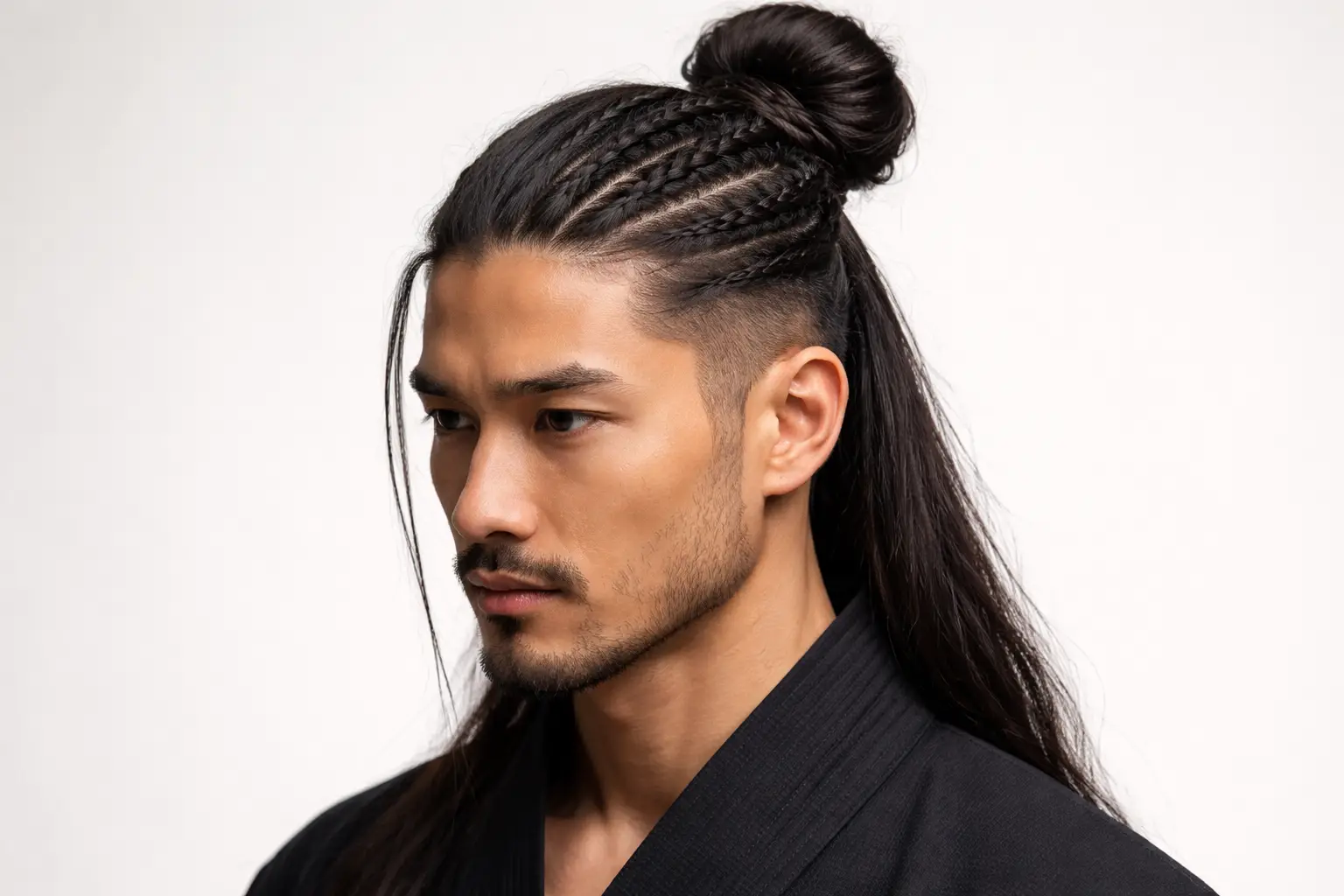
The samurai-inspired bun draws on one of the oldest and most recognized gathered hair traditions in the world, updated for the modern man with a braided base that adds contemporary detail to the historical silhouette. The hair at the sides and back is gathered tightly toward the top of the head and a small number of braids beginning at the front hairline converge at the crown where all the hair is then gathered into a tight, precise bun or topknot. The braided base at the front gives the otherwise clean style its design element and visual distinction. This look suits men who appreciate historical reference in their personal style and works well in creative professional environments where self-expression through appearance is genuinely appreciated.
The Single Crown Braid into Bun
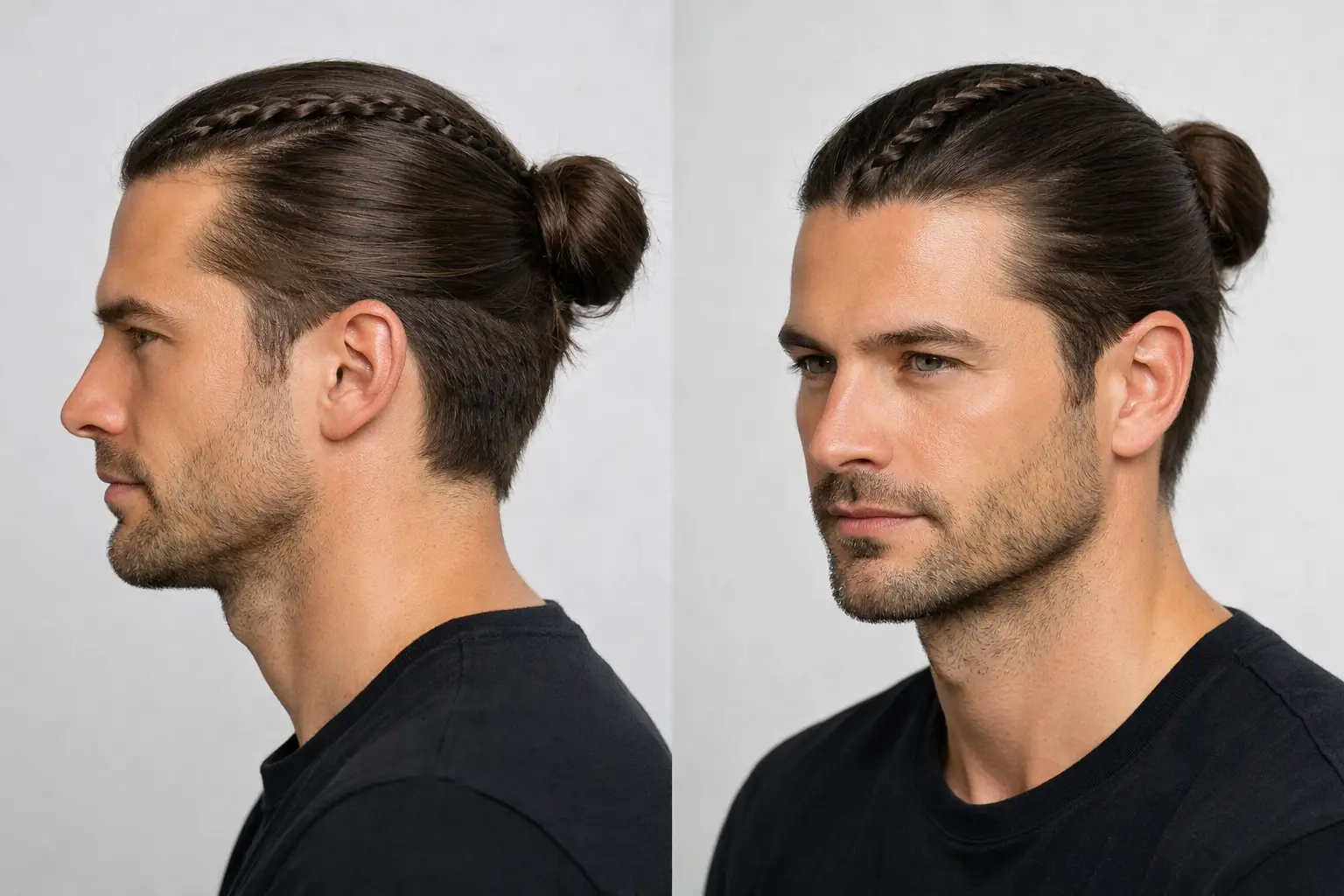
The single crown braid into a bun is the most minimal braided bun design and consequently one of the most wearable for men who are new to combining these two styles. A single braid beginning at the very front center of the hairline runs straight back along the crown of the head and terminates in a bun at the back or top. The simplicity of the single central braid gives it a clean, almost architectural quality on shorter long hair where a full cornrow design would not be achievable. It works beautifully on men with straight to lightly wavy hair and creates a very clear, visually direct design line that is easy to maintain and consistently looks intentional regardless of the overall neatness of the bun beneath.
The Braided Bun with Color
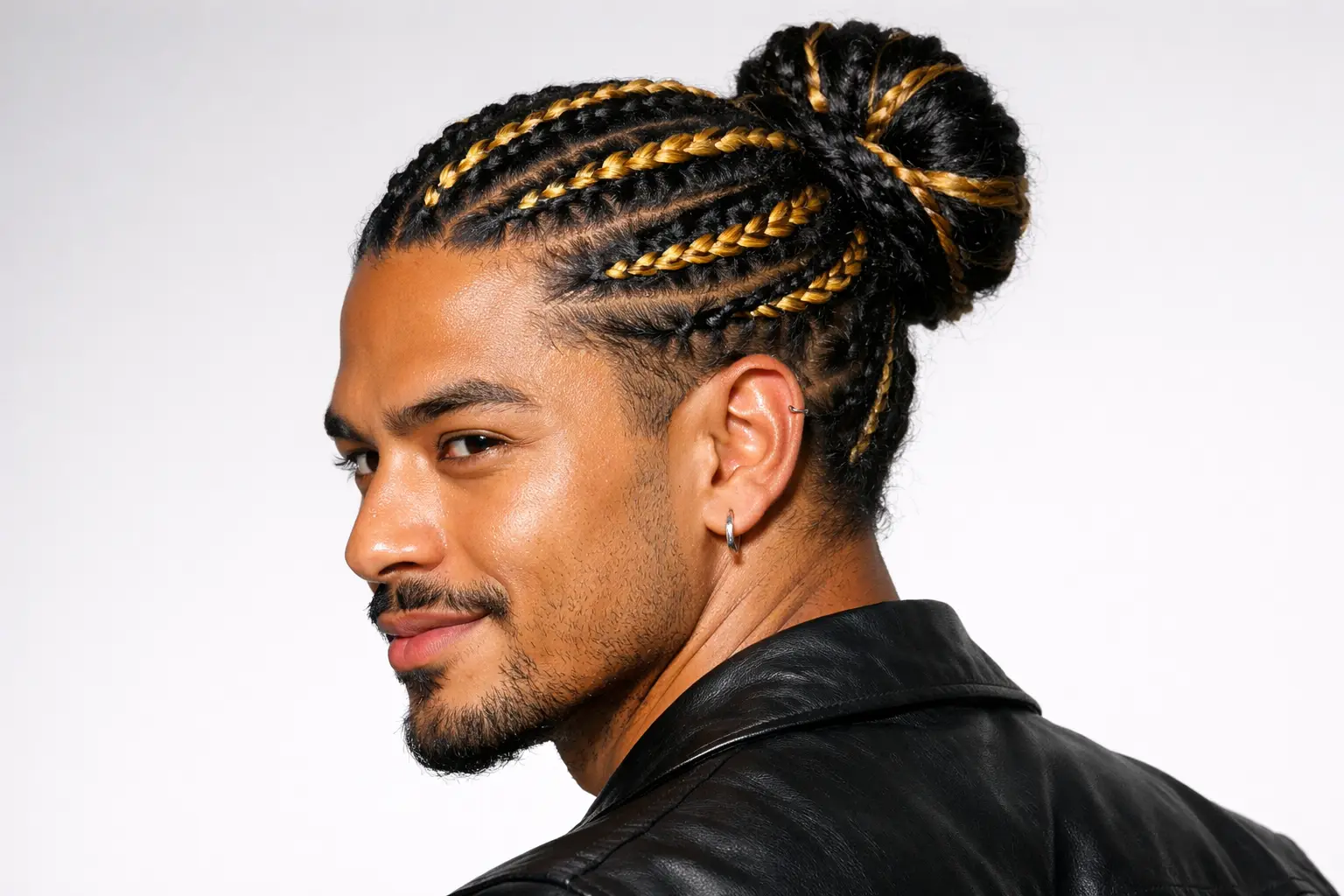
Adding color to a braided man bun design multiplies the visual impact of both the braid pattern and the bun by making each element more visually distinct. Highlights running through the braids make the pattern more visible and create a surface texture that solid-color hair cannot replicate. A full vivid color on the braided section contrasting with the natural or darker shade of the bun creates a two-tone effect that turns the hairstyle into a complete visual statement. This design is for men who want their hair to be an unambiguous expression of personal creativity and is most effectively executed by a colorist familiar with both men’s hair and the specific demands of maintaining color in braided styles.
The Low Drop Fade Man Bun with Side Braids
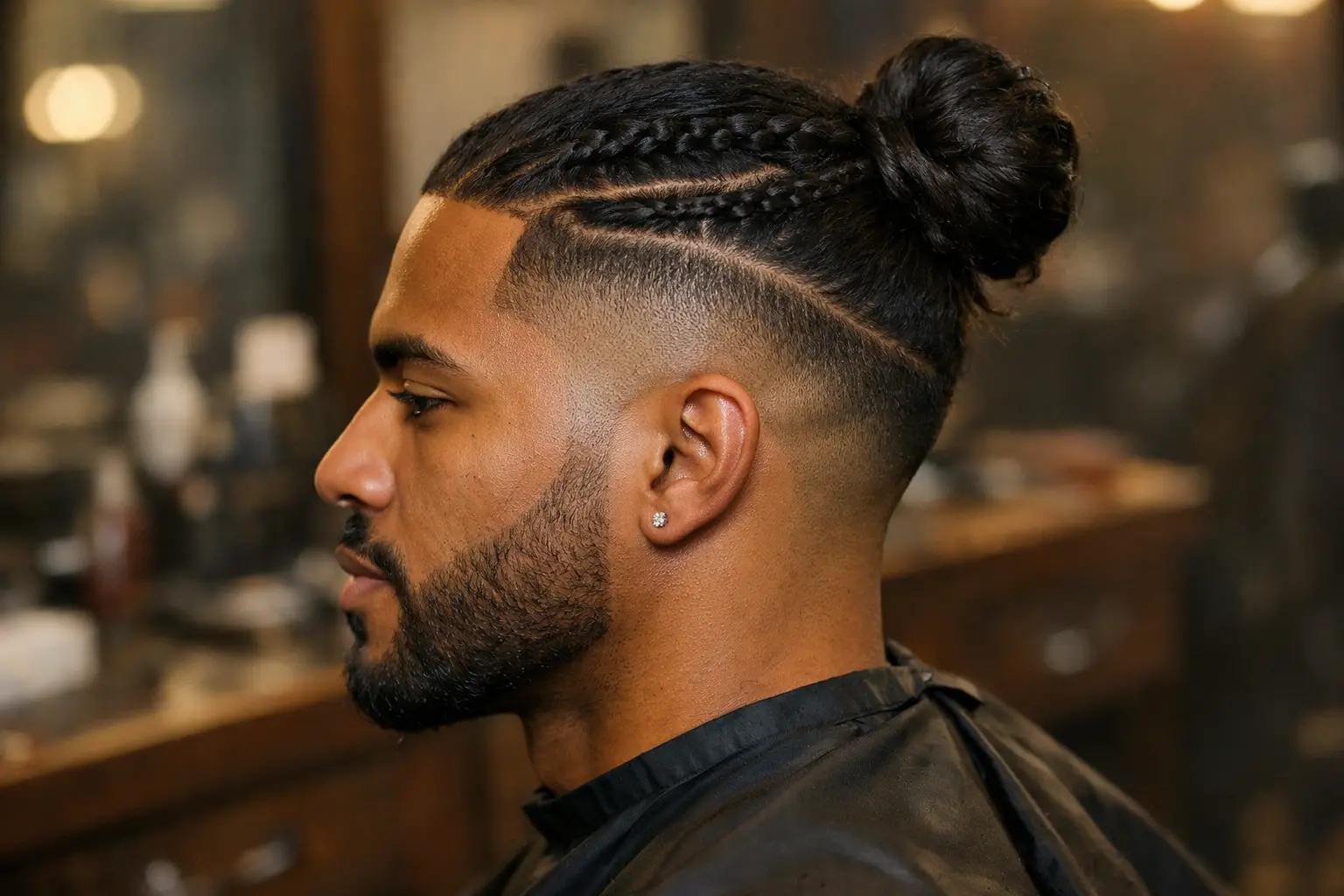
The low drop fade man bun with side braids combines the clean precision of a low fade that follows the curve of the head with braided sides that feed into the gathered bun above. The drop fade creates a rounded, arched line at the sides and nape that gives the overall silhouette a softer, more organic quality than a standard straight fade, while the side braids add surface detail and an element of design complexity. This look suits men who want something that balances barbershop precision with the cultural depth of braiding tradition and works across multiple face shapes with the right length and proportion adjustments at the consultation stage.
The Full Head Braids Gathered into Bun
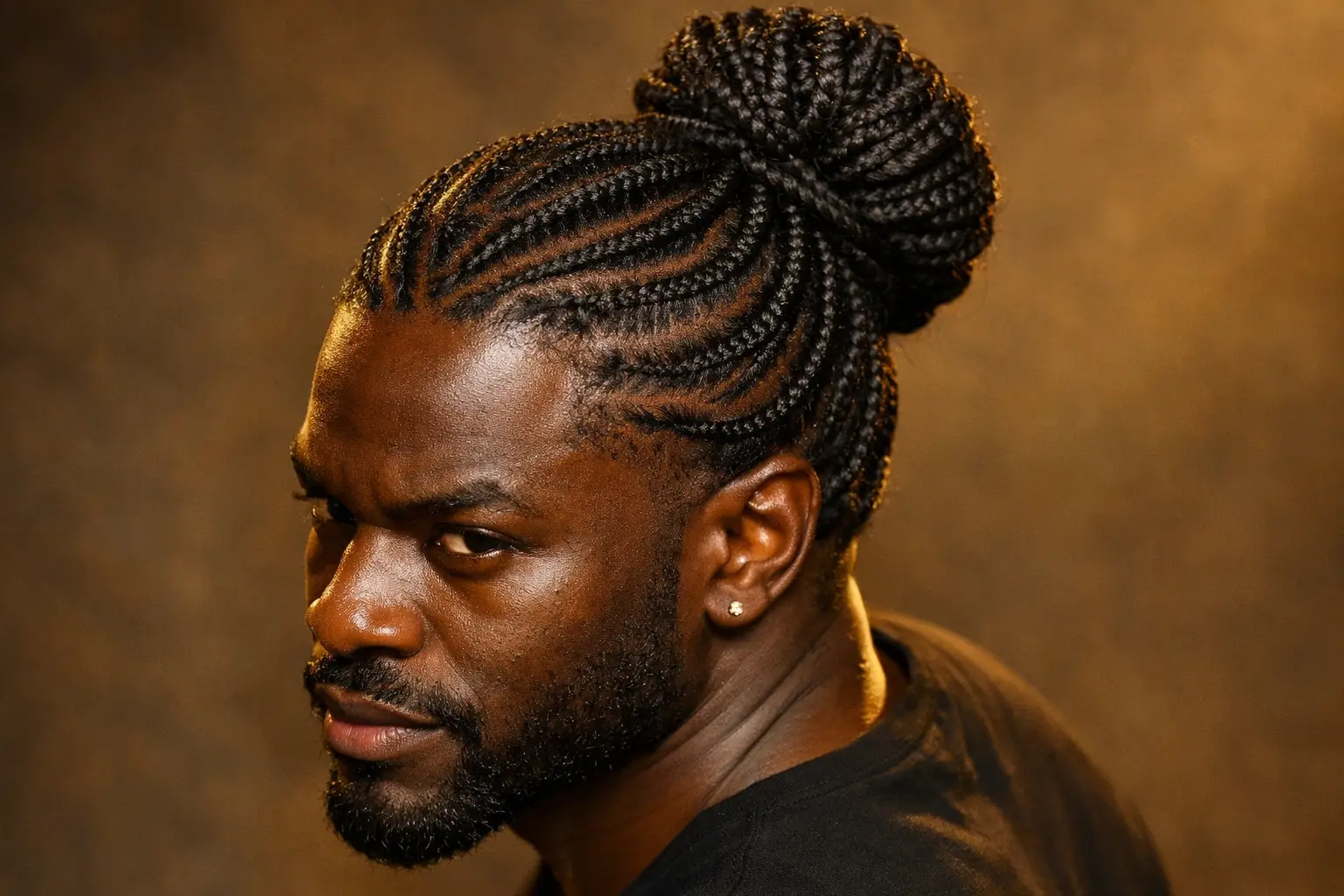
The full head braids gathered into a bun represents the maximum expression of the braided man bun concept. Every section of hair across the entire head is braided from root to end, whether in cornrows, box braids, or flat twists, and the complete collection of braids is then gathered and secured into a bun at the chosen position. This style requires the most time and skill to create but produces a result with unmatched visual complexity and protective benefit. It is genuinely one of the most striking hairstyle options available to men with long natural hair and suits men who want their hair to communicate cultural pride, personal creativity, and a serious commitment to the craft of styling simultaneously.
Essential Products and Tools for Braided Man Bun Styles
Every braided man bun design performs better when the hair is properly prepared and maintained with the right products. A wide-tooth comb or detangling brush is the starting point for any braided style, ensuring the hair is free of tangles before braiding begins and preventing breakage during the styling process. A light-hold pomade or hair serum applied before braiding gives the hair slip and manageability, making the braiding process faster and the result cleaner. A snag-free hair tie is non-negotiable for securing the bun because regular elastic bands cause breakage at the point of tension over time. A leave-in conditioner or hair mask applied weekly maintains the moisture levels that braiding requires to prevent dryness and brittleness at the braid points.
Conclusion
Stylish braids and man bun looks for guys represent one of the richest and most creatively rewarding categories in contemporary men’s hairstyling. The 17 design ideas in this article span the full range from the approachable simplicity of a single crown braid into a bun to the complete cultural statement of full-head braids gathered into a bun, demonstrating that this category has genuine depth and variety beyond what its surface appeal suggests. The most important step is finding the design that aligns with your hair type, face shape, and personal aesthetic and then committing to the maintenance that keeps it looking its best. When braids and man buns work together, the result is a style that communicates confidence, creativity, and a genuine relationship with the long and layered history of these two extraordinary techniques.
You may also like this: How To Cut Men’s Long Curly 15 Hair Design Ideas at Home
Frequently Asked Questions
How long does my hair need to be for a braided man bun?
Most braided man bun styles require at least four to six inches of length on top for the bun portion to hold adequately. Styles that incorporate cornrows or braids across the full head require more even length distribution. The half-up half-down braided bun can be achieved with slightly less length on the top section than a full man bun requires.
Are braided man buns suitable for professional environments?
Many braided man bun styles are entirely appropriate for professional settings. The low man bun with a braided section, the classic French braid man bun, and the samurai-inspired bun are all polished and controlled enough for most workplace environments. More elaborate designs with vivid color or very thick braids may be better suited to creative industries.
How do I prevent scalp tension when wearing a braided man bun?
Using a snag-free hair tie, avoiding braiding too tightly from the root, opting for knotless techniques where possible, and not wearing the bun in the exact same position every day all reduce tension on the scalp. Giving the hair a full day of rest between tight bun styles allows the scalp to recover and prevents traction alopecia over time.
What is the best product for keeping a braided man bun neat throughout the day?
A light-hold pomade or styling cream applied to the edges and flyaways keeps the braided bun looking clean throughout the day without making the hair stiff or heavy. A small amount of hair serum or oil applied to the bun itself adds shine and tames any frizz that develops between styling sessions.
Can men with short hair achieve a braided man bun style?
Men with shorter hair can achieve certain braided styles on the top section but may need clip-in or sewn-in extensions to create a full bun. Cornrow designs that terminate in a small gathered knot are the most achievable braided bun option for men whose hair has not yet reached full man bun length. Growing the hair to at least four to six inches on top before attempting the style produces the most satisfying result.