Introduction
Fine hair at 60 is one of the most common and genuinely challenging hair concerns that women face, and it deserves real and honest guidance rather than generic reassurances that a good shampoo will fix everything. The combination of hormonal changes after menopause, decades of styling and coloring, and the natural reduction in hair density and strand diameter that accompanies aging leaves many women in their sixties with hair that looks flat in photographs, feels limp by midday regardless of how much product was applied in the morning, and refuses to hold any volume for more than an hour after styling.
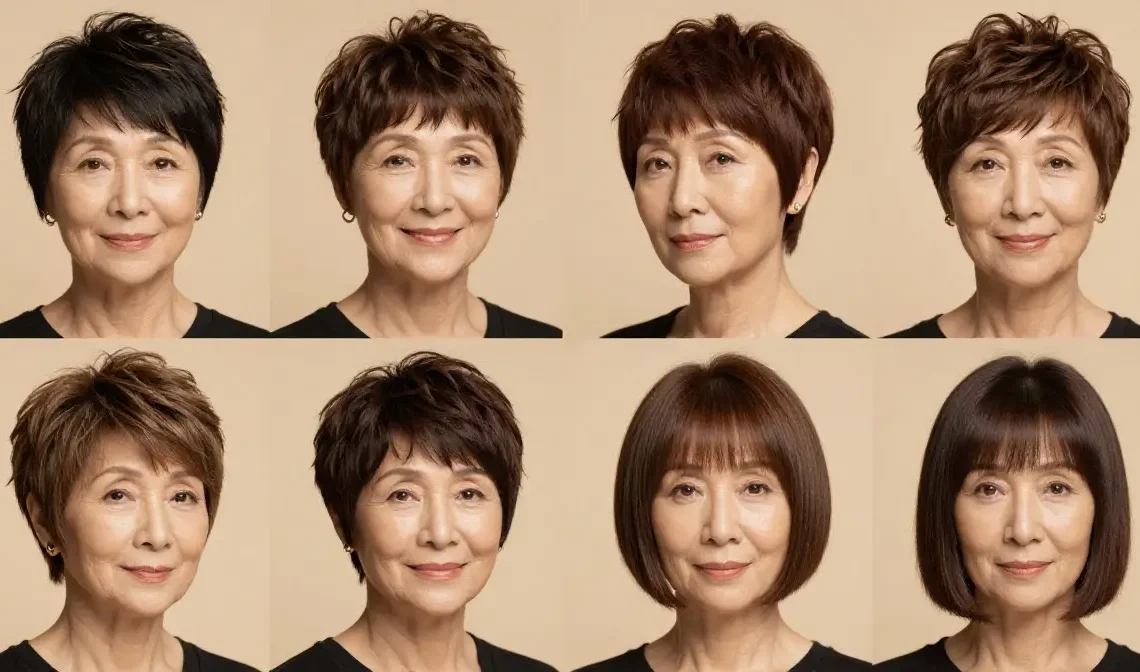
The encouraging truth is that fine hair at 60 responds extraordinarily well to the right haircut, the right color approach, and the right product and styling routine when all three are chosen with genuine understanding of what fine aging hair needs. This guide brings together 22 of the most volumizing, flattering, and practically effective hairstyle ideas for 60-year-old women with fine hair so you can find the version that works best for your specific hair situation, face shape, and personal confidence.
Textured Pixie Cut for Fine Hair at 60
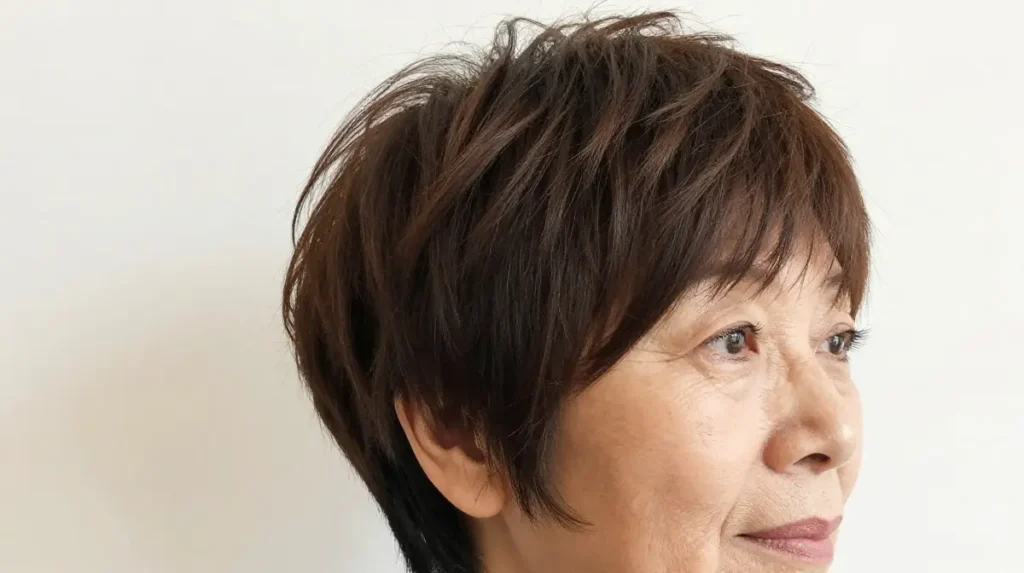
The textured pixie cut is one of the most consistently recommended and genuinely effective hairstyles for 60-year-old women with fine hair because its very short length eliminates the weight that causes fine hair to pull itself flat throughout the day, while the specific layering and texturizing technique applied through the top section creates the visual fullness and dimensional complexity that fine hair cannot generate on its own at any length. The shorter the hair, the less weight it carries, and the more naturally it stands away from the scalp with body and lift, which is the single most important physical principle that explains why a well-executed textured pixie is so effective for fine aging hair.
Wispy or side-swept bangs added to the pixie frame the forehead and soften the overall appearance in a way that is specifically flattering for mature features. A tiny amount of light hold matte clay or a texture paste worked through the dry top section and then shaped with the fingers gives the layered pixie its most dimensional and intentional finish. This cut requires visits every four to six weeks to maintain its precise and volumizing shape.
Blunt Bob for Fine Hair at 60
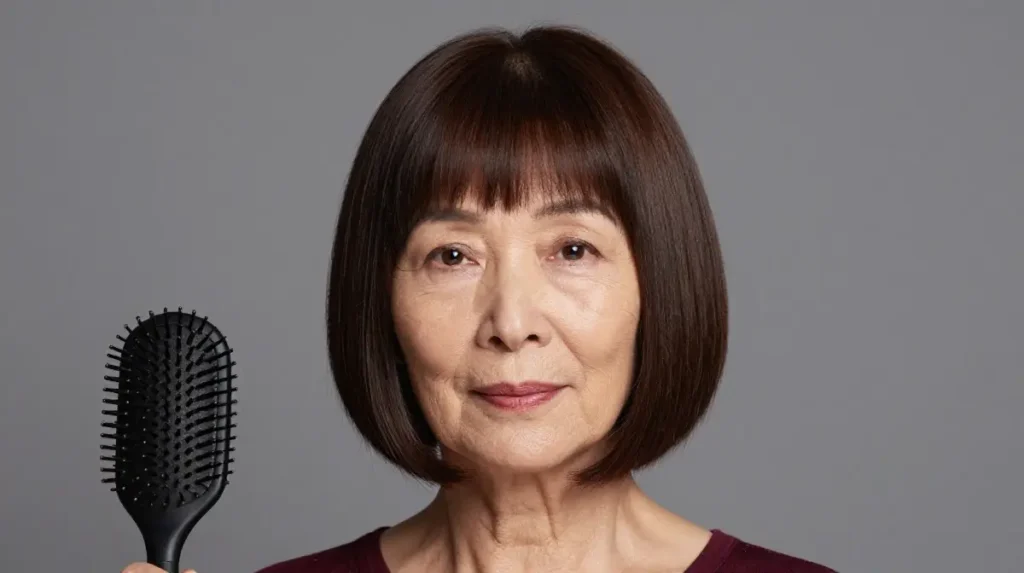
The blunt bob creates an optical illusion of greater thickness and density than any other bob variation available to women with fine hair because all of the hair is cut to the same length at a single clean horizontal line, which means every strand contributes its full visible weight to the bottom edge of the cut rather than tapering away gradually and making the overall hair appear sparse and wispy at the ends. This blunt bottom edge reads as a solid and confident line of hair that has an immediately fuller appearance regardless of the actual density of the individual strands above it.
A blunt bob for fine hair at 60 works most effectively when kept at a chin to slightly below-chin length, where the weight of the blunt cut sits closest to the jaw area and creates the most flattering framing effect for mature facial features. A blow-dry with a large round brush rolling the ends under slightly creates a smooth and polished blunt bob finish that maintains its shape throughout the day with minimal additional product. Adding soft beach waves to a blunt bob with a large curling iron creates additional visual dimension and texture that makes the fine hair appear even fuller.
Feathered Layered Bob for Fine Hair at 60
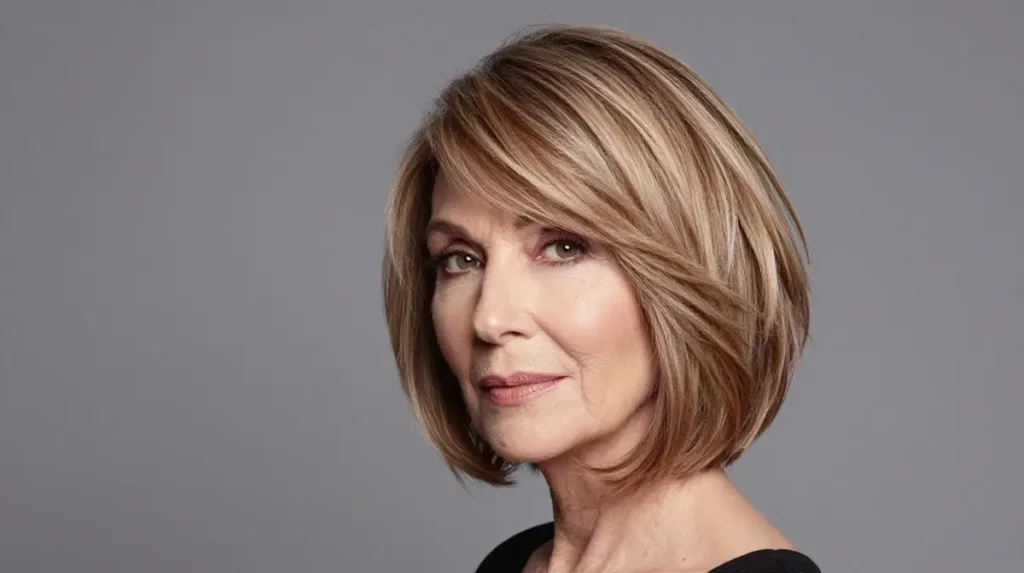
The feathered layered bob addresses the specific challenges of fine aging hair more directly and precisely than almost any other cutting approach available because the feathering technique creates a wispy and airy finish at the ends that adds apparent texture and movement to fine hair without the heaviness of a blunt cut end that can make fine hair appear weighted down rather than full and alive. Feathering involves cutting the hair ends at a delicate angle using either a razor or a scissor point-cutting technique, creating light and tapered ends that catch the light from multiple angles and create a visual impression of more dimensional and abundant hair than the actual strand count would suggest.
A blow-dry with a medium round brush finishing each section slightly outward shows feathered layers at their most voluminous and polished best for fine hair at 60. A light flexible hold spray applied as a finishing touch keeps the feathered ends moving in their intended direction throughout the day without weighing the fine hair down. This is one of the most reliably transformative haircut choices for 60-year-old women with fine or thinning hair.
Volumizing Layered Lob for Fine Hair
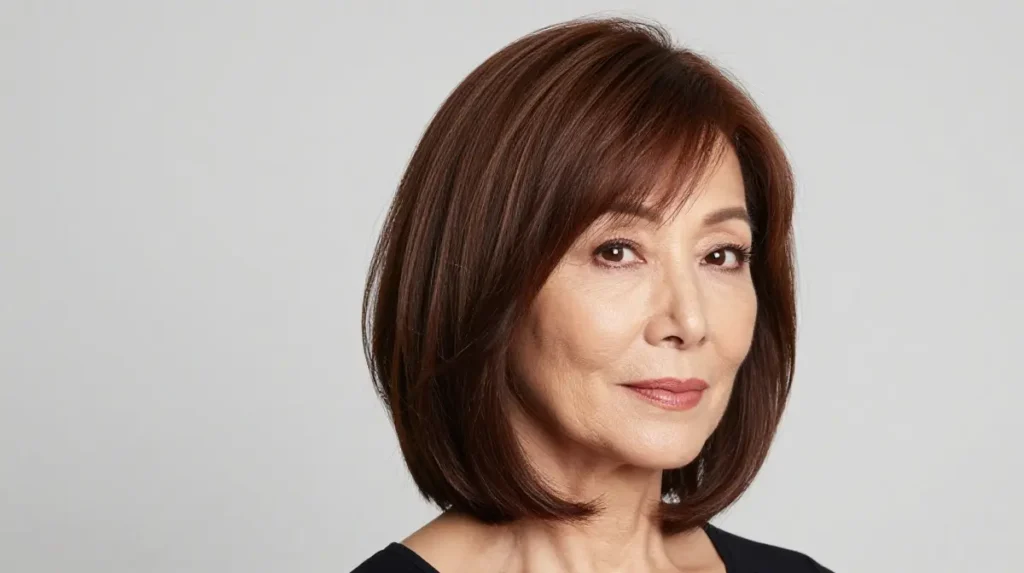
The layered lob gives 60-year-old women with fine hair the visual benefit of a longer style while using strategically placed layers to prevent the additional length from creating the heaviness and flatness that longer fine hair typically suffers from when left without the structural support of well-considered layers. The lob sits between the collarbone and the shoulder, which is long enough to allow styling variety while the layers cut through the mid-lengths and ends remove the weight that would otherwise pull fine hair completely flat and rob it of any apparent volume or movement throughout the day.
Face-framing layers cut specifically in the sections closest to the face create an additional brightening and lifting effect around the eyes and cheekbones that adds genuine visual energy to the overall look without requiring any additional styling beyond a simple blow-dry. A volumizing mousse applied to the roots of damp hair and a round brush used during the blow-dry creates the most consistently full and polished result for fine hair at this length. The layered lob grows out gracefully and maintains its overall flattering proportions for longer than shorter bob variations.
Curtain Bangs with Fine Hair at 60
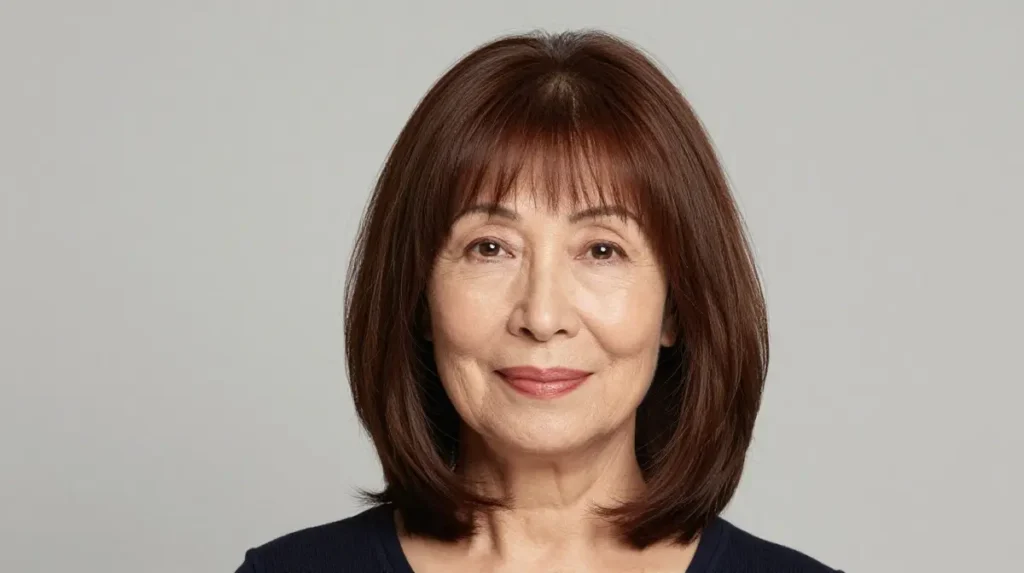
Curtain bangs are one of the most widely recommended fringe styles for 60-year-old women with fine hair specifically because their soft, center-parted, bilaterally face-framing quality works with limited hair density rather than against it, spreading the available hair across a wider forehead area rather than concentrating it in a single solid horizontal strip that requires a degree of density that fine hair often cannot reliably provide. The curtain bang falls gently from the center or slightly off-center part toward both temples, creating a face-framing sweep that covers any thinning at the hairline while adding a youthful and romantic quality to the overall hairstyle composition.
This bang style grows out very gracefully without creating the awkward and frustrating in-between phase that straight-cut solid fringes typically produce, which makes it one of the most practical fringe choices for 60-year-old women with fine hair who cannot visit the salon as frequently as more high-maintenance fringe styles require. A round brush and a blow dryer used together during the styling process give curtain bangs their characteristic soft bend away from the face and toward the temples.
Side-Swept Bangs with Short Fine Hair at 60
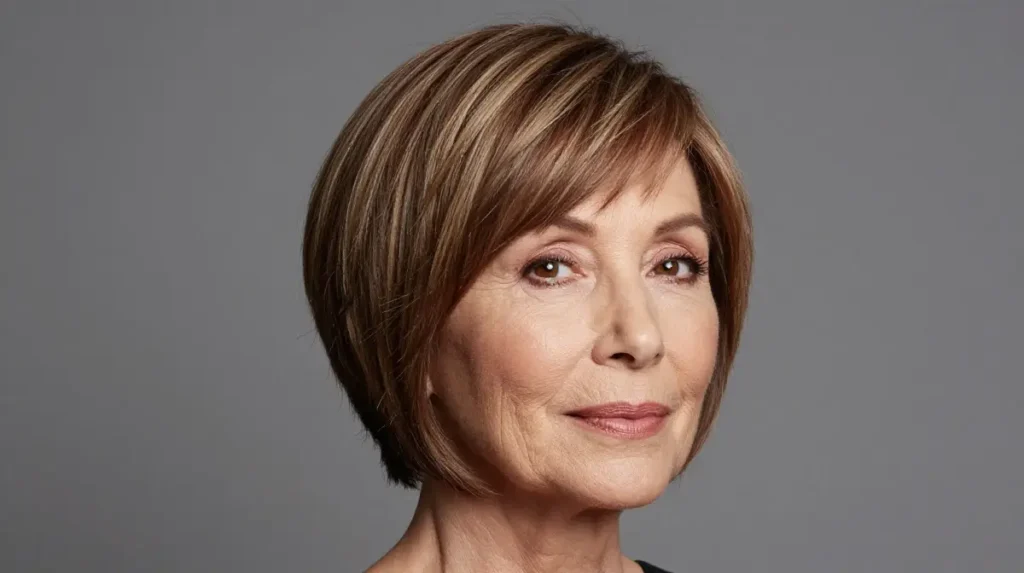
A side-swept fringe added to any short hairstyle for 60-year-old women with fine hair creates an immediately flattering result by breaking up the forehead area with a diagonal line that softens mature features, covers any thinning at the hairline or temples, and creates a sense of movement and gentle asymmetry that prevents the overall look from appearing flat or static regardless of the limited hair density being styled. The diagonal sweep of the side-swept bang works specifically with fine hair’s natural tendency to lie flat by directing it intentionally across the forehead in a way that makes the flatness an asset rather than a liability, using the sleek and smooth quality of fine hair to create a clean and polished fringe result.
A small amount of light hold styling cream or pomade worked through the bang section before blow-drying in the sweeping direction keeps the side-swept fringe sitting correctly throughout the day without requiring heat styling rework. This combination of side-swept bangs with a textured pixie, a layered bob, or a bixie cut creates some of the most consistently flattering short hairstyle compositions available for fine-haired 60-year-old women.
Stacked Bob for Fine Hair at 60
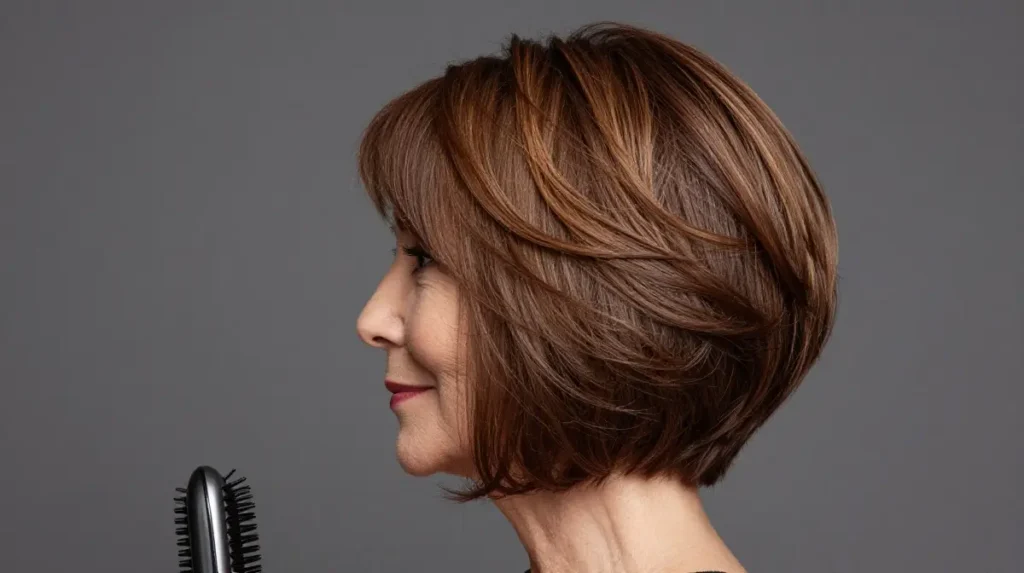
The stacked bob is one of the most technically sophisticated and practically effective volumizing hairstyles for 60-year-old women with fine hair because the stacking technique, where shorter layers are cut in a graduated sequence at the back of the head to build a rounded and full-appearing shape, generates an extraordinary amount of apparent volume and structural fullness in exactly the area where 60-year-old women with fine hair most visibly lose density and body. The stacked back provides a firm and rounded foundation that gives the entire bob a lifted and full appearance from behind, while the longer layers at the front frame the face and add a softening horizontal element that balances the rounded structure at the back of the cut.
A round brush used during blow-drying in an inward rolling motion at the back of the head shows the stacked layers at their most rounded and impressive best. This cut requires visits every five to six weeks to maintain the precise graduation that produces its volumizing effect, but the consistently beautiful results make the maintenance commitment entirely worthwhile for women with fine aging hair.
Angled Bob for Fine Hair at 60
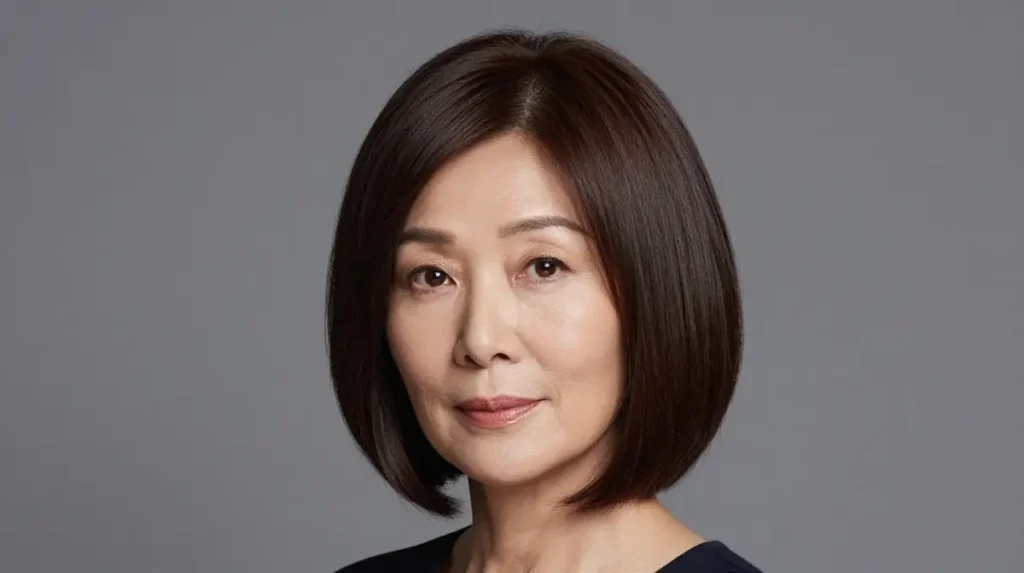
The angled bob is one of the most consistently flattering and practically effective short hairstyles for 60-year-old women with fine hair because its specific combination of a shorter back and gradually longer front sections creates two simultaneous volumizing effects that work together to make fine hair appear considerably thicker and more structured than it actually is. The shorter stacked back adds visual volume and fullness at the nape and crown area where fine hair typically appears most flat and sparse, while the longer front sections fall at and slightly below the jawline to frame the face in the most flattering possible way for mature features.
The diagonal line of the angled cut also adds a structural elegance to the overall shape that prevents the bob from appearing as a single flat and lifeless horizontal band of hair around the face, instead creating a sense of directed movement and forward intention. A blow-dry with a round brush rolling the front sections slightly under and the back sections slightly up and inward shows the angled bob at its most voluminous and polished best. This style photographs beautifully from every angle because its architectural quality gives it a defined and intentional silhouette.
Bixie Cut for Fine Hair at 60
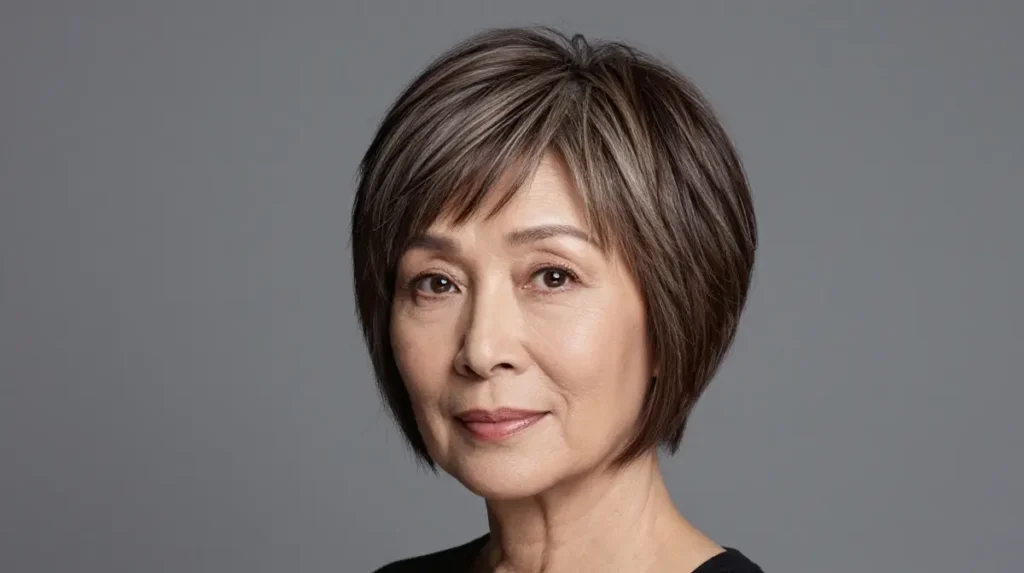
The bixie cut sits precisely between a pixie and a bob in its length and this specific in-between position makes it one of the most universally flattering and volumizing hairstyle options for 60-year-old women with fine hair because it provides enough length to create face-framing movement while maintaining the structural shortness that keeps fine hair from being pulled flat by its own weight throughout the day. The bixie typically features layers through the top and sides that create a textured and dimensional result that suits fine aging hair because the layering at this specific length removes enough weight to allow the remaining hair to sit with genuine lift and body rather than lying flat against the scalp.
Face-framing pieces left slightly longer at the front of the bixie create a flattering frame around the cheekbones and jawline that draws attention toward the center of the face while the shorter textured crown area provides the volume and lift that fine hair most needs. A light volumizing mousse or a sea salt spray applied to damp hair before diffusing creates the most effortless and dimensional finish for a bixie cut on fine hair at 60.
Crown Volume Technique for Fine Hair at 60
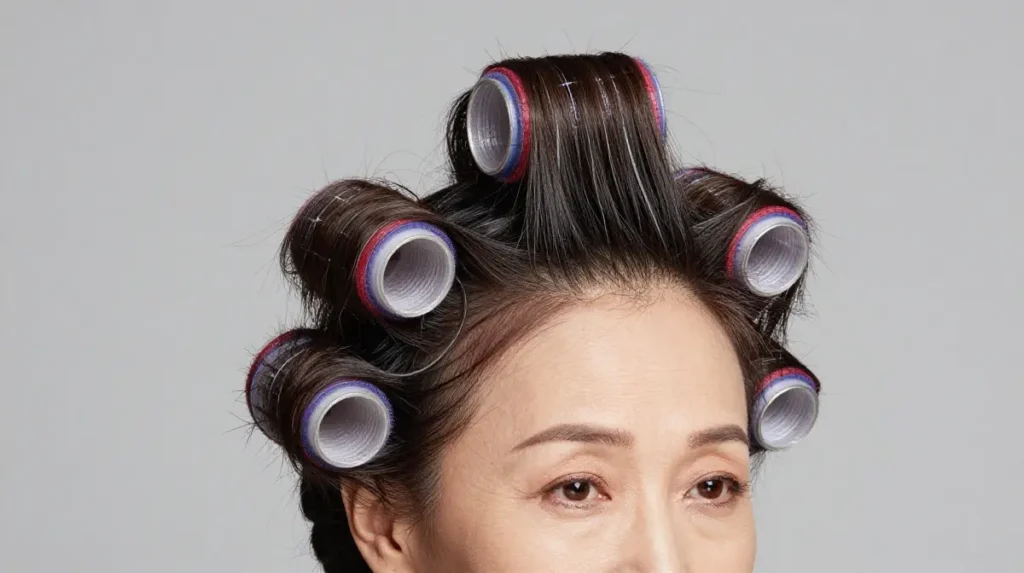
Creating deliberate and targeted volume at the crown of the head is the single most important and practically impactful styling principle available to 60-year-old women with fine hair, because it addresses the most visible and emotionally significant manifestation of fine aging hair which is the flat, sparse, and deflated appearance at the top of the head that makes many women feel most self-conscious about their hair’s visible thinning. The crown volume technique works through a combination of the right cut, which should include shorter and more aggressively textured layers specifically through the crown and top sections to create a lifting foundation, and the right styling approach, which involves applying a root-lifting spray directly to the damp crown before blow-drying in an upward direction with a round brush to set the lift permanently into position as the hair dries.
Velcro rollers placed at the crown while the rest of the hair is styled and then removed just before leaving the house is one of the most consistently effective and underused techniques for maintaining crown volume in fine hair throughout the entire day without any heat styling rework required.
Soft Waves for Fine Hair at 60
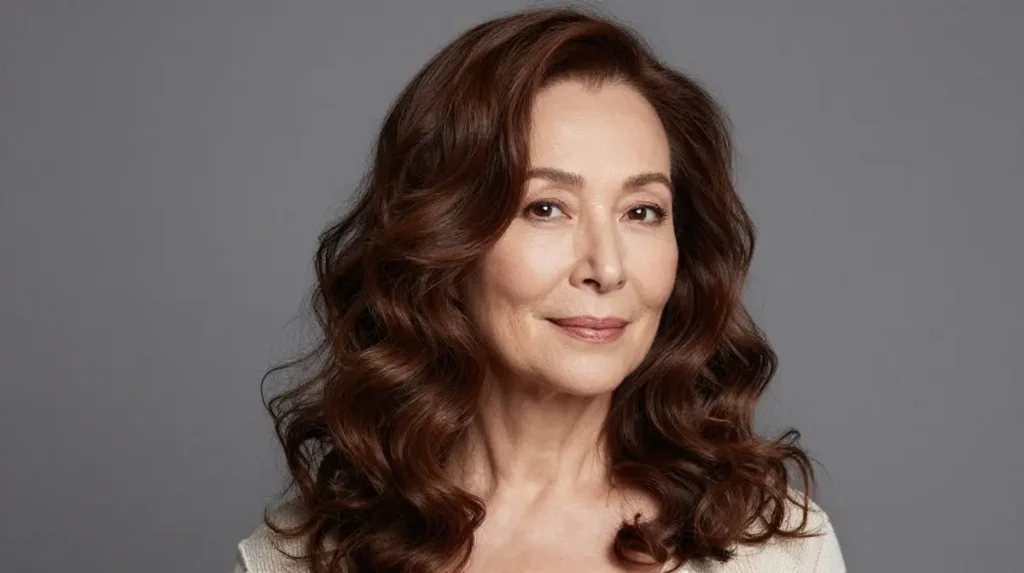
Soft waves added to any short or medium hairstyle for 60-year-old women with fine hair create one of the most immediately effective and visually impactful volume illusions available through styling rather than through the haircut structure alone, because the wave pattern lifts individual sections of hair away from the scalp and creates a three-dimensional surface that makes the overall hair appear considerably fuller and more abundant than its actual density would suggest in its natural flat and straight resting position. The waves create a dimensional surface across the entire hairstyle that makes the hair appear to have internal complexity and genuine body that fine hair at rest simply does not possess, which is why wave styling is one of the most consistent recommendations from hairstylists who work specifically with fine and thinning mature hair.
A medium-barrel curling iron or a large-barrel wand used on sections of approximately one inch in width creates the most natural and flattering wave pattern for fine hair at 60, particularly when each formed curl is immediately pinned to cool completely before being released and gently tousled with the fingers. A lightweight volumizing spray applied before curling and a flexible hold spray applied as a finish maintains the wave shape without creating the product heaviness that collapses fine hair.
Wispy Bangs for Fine Hair at 60
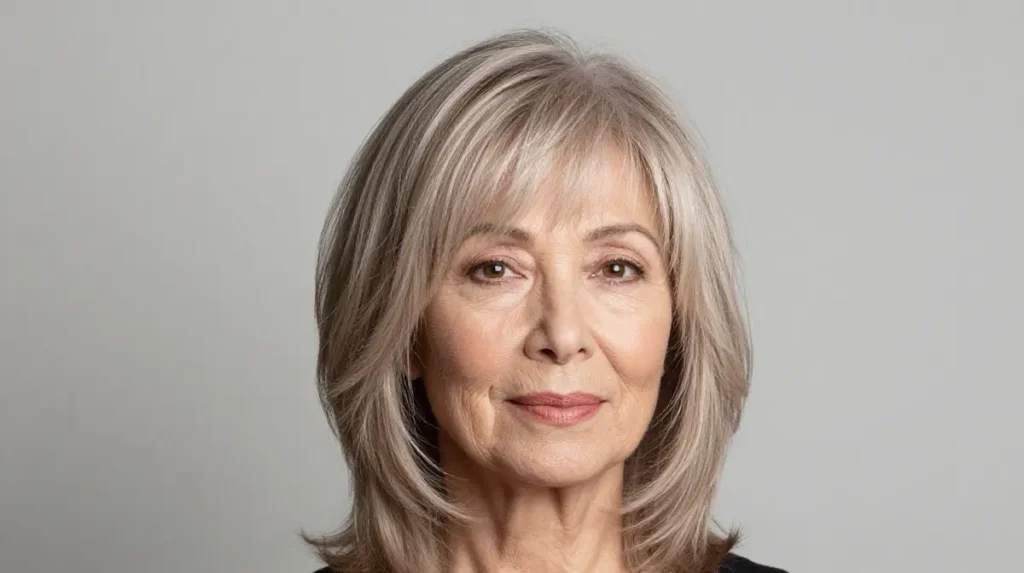
Wispy bangs are a specifically gentle and age-appropriate fringe option for 60-year-old women with fine hair that works with the limited hair density available rather than requiring the solid and thick bang section that fine hair at 60 often simply cannot produce convincingly or maintain comfortably between salon visits. The wispy bang is cut with deliberately fine and light ends that spread softly across the forehead without creating the heavy horizontal bar of a blunt fringe, instead creating a delicate and slightly textured fringe that suits mature features by softening the forehead and brow area without covering the face or creating an overly structured appearance that aged, fine hair cannot hold throughout the day.
This type of bang also covers any visible thinning at the frontal hairline that many 60-year-old women experience as one of the first and most visible signs of hormonal hair loss, creating a flattering and practical solution to one of the most common and emotionally distressing aspects of fine aging hair. A small amount of light hold pomade or styling cream worked through the dry wispy bang section after the overall blow-dry keeps it sitting softly in position throughout the day.
Gray Blending for Fine Hair at 60
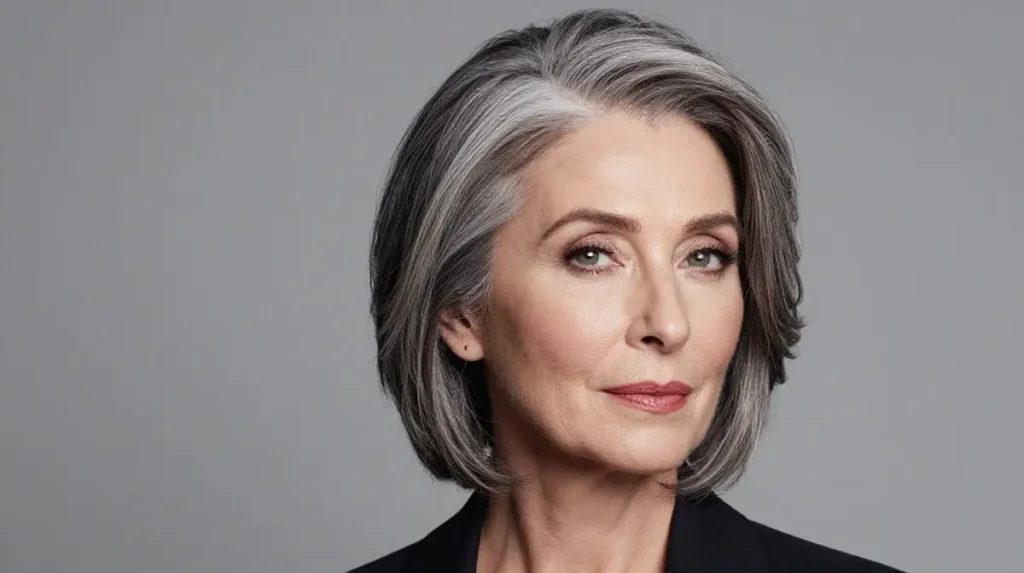
Gray blending applied to fine hair at 60 is one of the most effective and practically smart approaches to hair color available for women at this stage of life because it works with the natural gray that is appearing in the hair rather than fighting against it with heavy all-over color that requires constant and damaging root touchup services that progressively weaken already fragile fine strands. The gray blending technique uses highlights, lowlights, or balayage in tones that complement the natural gray to create a dimensional and multi-tonal result that makes the fine hair appear more textured and abundant than a flat single-tone color can achieve.
When lighter and darker tones alternate through fine hair, the eye perceives depth and tonal variation between them that translates directly into the impression of thicker and more dimensional hair. A blue or purple-toned toning shampoo used once or twice weekly neutralizes any unwanted yellow or brassy tones that develop in blended gray hair, keeping the color looking intentional, cool, and beautifully silver throughout the weeks between salon visits.
Balayage Highlights for Fine Hair at 60
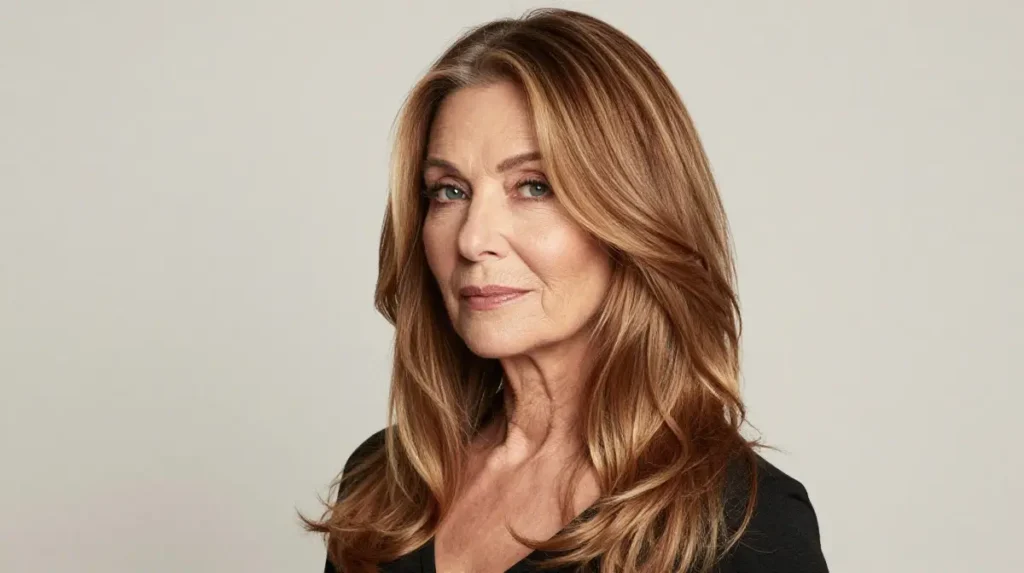
Balayage highlights applied to fine hair for 60-year-old women represent one of the most multitasking and practically rewarding salon investments available because the technique simultaneously creates the dimensional color effect that makes fine hair appear richer and more textured and reduces the frequency of salon visits required for color maintenance compared to traditional root touchup services. The freehand painting technique of balayage places lighter color through the mid-lengths and ends of the fine hair in a way that creates a natural sun-kissed dimensional effect where the lighter color sits specifically in the areas that catch the most light, creating the visual impression of depth and movement within the hair that flat single-tone color cannot produce.
Face-framing balayage highlights placed specifically in the sections closest to the face of a 60-year-old woman with fine hair create an immediate brightening effect around the hairline and temples, which is often where fine hair thinning is most visible, effectively disguising the areas of lowest density by drawing brightness and light toward them. A color-protecting shampoo and a weekly deep conditioning treatment maintain the health and vibrancy of balayage-colored fine hair between salon appointments.
Short Shag for Fine Hair at 60
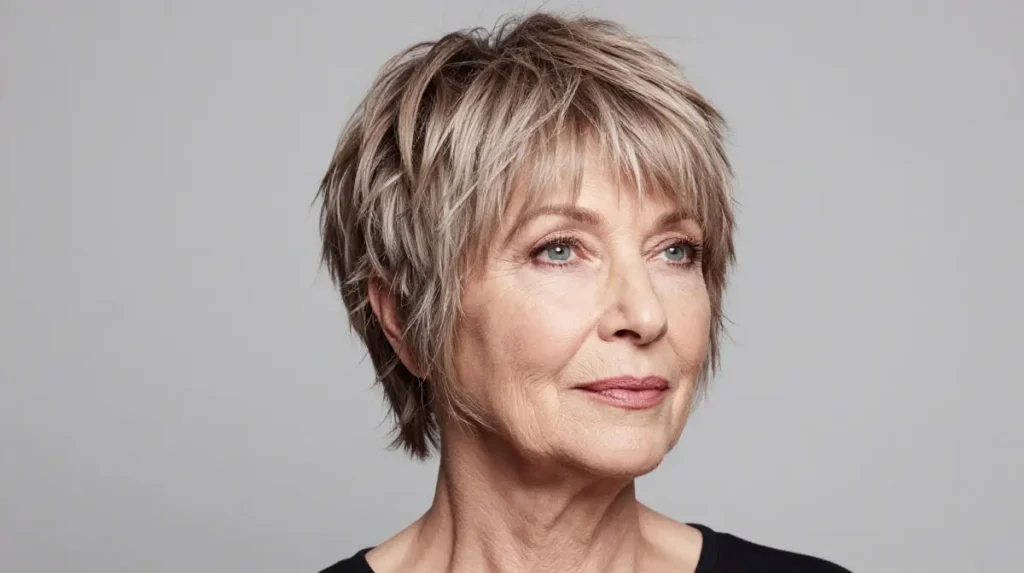
The short shag adapted for 60-year-old women with fine hair takes the heavy layering principle of the classic shag and applies it with a specifically lighter and more considered touch that creates texture and movement without overwhelming fine strands with excessive cutting that would remove the density the hair cannot afford to lose at this stage of life. The fine hair version of the short shag uses strategic point cutting and light razoring at the ends to create a textured and slightly choppy finish through the mid-lengths, paired with face-framing curtain bangs that add the most beneficial layering element closest to the face where the brightening effect of shorter sections is most flattering for mature features.
The overall result is a hairstyle that has the visual character and movement of a shag without the aggressive thinning that a full salon shag treatment would apply to already limited hair density. A sea salt spray or a very light texturizing mousse worked through slightly damp hair before air-drying creates the shag’s signature lived-in texture with absolutely zero heat required.
Volumizing Blowout for Fine Hair at 60
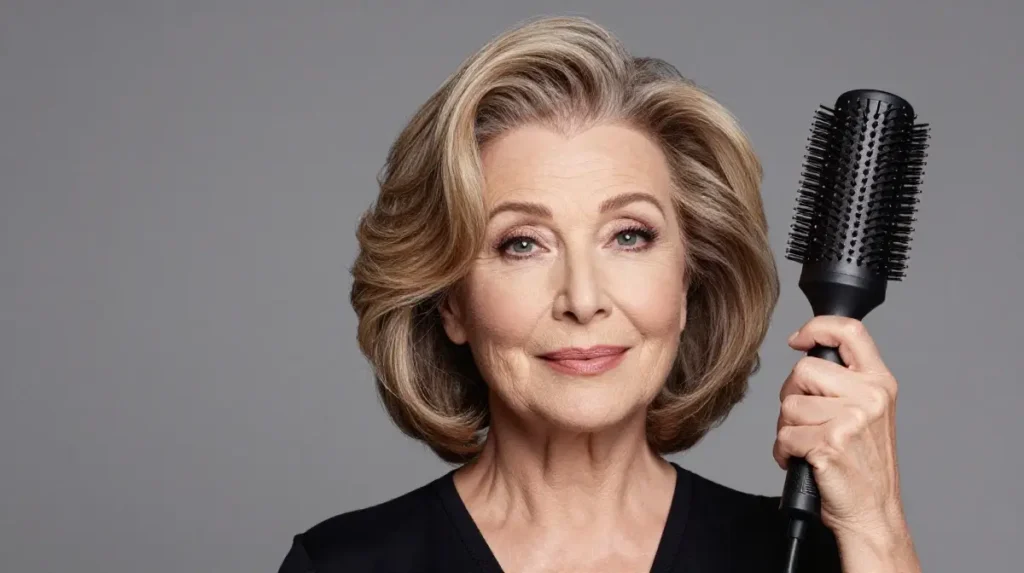
A volumizing blowout applied to any short or medium hairstyle for 60-year-old women with fine hair is the single most immediately transformative styling approach available, creating a full, rounded, and genuinely impressive result that lifts the entire face and gives the hair a healthy and abundant quality that is deeply satisfying after years of struggling with flat and lifeless fine hair styling. The blowout technique involves blow-drying the hair in sections using a medium to large round brush, lifting each section upward at the roots and rolling it smoothly outward or inward as it dries to create simultaneous volume at the roots and smooth direction through the mid-lengths and ends.
A volumizing mousse applied generously to the roots of thoroughly damp hair before blow-drying is the single most important product choice for supporting a voluminous blowout result on fine aging hair because it gives individual strands the coating of body-building ingredient they need to stand away from the scalp with genuine fullness rather than collapsing flat as soon as the blow-dryer is switched off. The blowout result typically lasts two to three days with proper nighttime care using a silk pillowcase.
Razor Cut Layers for Fine Hair at 60
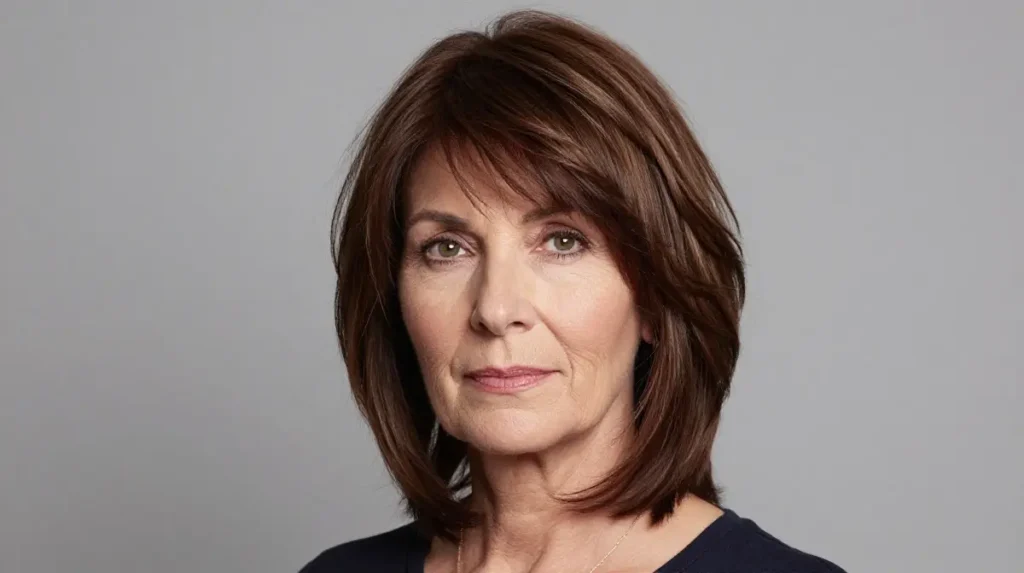
The razor cut is one of the most technically specific and genuinely effective cutting approaches for 60-year-old women with fine hair because the razor creates a completely different type of layer end from what scissors produce, resulting in a softer, more tapered, and infinitely lighter finish that makes fine hair appear textured and dimensional without any of the heaviness that scissor-cut ends can sometimes introduce even when the intention is to create a light and airy result. The razor-cut layer ends are inherently wispy and feathered in their quality, which is precisely the type of finish that fine aging hair needs to appear fuller because the tapered ends catch the light from multiple angles and create the visual complexity that solid and blunt ends simply cannot generate regardless of the overall shape of the cut.
A skilled hairstylist who uses a razor confidently and understands how to adapt the pressure and angle to suit fine hair is essential for achieving the best possible razor-cut layered result because incorrect razor technique on fine hair can create stringy and weak-looking ends rather than the intended soft and feathered ones. This cutting approach works beautifully on straight and slightly wavy fine hair at every length from a short bob to a medium lob.
Side Part with Volume for Fine Hair at 60
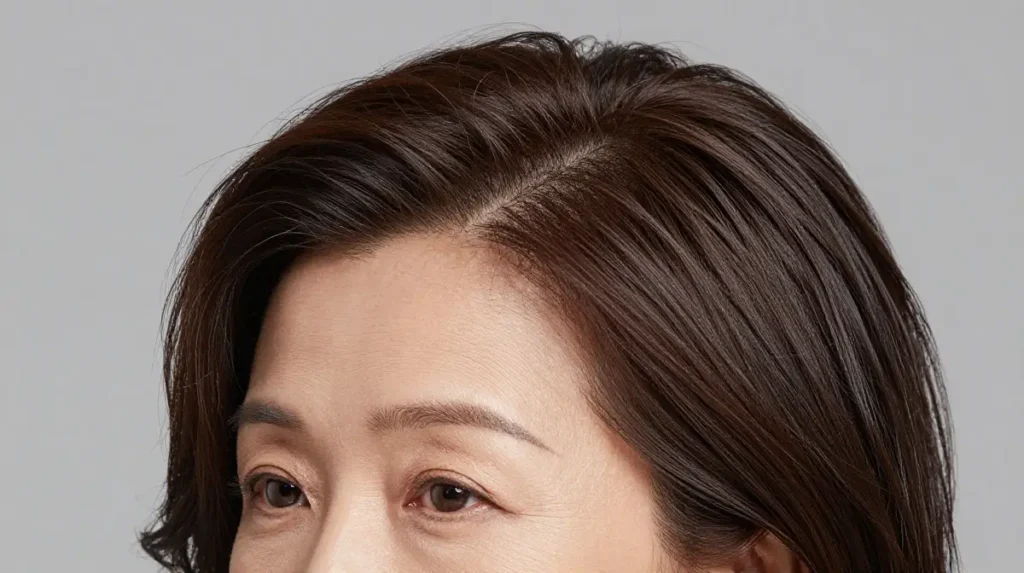
A deep side part used within any hairstyle for 60-year-old women with fine hair is one of the most immediately effective and genuinely effortless techniques for creating the appearance of greater hair volume and density without any additional product or heat styling commitment because the side part creates an unequal distribution of hair mass across the two sides of the head that generates a visual sense of hair abundance on the side where more hair accumulates. The side part also helps conceal thinning at the natural part line, which is one of the most emotionally distressing and visually apparent manifestations of diffuse fine hair thinning for many women over 60, by moving the parting away from its established position to a fresh area where the scalp is less visibly exposed.
Alternating the part position between styling sessions prevents the development of a deep groove along a fixed parting line that can actually make thinning more visible over time by consistently exposing the same scalp area repeatedly. A root-lifting spray applied directly at the parting and crown before blow-drying sets the volume in position most effectively for fine aging hair.
Hot Rollers and Velcro Rollers for Fine Hair at 60
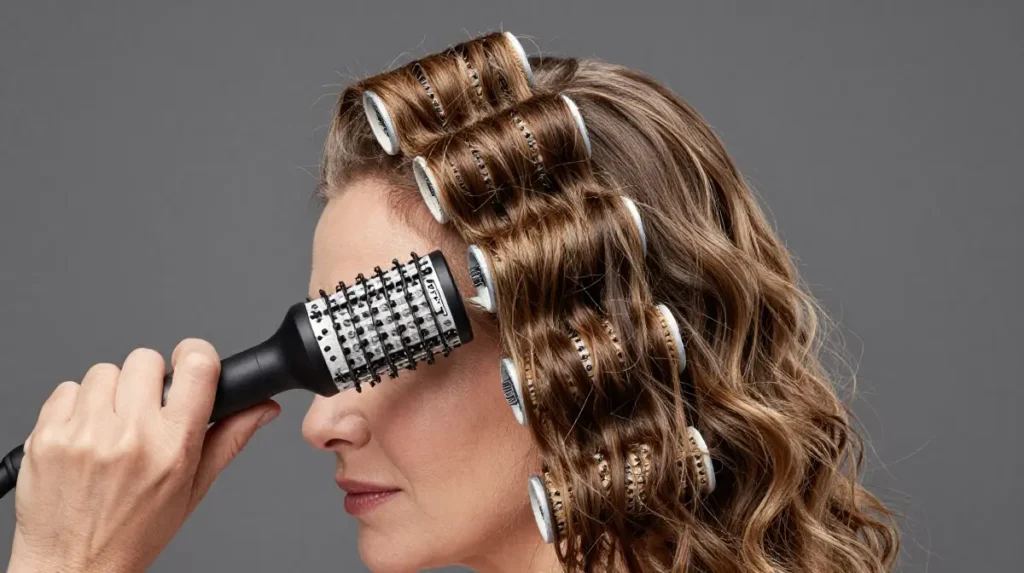
Hot rollers and velcro rollers are two of the most underused and genuinely effective volumizing tools available for 60-year-old women with fine hair because they create a sustained heat or tension set on the hair shaft that generates a wave or curl pattern with significantly more volume and staying power than the same wave created with a curling iron alone, particularly for fine hair that tends to lose styling quickly due to its reduced structural integrity compared to younger or thicker hair.
Hot rollers used on freshly blow-dried fine hair create a wave pattern that sets deeply into the hair shaft because the heat from the roller maintains the styling temperature at the section for several minutes while the roller is in place, producing a volume and body result that lasts considerably longer throughout the day than a quickly formed curling iron wave on fine hair. Velcro rollers placed specifically at the crown and top sections of the hair while the rest is styled with a blow-dryer create targeted crown volume that is the single most beneficial volumizing effect available for 60-year-old women with fine thinning hair at the top of the head.
Fine Hair Color Tips for Women at 60
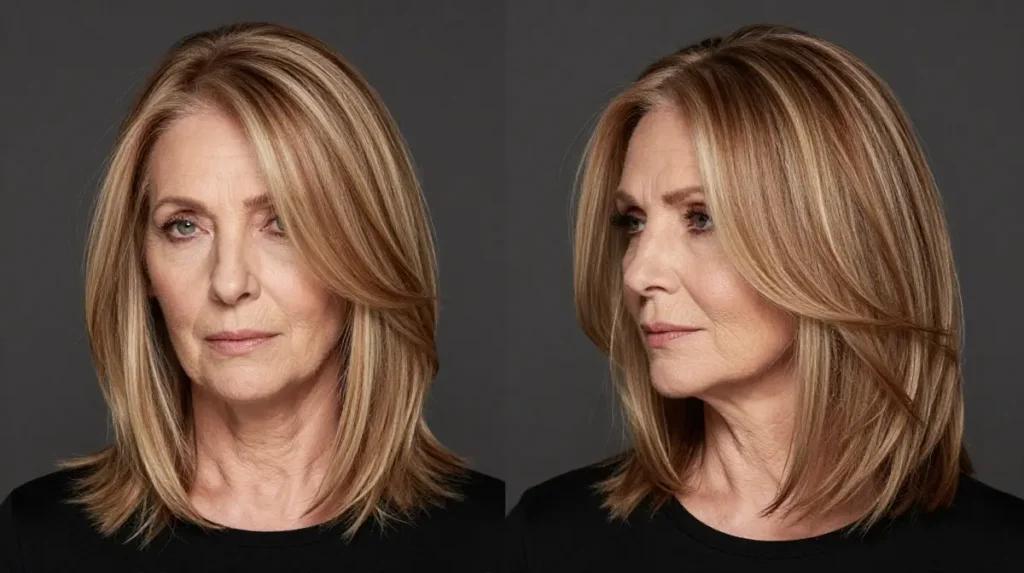
Strategic color choices for 60-year-old women with fine hair can significantly enhance the visual impression of volume and hair density by creating tonal variation within the hair that makes individual sections appear more distinct and three-dimensional than a flat single-tone color can ever achieve on its own, regardless of how good the haircut underneath it might be. Lighter hair colors generally create a more voluminous appearance in fine aging hair because they reduce the visual contrast between the hair and the scalp, making the scalp less visible through the fine strands and creating an impression of greater overall hair density.
Face-framing highlights placed in the sections closest to the face are particularly effective for fine hair at 60 because they create brightness and light around the hairline and temples, which is often where thinning is most visible, effectively drawing positive attention to the face rather than allowing the eye to focus on the sparseness of the hair at its most visible boundaries. Avoiding very dark all-over color on fine aging hair is a consistently recommended principle because dark color creates maximum contrast between the hair and the scalp, making every area of thinning and scalp visibility far more obvious.
Product and Styling Tips for Fine Hair at 60
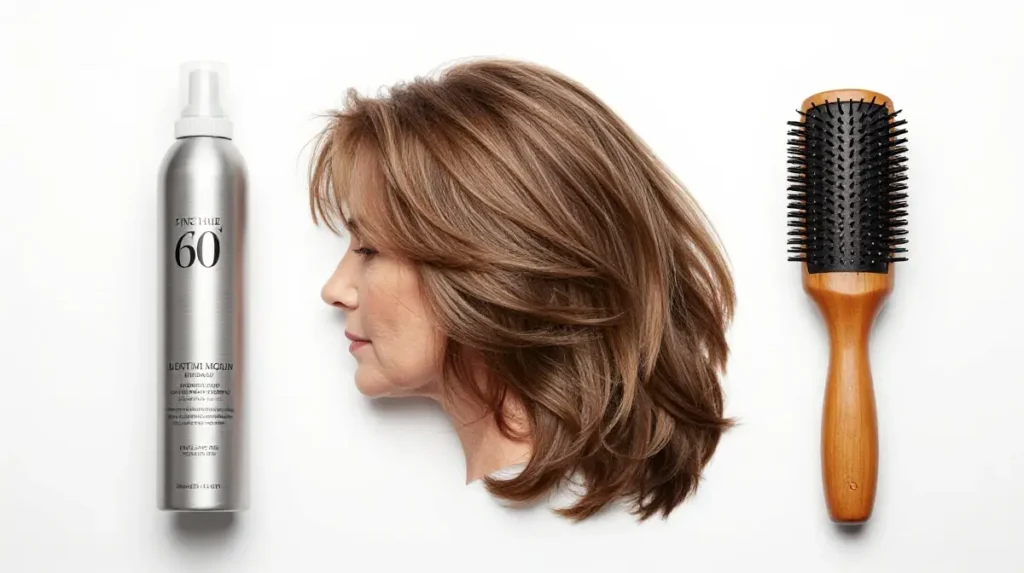
The most important product and styling principles for 60-year-old women with fine hair are built around two consistent and practically essential rules that apply regardless of the specific hairstyle being worn and the individual hair density of the person wearing it. Never apply heavy or oil-based products to fine aging hair because they coat individual strands and physically weigh each one down, making the overall hair appear flatter, sparser, and more limp than it was before any product was applied. A lightweight volumizing mousse applied to the roots before blow-drying is the single most practically effective product intervention for fine hair at 60, providing the foundational lift that the blow-dry technique then amplifies into visible and lasting crown volume throughout the day.
Dry shampoo applied to the roots on non-wash days is the second most impactful daily habit for fine hair at 60 because it absorbs the oil that accumulates at the scalp and makes fine hair appear greasier and flatter than it actually is, while simultaneously adding a degree of grip and texture to the individual strands that gives them more apparent body and volume throughout the day without any additional styling.
Hair Care Routine for Fine Hair at 60
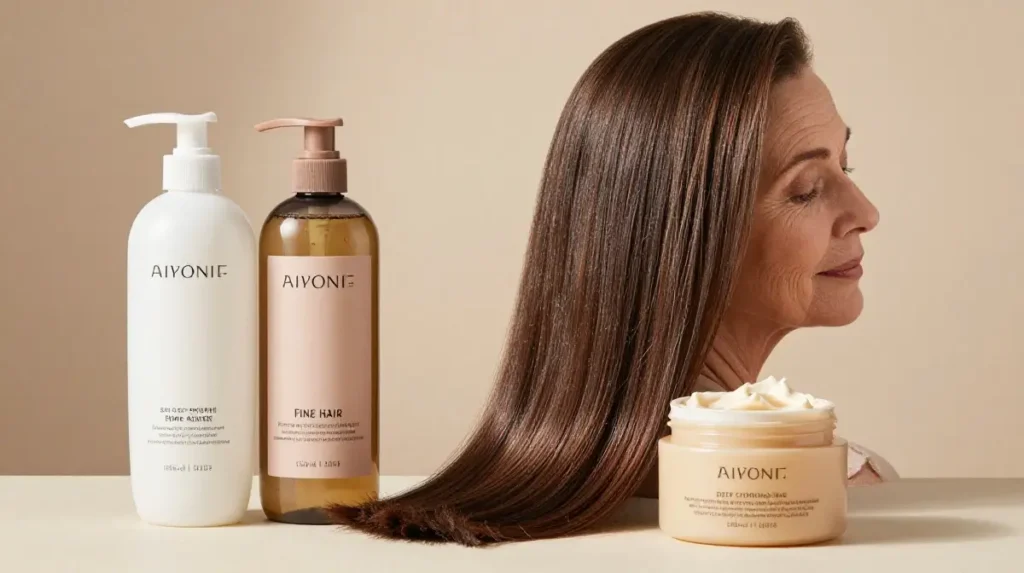
Maintaining fine hair in genuinely good condition as a 60-year-old woman requires a consistent and thoughtful care routine that addresses the specific fragility, dryness, and reduced elasticity of mature fine hair rather than simply applying the same product and care approach that worked in earlier decades when the hair had fundamentally different structural needs. A moisturizing and sulfate-free shampoo used two to three times per week cleanses the scalp effectively without stripping the natural oils that become increasingly important for maintaining the health and manageability of fine aging hair as the scalp’s own oil production naturally decreases with age.
A weekly deep conditioning mask applied only through the mid-lengths and ends, carefully avoiding the roots where product accumulation would simply flatten fine hair further, provides the intensive moisture that mature fine hair requires to maintain its health and resistance to breakage between salon visits. Heat protectant spray applied before every blow-dry session is non-negotiable for 60-year-old women with fine hair because the cumulative heat damage from regular heat styling on fine aging hair progressively reduces the already limited strand diameter and accelerates the overall thinning process that women at this stage are already working to manage as gracefully as possible.
Quick Reference Table: Best Hairstyles for 60 Year Old Women with Fine Hair
| Hairstyle | Best For | Key Technique | Product Recommendation | Salon Frequency |
|---|---|---|---|---|
| Textured Pixie | Very fine or thinning hair | Crown layering, wispy ends | Matte clay or texture paste | Every 4 to 5 weeks |
| Blunt Bob | Fine straight to wavy hair | Single-length blunt cut | Volumizing mousse, round brush | Every 5 to 6 weeks |
| Stacked Angled Bob | Crown thinning, flat nape | Stacking and graduation technique | Volumizing mousse, flexible spray | Every 5 to 6 weeks |
| Layered Lob | Prefers longer fine hair | Face-framing layers, root lift | Mousse, root-lifting spray | Every 6 to 7 weeks |
| Bixie Cut | All fine hair types | Textured layering, face framing | Sea salt spray or mousse | Every 5 to 6 weeks |
| Balayage Highlights | Color and volume combined | Balayage painting, face-framing | Color-protecting shampoo, gloss | Color every 3 to 5 months |
| Razor Cut Layers | Fine straight to wavy hair | Razor sliding, feathered ends | Root-lifting spray, sea salt spray | Every 5 to 6 weeks |
Conclusion
Fine hair at 60 is a common and entirely manageable hair situation when the right hairstyle, the right color approach, and the right product and styling routine are chosen with genuine understanding of what fine aging hair needs to look its most beautiful and confident. The 22 hairstyle ideas in this guide cover every concern that 60-year-old women with fine hair face from visible crown thinning and flat lifeless texture to the desire for low-maintenance styling and age-appropriate face-framing.
The most important step is finding a hairstylist who genuinely understands fine aging hair and knows which specific cutting techniques, color approaches, and styling strategies will produce the most consistently beautiful and volumizing results for your individual hair density, texture, and face shape. Your hair at 60 is still capable of looking genuinely full, vibrant, and beautifully styled with the right guidance and the right cut behind it.
You can may also like this: 22 Low Maintenance Short Haircuts for Round Faces Ideas
FAQs
What hairstyle is best for a 60-year-old woman with fine hair
The textured pixie, the stacked angled bob, and the bixie cut are consistently the most effective hairstyles for 60-year-old women with fine hair because each uses specific cutting techniques that create maximum volume and apparent fullness from limited hair density.
Should 60-year-old women with fine hair avoid long hair
Generally yes. Long fine hair tends to pull itself flat under its own weight and makes thinning most visibly apparent. A layered lob at collarbone length is the most flattering longer option for fine hair at 60 because the layers prevent the weight from eliminating all apparent volume.
What products are best for fine hair at 60
A volumizing mousse applied to the roots before blow-drying, a root-lifting spray targeted at the crown, and a dry shampoo used between wash days are the three most practically effective products for making fine hair at 60 appear consistently fuller and more voluminous throughout the day.
Do highlights help fine hair look fuller at 60
Yes significantly. Balayage and face-framing highlights create tonal contrast within the hair that makes it appear more dimensional and fuller than a flat single-tone color. The contrast between lighter and darker sections creates the visual impression of depth and volume that fine hair lacks on its own.
How often should a 60-year-old woman with fine hair get a trim
Every five to six weeks is ideal for maintaining a hairstyle on fine aging hair at 60. Regular trims prevent the ends from splitting and becoming wispy in an unintentional way, keep the volumizing structure of the cut at its most effective, and ensure the overall style continues to look intentional and well-maintained.
1 Comment