Introduction
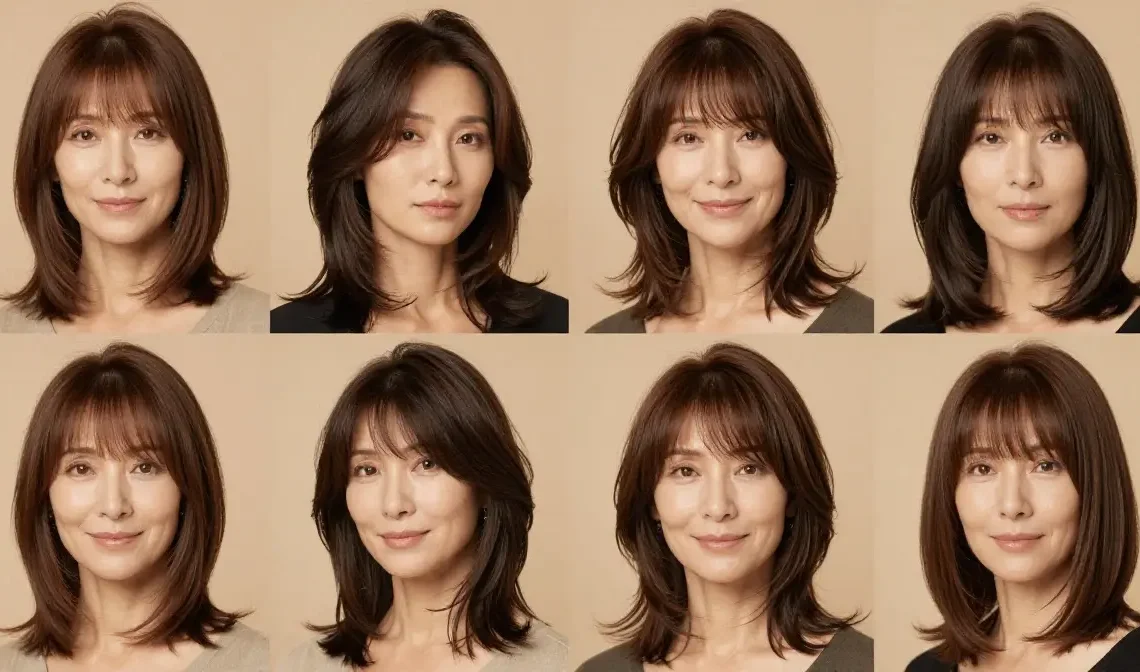
Thin hair after 50 is one of the most common and genuinely frustrating hair concerns that women face, and it deserves honest and practical advice rather than vague reassurances that everything will be fine with the right shampoo. Hormonal changes around and after menopause significantly reduce hair density, strand diameter, and the natural oils that give hair its body and shine, leaving many women with hair that looks flat in the morning regardless of how much effort goes into styling it. The good news is that layered hairstyles are specifically and remarkably effective at addressing every one of these concerns simultaneously.
The right layers remove weight from the ends, allow the remaining hair to sit with more lift and body, create visual dimension that makes the hair appear fuller than it actually is, and give the overall hairstyle a sense of movement that makes thin hair look genuinely alive and well-managed. This guide brings together 22 of the most flattering and practically effective layered hairstyles for women over 50 with thin hair so you can find the version that works best for your specific hair situation, face shape, and personal style.
Feathered Layered Bob for Thin Hair
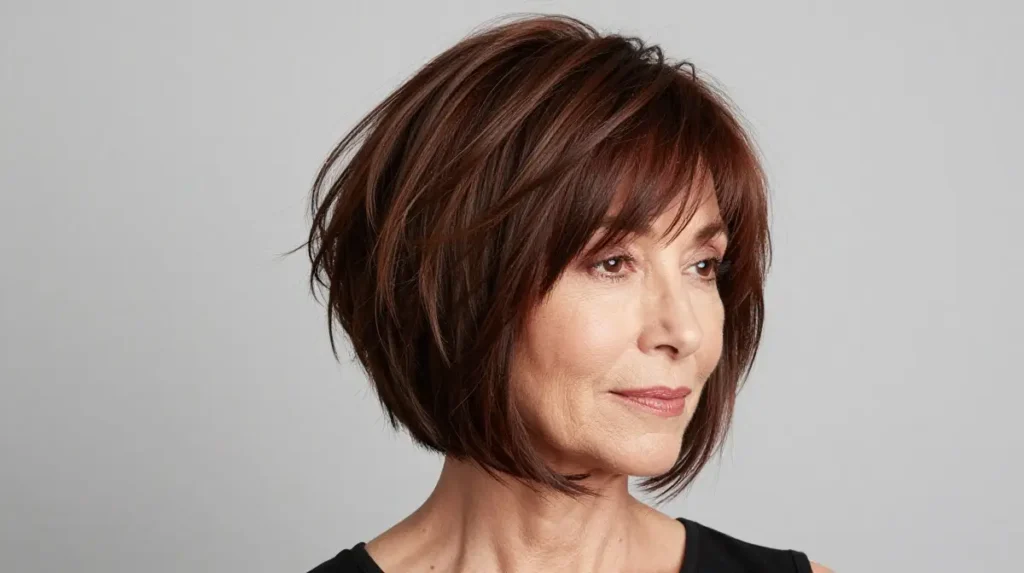
The feathered layered bob is consistently one of the most recommended hairstyles for women over 50 with thin hair because the feathering technique addresses the specific challenges of fine aging hair more directly and effectively than almost any other cutting approach available. Feathering involves cutting the ends of the hair at a soft, delicate angle using either a razor or a scissor point-cutting technique, creating a wispy and airy finish that prevents the bob from sitting heavily and instead gives the ends a light and textured quality that makes the hair appear considerably fuller throughout the entire length.
The feathered finish also adds a degree of movement to thin hair that a blunt-cut bob simply cannot achieve, because the angled ends catch the light differently at different angles and create the visual impression of dimensional and textured hair. A blow-dry with a medium round brush finishing each section slightly outward or upward shows the feathered layers at their most voluminous and polished best. This is one of the most reliably transformative layered hairstyle choices available for women over 50 with fine or thinning hair.
Textured Crown Layers for Volume
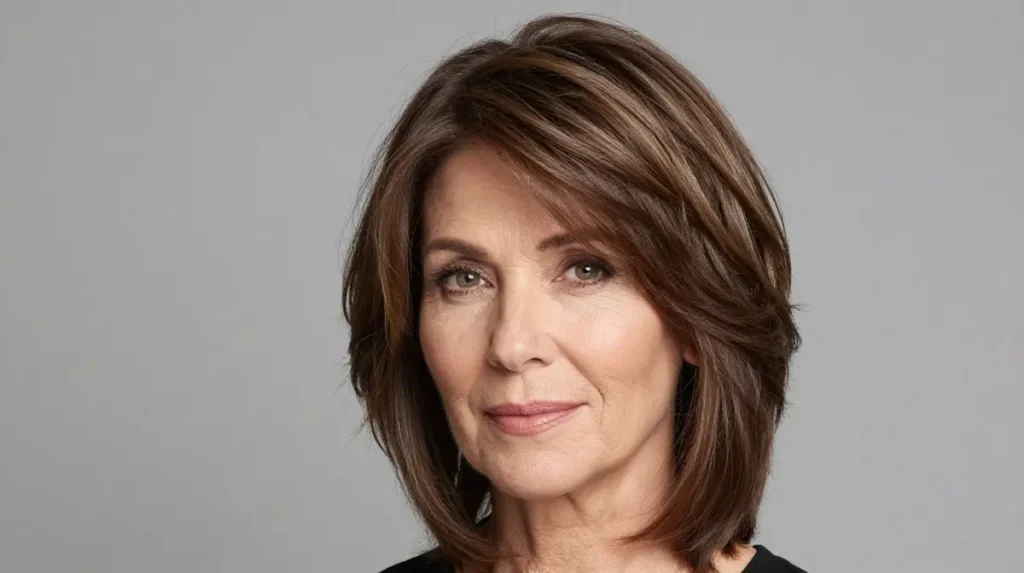
Focusing layering specifically through the crown area is one of the most technically targeted approaches to creating volume in exactly the zone where women over 50 most commonly experience the first and most visible signs of hair thinning. When shorter and more aggressively textured layers are cut specifically through the crown and top sections of the hair, they create a foundation of lift and body that gives the entire hairstyle a fuller and more youthful appearance from both the front and the top simultaneously.
This technique works through a combination of vertical cutting during the session, root-lifting product application, and blow-drying technique that directs warm air upward at the roots to set the lift before the outer layers settle into their final resting position. A root-lifting spray applied generously to the damp crown before blow-drying is the most effective single product intervention for maintaining the textured crown volume between salon visits. Women who have struggled with a visibly thin or flat crown area consistently report the most significant and satisfying improvement from this specific layering approach.
Short Wispy Layered Cut for Fine Hair
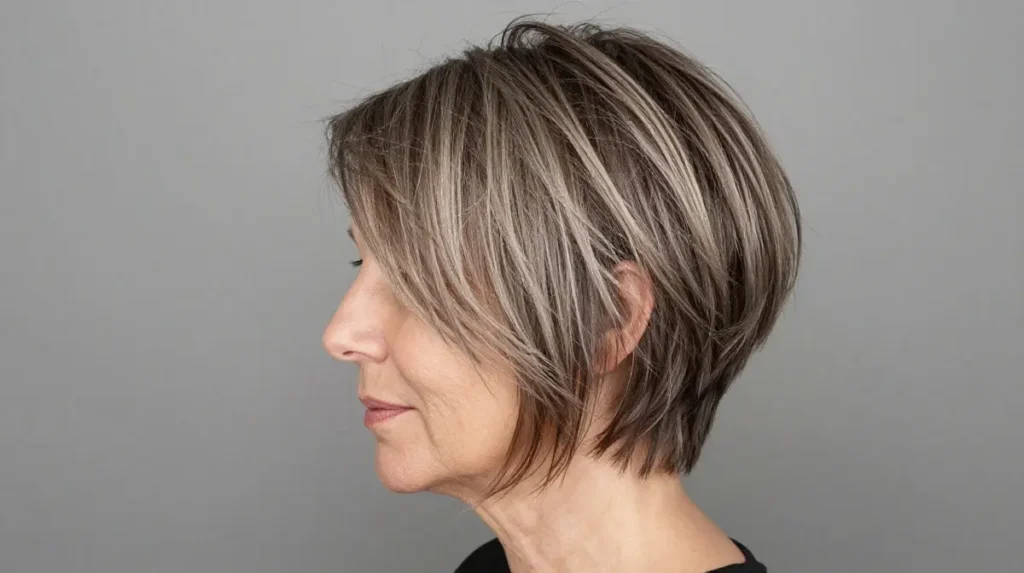
A short wispy layered cut for women over 50 with thin hair keeps the overall hair length at a manageable and lightweight level while using fine, soft layers throughout to create the maximum possible visual volume and texture from limited hair density. The wispy quality of the layers is achieved by cutting the sections with very light pressure using a razor or by using the tip of the scissors to create deliberately irregular and fine-pointed ends rather than blunt and heavy ones that would simply make the thin hair look even more sparse and flat.
Keeping the overall length short reduces the weight that causes thin hair to pull itself flat throughout the day, which is one of the most practically important reasons why shorter layered cuts consistently outperform longer ones for women dealing with significant thinning. A small amount of volumizing mousse worked through damp hair before blow-drying gives the wispy layers enough body to show their full dimensional quality. This type of cut requires visits every five to six weeks to maintain its light and intentional character.
Layered Lob for Women Over 50 with Thin Hair
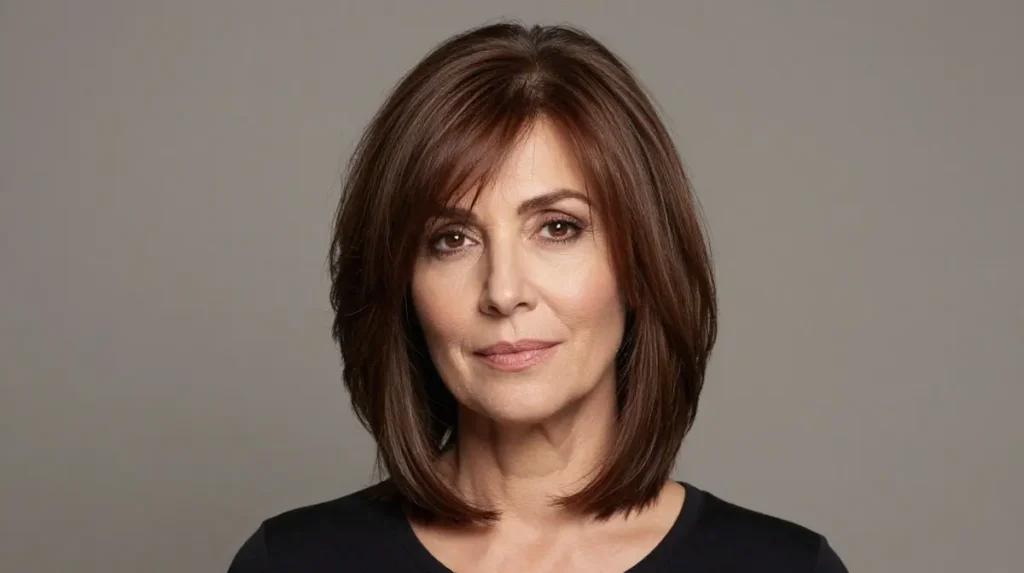
The layered lob gives women over 50 with thin hair the visual benefit of a longer style while using the specific placement of layers to prevent the additional length from creating the heaviness and flatness that longer thin hair typically struggles with when left unlayered. The lob sits between the collarbone and the shoulder, which is long enough to allow a range of styling options from loose waves to a simple half-up style, while the layers cut through the mid-lengths and ends remove the weight that would otherwise pull thin hair completely flat and rob it of any apparent volume or movement.
Face-framing layers added specifically to the sections closest to the face create an additional brightening and lifting effect around the eyes and cheekbones that adds genuine visual energy to the overall look without requiring any additional styling beyond a simple blow-dry. A volumizing mousse applied at the roots and a round brush used during the blow-dry session creates the most consistently full and polished result for thin hair at this length. The layered lob grows out gracefully and maintains its overall flattering proportions for longer between salon visits than shorter styles.
Face-Framing Layers for Thinning Hair
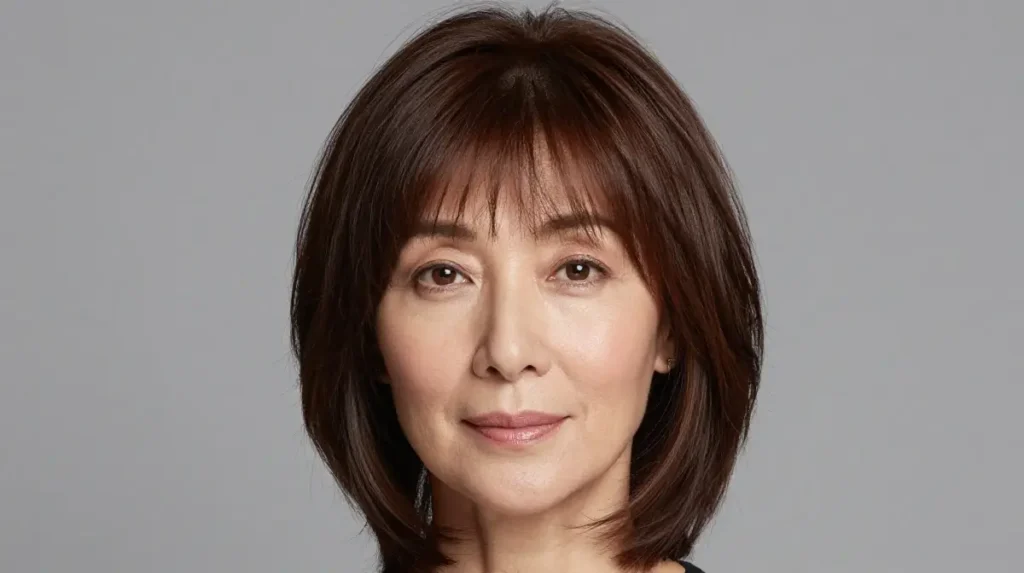
Face-framing layers are among the most impactful and practically valuable layering techniques for women over 50 with thin hair because they work directly on the area of the haircut closest to the face, creating a brightening and lifting effect that draws attention toward the eyes and cheekbones rather than toward the flatness or thinness of the hair itself. The face-framing layers are cut shorter than the rest of the hair around the face and then blend gradually into the longer sections at the sides and back, creating a gentle curtain of lighter and more textured hair that frames the face from both sides and adds a sense of dimensional movement to what might otherwise be a flat and lifeless hairline area.
This technique works with virtually any haircut length and style, from a short bob to a medium lob, and can be added to an existing cut without requiring a complete change to the overall hairstyle. The face-framing layers also add a degree of softness to mature features that is genuinely anti-aging in its visual effect, drawing the eye upward and inward rather than allowing it to settle on the lower face and jaw. A small amount of texturizing spray worked through the dry face-framing sections after styling keeps them separated and defined throughout the day.
Soft Wave Layered Bob for Thin Hair
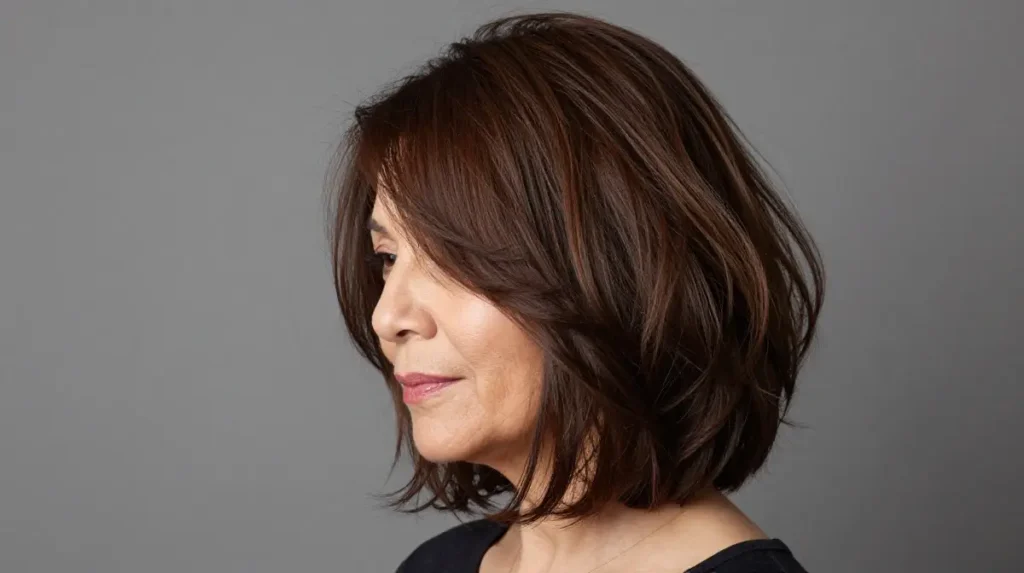
Adding soft waves to a layered bob for women over 50 with thin hair creates one of the most immediately effective volume illusions available through styling rather than cutting, because the wave pattern lifts individual sections of hair away from the head and creates a three-dimensional surface that makes the overall hair appear considerably fuller and more abundant than its actual density would suggest. The combination of the bob’s layered structure and the dimensional quality of soft waves creates a genuinely impressive volume result that photographs beautifully and holds its shape through a full day of activity when the right products are used correctly during the styling process.
A medium-barrel curling iron or a large-barrel wand used on sections of approximately one inch in width creates the most natural and relaxed wave pattern, particularly when each formed curl is immediately pinned to cool completely before being released and gently tousled with the fingers. A lightweight volumizing spray applied before curling and a flexible hold spray applied as a finish maintains the wave shape without creating stiffness that would eliminate the natural-looking softness of the waves. This styling approach transforms thin layered hair into something that appears genuinely rich and voluminous.
Layered Pixie Cut for Fine Hair Over 50
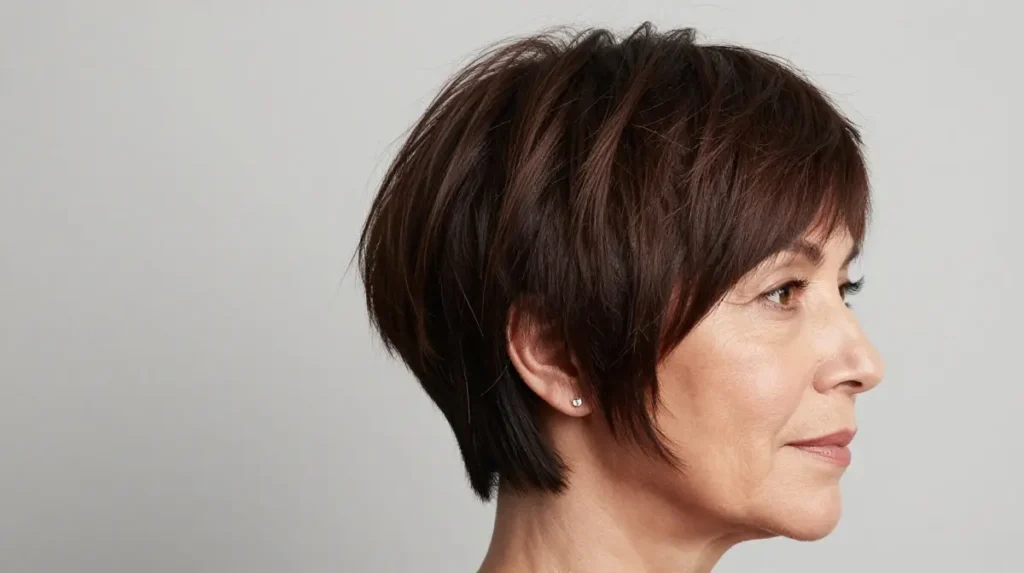
The layered pixie cut is one of the boldest and most practically effective haircut choices for women over 50 with thin hair because its very short length eliminates the heaviness that longer thin hair always struggles with and replaces it with a precise and structured silhouette that uses clever layering to create the appearance of texture and volume from whatever hair density is available. Layers cut through the top section of a pixie give it a lifted and textured crown area that reads as full and deliberately styled rather than thin and sparse, which is the most important visual distinction between a well-executed layered pixie and a poorly cut one that simply exposes the scalp.
Wispy or side-swept bangs added to the pixie frame the forehead and soften the overall appearance of the cut in a way that suits mature features very flatteringly. A tiny amount of light hold matte clay or a texture paste worked through the dry pixie sections and then shaped with the fingers gives the layered pixie its most dimensional and intentional finish. This cut requires visits every four to six weeks to maintain its precise shape and intentional character but delivers extraordinary volume results for the effort invested.
Graduated Layered Bob for Thin Hair
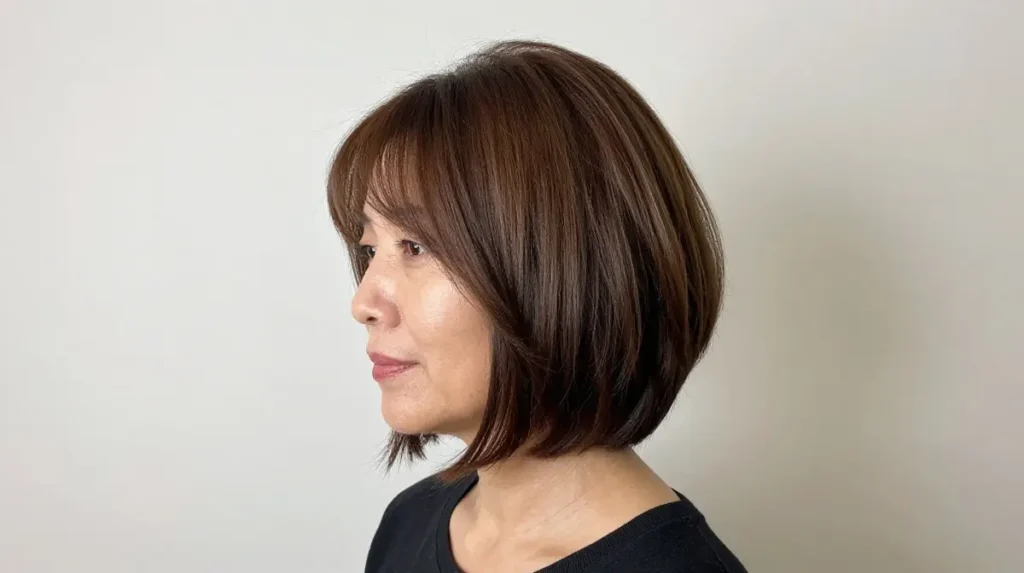
The graduated layered bob creates a specific shape where the hair length increases progressively from the shortest point at the nape of the neck to the longest point at the front, and this gradual graduation generates significant visual volume at the back of the head through the stacking of shorter layers that build upon each other to create a rounded and full-appearing shape. For women over 50 with thin hair, the graduated bob is particularly effective because the stacking at the back addresses the specific area where thin hair most commonly appears flattest and most visibly sparse, replacing the flat and deflated appearance of unlayered thin hair at the nape with a rounded and voluminous shape that reads as genuinely full regardless of the actual hair density present.
A round brush used during the blow-dry in an inward rolling motion at the back of the head sets the stacked layers into their most rounded and polished position. The graduated bob suits women with straight and gently wavy hair most consistently because the graduation’s visual precision is most clearly legible in smoother and more controlled hair textures. This cut is one of the most structurally sophisticated and volume-effective layered hairstyle choices available for thin aging hair.
Layered Shag for Women Over 50 with Thin Hair
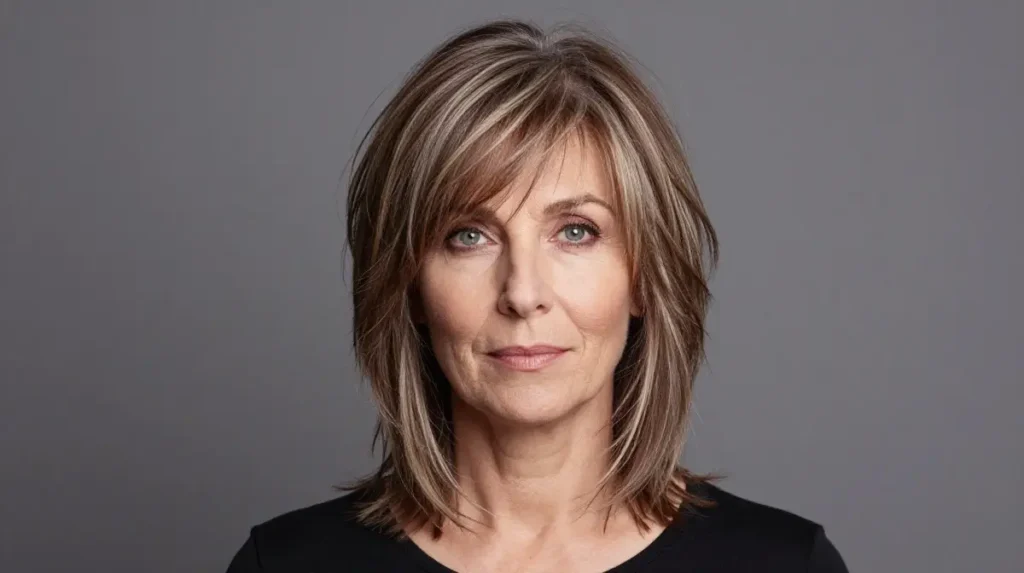
The shag haircut adapted for women over 50 with thin hair takes the heavy layering principle of the classic shag and applies it with a lighter touch that creates texture and movement without overwhelming fine strands with too much cutting that removes the density the hair cannot afford to lose. The thin hair version of the shag uses strategic point cutting and razoring at the ends to create a textured and slightly choppy finish through the mid-lengths, paired with face-framing curtain bangs or a soft fringe that adds an additional layering element closest to the face where the brightening effect of shorter sections is most beneficial for mature features.
The overall result is a hairstyle that has the visual character and movement of a shag without the aggressive thinning that a full shag treatment would apply to already limited hair density. A sea salt spray or a light texturizing mousse worked through slightly damp hair before air-drying or diffusing captures the shag’s signature lived-in texture most effectively for thin hair. This style works particularly well for women with naturally wavy thin hair where the wave pattern provides additional texture that the layering can amplify rather than having to create from scratch.
Curtain Bangs with Layers for Thin Hair
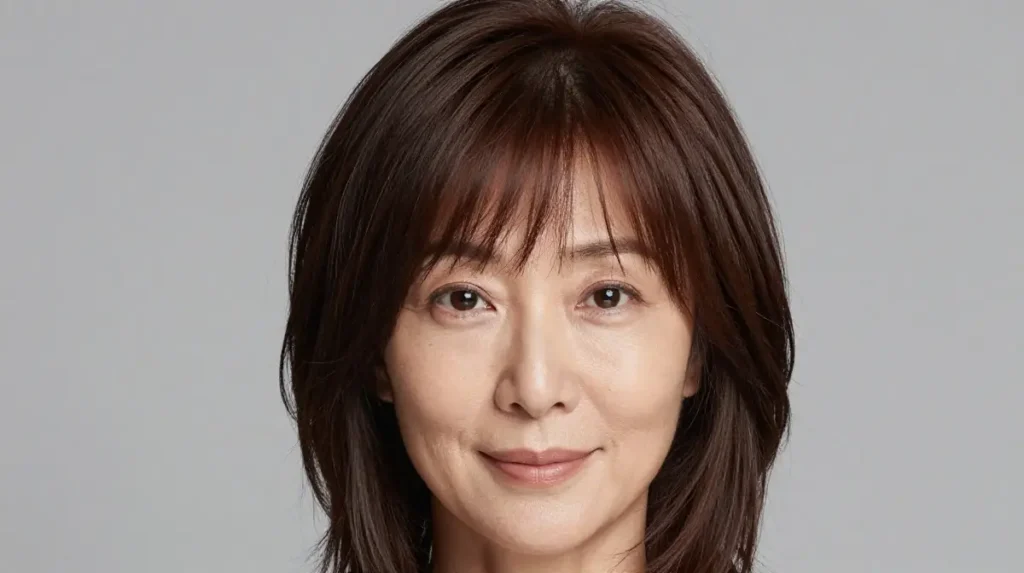
Curtain bangs added to a layered hairstyle for women over 50 with thin hair create an immediately flattering and face-brightening effect that addresses both the thinning concerns of the hair and the softening concerns of mature facial features simultaneously, making this particular combination one of the most practically effective and visually rewarding styling choices available for this specific demographic. The curtain bang falls softly from a center or slightly off-center part toward both temples, creating a face-framing sweep of hair that covers any thinning at the hairline or temples while adding a youthful and romantic quality to the overall hairstyle composition.
This bang style is specifically recommended over a straight-across blunt fringe for women over 50 with thin hair because the blunt fringe requires a degree of hair density at the front section to sit correctly, while the curtain bang works gracefully even with limited density by spreading the available hair lightly across a wider area rather than concentrating it in a single horizontal strip. A round brush and a blow dryer used to direct the curtain bang sections gently outward toward the temples creates the most natural and flattering finish.
Layered Hairstyle with Highlights for Volume
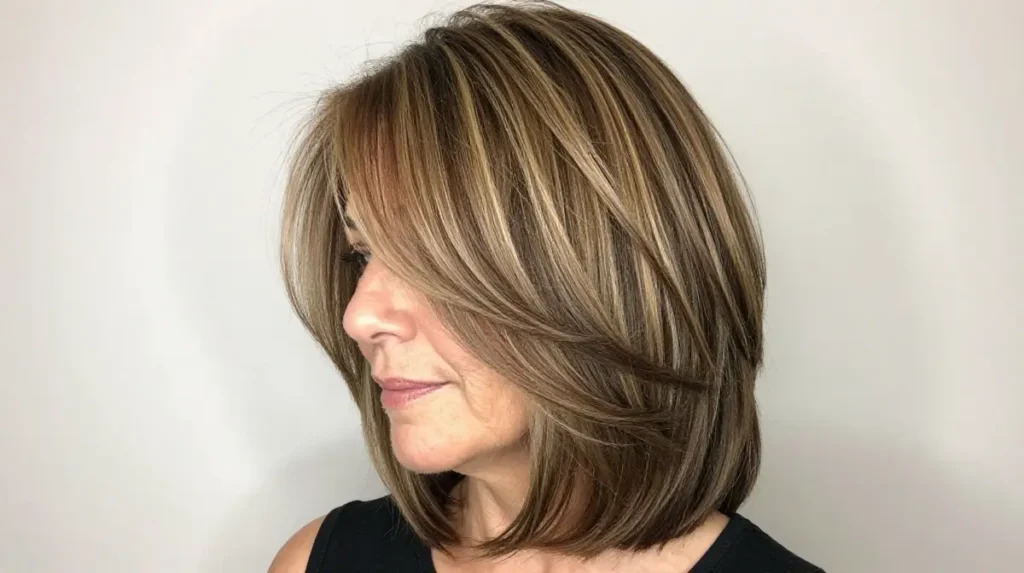
Adding strategically placed highlights to a layered hairstyle for women over 50 with thin hair creates a dimensional color effect that significantly enhances the visual impression of volume and fullness by creating tonal contrast within the hair that makes individual sections appear more distinct and three-dimensional than a flat, single-tone color can achieve. When lighter and darker tones alternate through the layers of a thin hair cut, the eye perceives depth and shadow between them that translates directly into the impression of thicker and more abundant hair, even though the actual density of the hair has not changed at all.
Face-framing highlights placed in the sections closest to the face are particularly effective for thin hair over 50 because they create brightness around the hairline and temples, which is often where thinning is most visible, effectively disguising the areas of lowest density with a strategic lightening that draws attention rather than deflecting it. Balayage or babylight highlights in shades two to three levels lighter than the base color create the most natural and age-flattering result for women at this stage of life.
Razor Cut Layered Style for Fine Hair
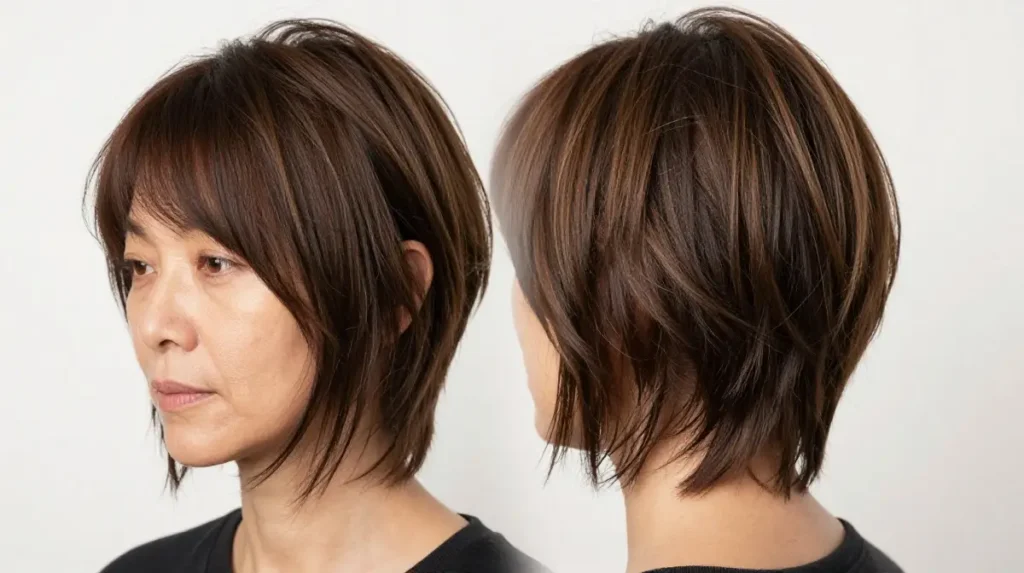
The razor cut is one of the most technically specific and genuinely effective cutting approaches for women over 50 with thin hair because the razor’s angled and sliding cut creates a completely different type of layer end from what scissors produce, resulting in a softer, more tapered, and infinitely lighter finish that makes thin hair appear textured and dimensional without any of the bluntness that scissor-cut ends can introduce. The razor-cut layer ends are inherently wispy and feathered in their quality, which is precisely the type of finish that thin hair needs to appear fuller because the tapered ends catch the light from multiple angles and create visual complexity that solid and blunt ends simply cannot generate regardless of the cut’s overall shape.
A skilled hairstylist who uses a razor confidently and understands how to adapt the pressure and angle of the cut to suit fine hair is essential for achieving the best possible razor-cut layered result because incorrect razor technique on thin hair can create stringy and weak-looking ends rather than the intended soft and feathered ones. The razor-cut layered style suits straight and slightly wavy thin hair particularly well and works beautifully at every length from a short bob to a medium lob.
Side Part Layered Style for Thinning Crown
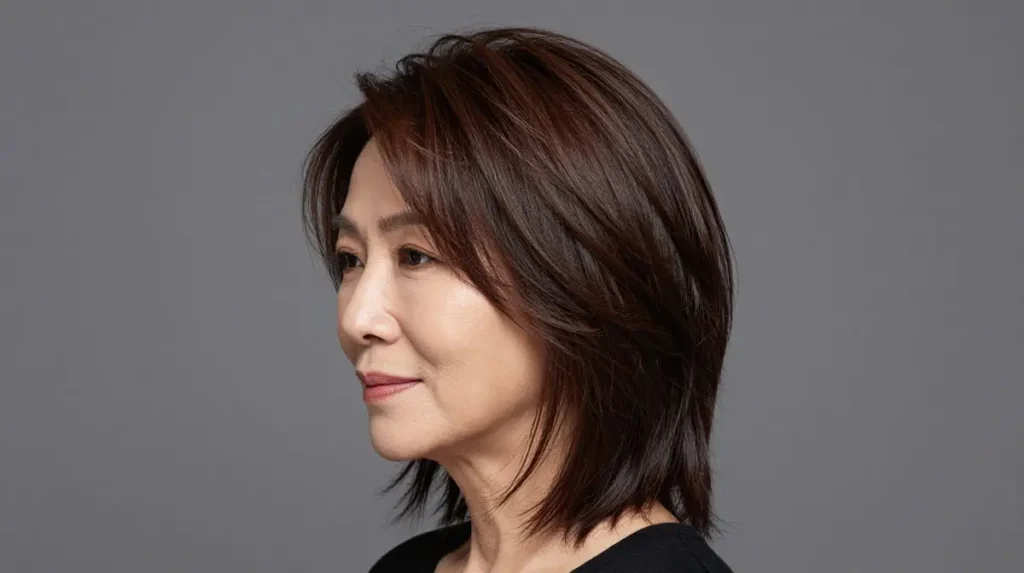
A deep side part used within a layered hairstyle is one of the most practical and immediately effective techniques for women over 50 with thin hair who experience visible thinning at the crown or along the natural part line, because the side part distributes the available hair across a wider area of the scalp rather than concentrating the parting along the same line every day where the hair is already at its thinnest. Moving the part to a side position and then layering the hair through the top section to create lift and coverage over the previously thin area creates a combination of styling strategy and cutting technique that addresses the thinning crown concern more effectively than either approach could achieve independently.
The hair on the heavier side of the side part falls naturally across the crown, providing coverage and apparent fullness while the layering below it gives the overall shape body and movement. Applying a root-lifting spray directly to the crown area before blow-drying and then using a round brush to direct the hair across the part creates the most effective and long-lasting coverage result. Alternating the part position slightly between styling sessions also prevents the hair from developing a deep groove along a fixed parting line that can make thinning more visible over time.
Low Maintenance Layered Style for Thin Hair Over 50
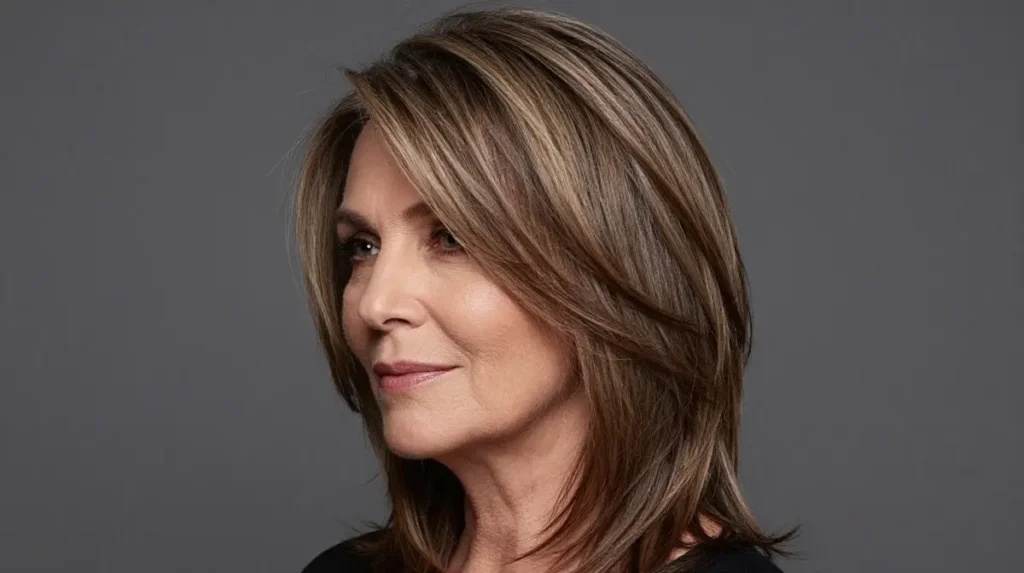
The low maintenance layered hairstyle for women over 50 with thin hair is specifically designed around the requirement that the cut works attractively without requiring extensive daily product application or elaborate heat styling techniques to look genuinely presentable and well-managed. This approach works most effectively when the hairstylist creates layers that complement the hair’s natural growth pattern, texture, and movement so that the hair falls into a flattering position as it dries without requiring constant direction or reshaping. A lightweight leave-in conditioner or a small amount of mousse worked through damp hair before air-drying defines the natural texture and adds a degree of body without introducing heaviness that would flatten fine hair throughout the day.
Dry shampoo applied to the roots on non-wash days absorbs excess oil and adds a valuable degree of texture and apparent volume that makes the low maintenance layered style look refreshed rather than unwashed on styling-free mornings. The most important investment for a genuinely low maintenance result is the quality of the cut itself, because a well-considered and precisely layered cut does the visual work that daily styling otherwise has to provide.
Voluminous Blowout with Layered Cut for Thin Hair
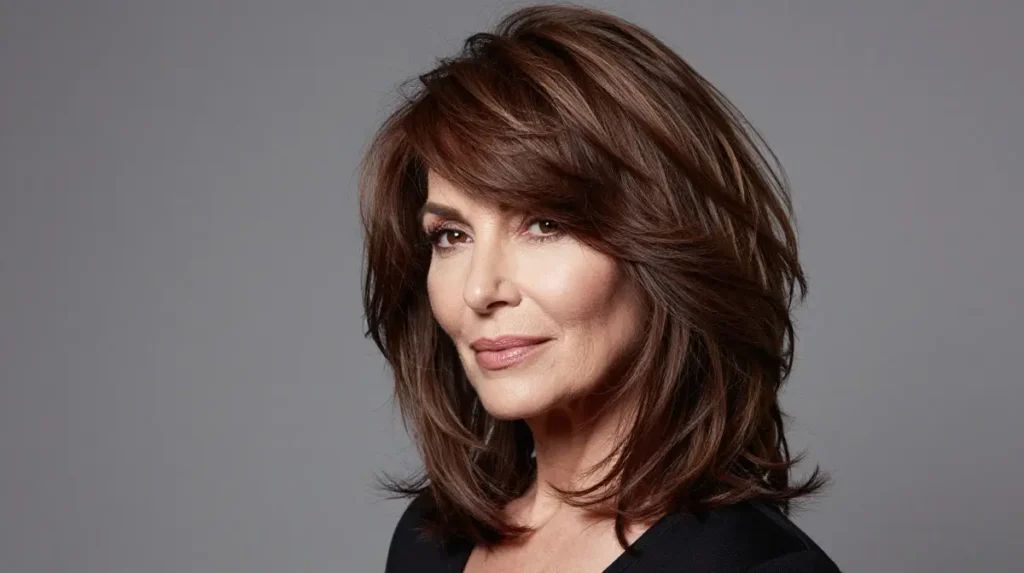
A voluminous blowout applied to a layered cut for women over 50 with thin hair is the most immediately transformative styling approach available, creating a full, rounded, and genuinely impressive result that lifts the entire face and gives the hair a healthy, abundant appearance that is deeply satisfying after years of struggling with flat and lifeless thin hair styling. The blowout technique involves blow-drying the hair in sections using a medium to large round brush, lifting each section upward at the roots and rolling it smoothly outward or inward as it dries to create simultaneous volume at the roots and smooth direction through the mid-lengths and ends.
The layered cut provides the ideal structural foundation for a blowout because the graduated layers naturally create more lift and movement when the blow-dry technique is applied to them than a single-length cut would, amplifying the volume effect considerably. A volumizing mousse applied generously to the roots of damp hair before blow-drying is the single most important product choice for supporting a voluminous blowout result on fine and thin hair. The result typically lasts two to three full days with proper nighttime care using a silk pillowcase and a loose protective style during sleep.
Layered Style with Wispy Bangs for Thin Hair
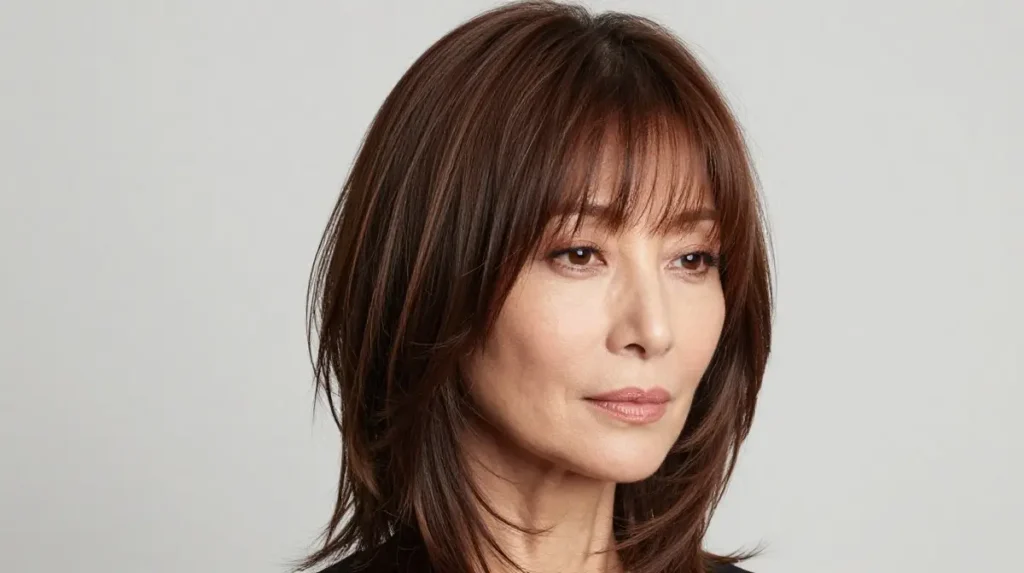
Wispy bangs added to a layered hairstyle for women over 50 with thin hair create a specifically gentle and age-appropriate fringe option that works with the limited hair density available rather than requiring a solid and thick bang section that thin hair often cannot produce convincingly. The wispy bang is cut with deliberately fine and light ends that spread softly across the forehead without creating the heavy horizontal bar of a blunt fringe, instead creating a delicate and slightly textured fringe that suits mature features by softening the forehead and brow area without covering the face or creating an overly structured appearance.
This type of bang is also considerably more forgiving during the grow-out phase than a blunt fringe because the light and tapered ends simply become slightly longer and softer-looking as they grow rather than creating the awkward in-between phase that solid bangs typically produce. A small amount of light hold pomade or styling cream worked through the dry wispy bang section after the overall blowout keeps it sitting softly in position throughout the day.
Gray Hair Layered Style for Thin Hair Over 50
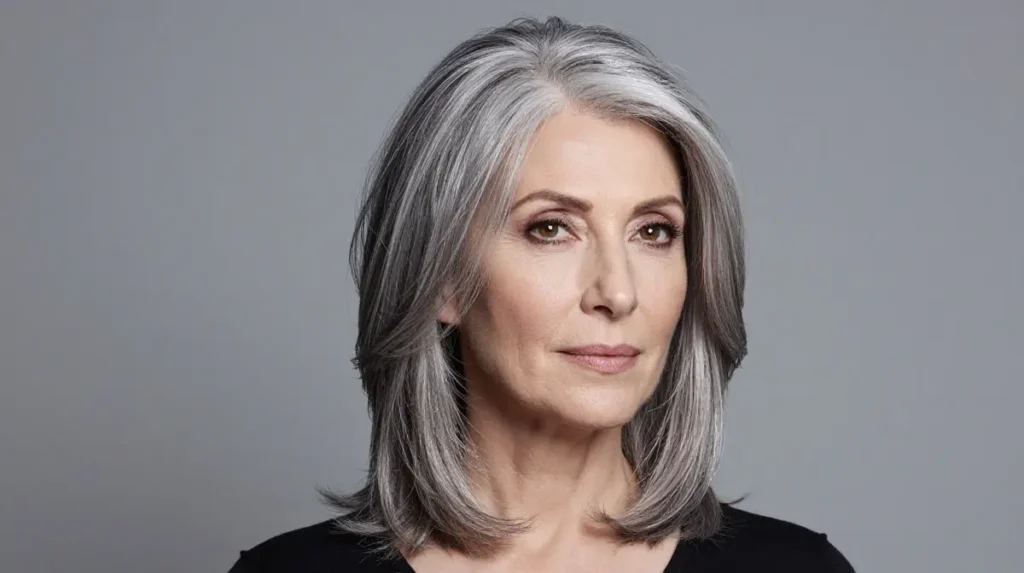
Embracing natural gray hair alongside a well-executed layered hairstyle for thin hair over 50 creates one of the most authentic and genuinely stylish combinations available to women at this stage of life, where the decision to stop coloring and work with the natural gray is one that consistently produces beautiful results when the haircut and care routine are properly matched to the specific qualities of the gray hair itself. Gray hair often has a slightly coarser or more wiry texture than pigmented hair, which actually provides a degree of natural grip and texture that can be worked with productively in a layered cut to create more apparent volume than fine pigmented hair sometimes manages to produce with the same techniques. A blue or purple-toned toning shampoo used once or twice weekly neutralizes any unwanted yellow or brassy tones that develop in gray and white hair, keeping the color looking cool, bright, and intentionally silver rather than dull or straw-colored.
A glossing treatment applied at the salon every six to eight weeks adds a genuine luminosity to gray hair that makes it appear healthy, well-maintained, and beautifully silvery rather than simply undyed and uncared for. Layers cut specifically to create crown volume are especially important for gray thin hair because the combination of aging and the transition from pigmented to gray hair can produce particularly reduced density at the top.
Layered Bob with Balayage for Thin Hair Over 50
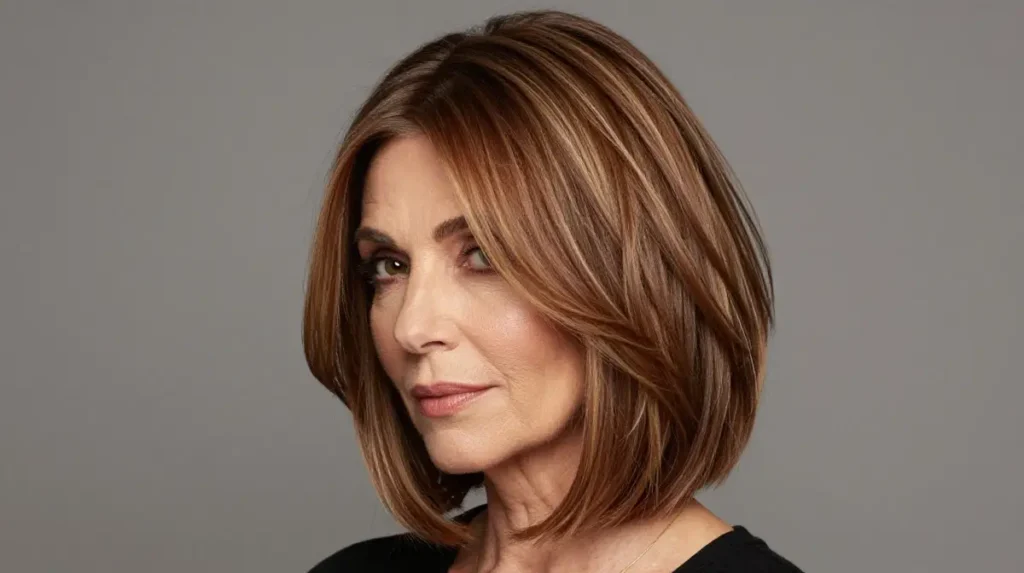
A balayage layered bob for women over 50 with thin hair combines two of the most effective tools for making thin aging hair appear fuller and more dimensional, using the layered cut to create structural volume and the balayage color technique to add tonal contrast that enhances the visual impression of density and movement throughout the hair. The balayage painting technique places lighter color through the mid-lengths and ends of the layered bob in a way that creates warmth, brightness, and a sun-kissed dimensional effect that makes each individual section of the hair appear more distinct and full than a flat single-tone color would allow.
For women over 50 whose thin hair is also incorporating natural gray, balayage in complementary champagne, pearl, or warm blonde tones blends and softens the gray rather than creating a harsh contrast between colored and uncolored sections. The grow-out of balayage is intentionally gradual and natural-looking, which means this color technique requires fewer salon visits than a full root touchup service and is therefore one of the most practically convenient color approaches for women over 50 who want ongoing color enhancement without constant maintenance appointments.
Layered Hairstyle Styling Tips for Thin Hair Over 50
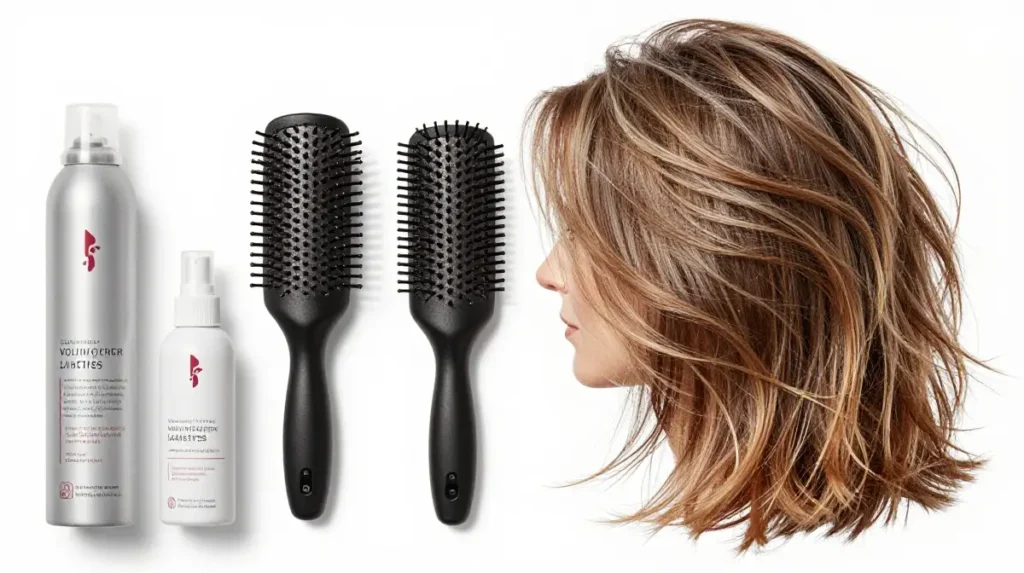
Getting consistently impressive results from a layered hairstyle as a woman over 50 with thin hair depends as much on the daily product and styling routine as it does on the quality of the layered cut itself, and understanding a few practical principles makes an enormous difference to the visual outcome every morning. Never apply heavy or oil-based products to thin aging hair because they coat individual strands and make them appear even more sparse and limp than they actually are, eliminating the natural lift that thin hair can produce when treated with the right lightweight products. A volumizing mousse applied specifically to the roots on damp hair before blow-drying is the single most impactful product choice for women with thin hair, providing the foundational lift that the blow-dry technique then amplifies through directional heat and airflow.
A root-lifting spray applied at the crown supplements the mousse in the specific area where thinning is most visible and creates targeted volume that the overall mousse application sometimes misses at the scalp level. Dry shampoo used on the roots between wash days absorbs oil and restores texture that makes thin hair feel and appear considerably fuller without any wet styling required.
Anti-Aging Layered Hairstyle Choices for Women Over 50
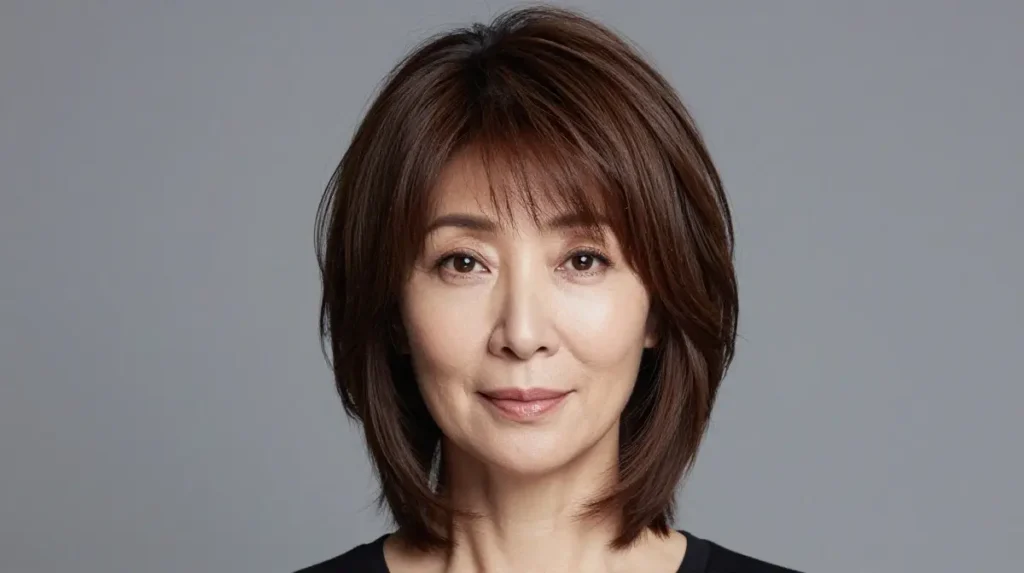
Choosing layered hairstyles for women over 50 with thin hair specifically with anti-aging visual effects in mind means understanding which specific elements of a hairstyle make mature features appear fresher, more energetic, and more radiant rather than simply choosing the most fashionable or conventionally attractive option regardless of how it interacts with the specific changes that aging brings to the face and hair. Face-framing layers that draw the eye upward toward the eyes and cheekbones rather than allowing attention to settle on the lower face and jawline are one of the most reliably effective anti-aging layering strategies available through haircutting technique alone.
Avoiding flat and heavy hairstyles that create a downward visual pull by sitting smoothly against the scalp without any volume or lift is equally important because this type of styling actually accentuates the changes associated with aging rather than counterbalancing them. Conversely, volume and lift created through strategic layering at the crown and root area create an upward visual energy that consistently reads as more youthful and vibrant regardless of the specific hairstyle chosen. Soft waves and textured finishes created through styling add dimension and movement that further reinforce this upward and outward visual quality.
Layered Hairstyle Maintenance for Thin Hair Over 50
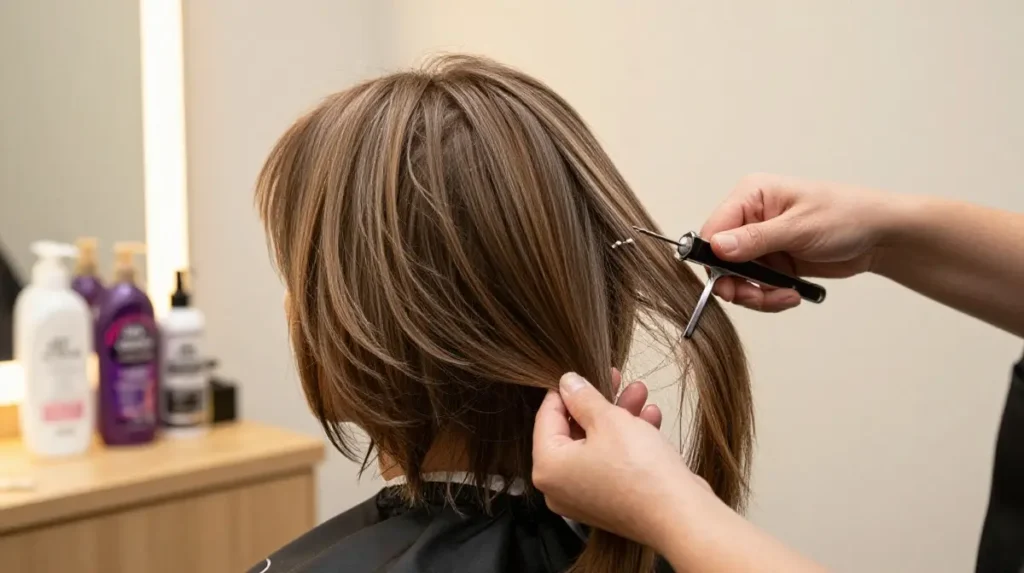
Maintaining a layered hairstyle in genuinely good condition as a woman over 50 with thin hair requires a care routine that addresses both the cutting maintenance and the at-home product and treatment routine that keeps thin aging hair in the healthiest possible condition between salon visits. Thin hair over 50 benefits most from a trim every five to six weeks because shorter intervals between cuts prevent the layered ends from becoming damaged or splitting, which makes thin hair appear even more sparse and wispy rather than intentionally textured. A moisturizing and sulfate-free shampoo used two to three times per week cleanses the scalp effectively without stripping the natural oils that are already reduced in thin aging hair and contribute significantly to its apparent health and body.
A lightweight conditioner applied only through the mid-lengths and ends, carefully avoiding the roots, prevents the product heaviness at the scalp that flattens fine hair while still providing the moisture that prevents brittleness and breakage through the lengths. Heat protectant spray applied before every blow-dry session prevents cumulative heat damage that progressively thins individual strands and accelerates the overall thinning process that women over 50 are already managing.
How to Choose the Best Layered Hairstyle for Your Face Shape and Thin Hair
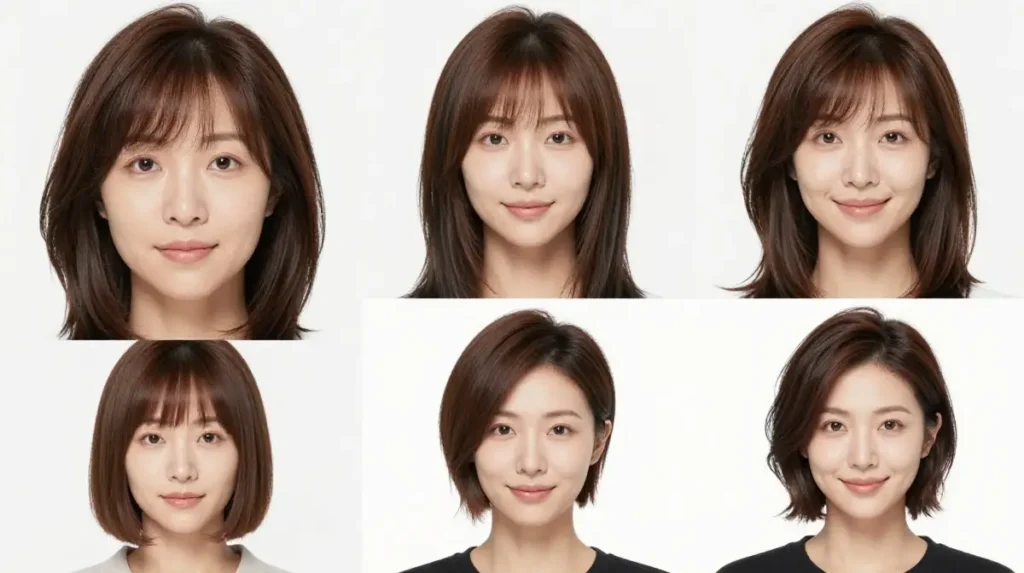
Selecting the most flattering layered hairstyle as a woman over 50 with thin hair requires balancing two distinct sets of considerations simultaneously, those related to the specific visual requirements of thin hair and those related to the face shape proportions that determine which hairstyle silhouettes are most flattering for the individual. Women over 50 with thin hair and round faces benefit most from layered styles that add height at the crown and keep volume away from the widest part of the face, such as a layered lob with face-framing layers and a side part that creates vertical visual movement rather than horizontal width. Square-faced women with thin hair look most flattered by soft layered styles with gentle waves or curtain bangs that reduce the apparent sharpness of the jaw through textural softness rather than through heavy side volume that thin hair cannot reliably produce anyway.
Women with oval faces and thin hair have the most natural flexibility in layered hairstyle selection because the balanced proportions of an oval face provide a forgiving canvas for most layered cut options, with the primary consideration being the choice of layering technique that best addresses the specific density and thinning concerns of the individual hair rather than the face shape requirements. Consulting with a hairstylist who has specific experience with thin aging hair and who understands both the cutting and the styling approaches that work best for this hair type is the most reliable path to finding a genuinely flattering and practically manageable layered result.
Quick Reference Table: Best Layered Hairstyles for Women Over 50 with Thin Hair
| Hairstyle Style | Best For | Key Technique | Product Recommendation | Salon Frequency |
|---|---|---|---|---|
| Feathered Layered Bob | All thin hair types | Razor or point cut feathering | Volumizing mousse, round brush | Every 5 to 6 weeks |
| Textured Crown Layers | Visible crown thinning | Crown layering, root lift technique | Root-lifting spray, mousse | Every 5 to 6 weeks |
| Graduated Layered Bob | Flat nape and back area | Stacking and graduation technique | Volumizing mousse, flexible spray | Every 5 to 6 weeks |
| Layered Lob | Prefers longer length | Face-framing layers, round brush blowout | Volumizing mousse, texturizing spray | Every 6 to 7 weeks |
| Layered Pixie | Maximum thinning concern | Crown layering, wispy ends technique | Matte clay or texture paste | Every 4 to 5 weeks |
| Balayage Layered Bob | Color and volume combined | Balayage painting, face-framing highlights | Color-protecting shampoo, gloss | Color every 3 to 5 months |
| Razor Cut Layered Style | Fine straight to wavy hair | Razor sliding technique, feathered ends | Sea salt spray, root-lifting spray | Every 5 to 6 weeks |
Conclusion
Thin hair after 50 is a genuine challenge but it is one that the right layered hairstyle consistently and significantly improves in ways that no product, supplement, or styling trick alone can replicate. The 22 layered hairstyle ideas in this guide cover every concern that women over 50 with thin hair face, from visible crown thinning and flat lifeless texture to the need for low-maintenance styling and age-appropriate face-framing. The most important step is finding a hairstylist who genuinely understands thin aging hair and knows which specific layering techniques, product recommendations, and styling approaches will produce the most consistently beautiful results for your individual hair density, texture, and face shape. Invest in the right cut, commit to a proper care routine, and let the layers do the work that thin hair alone cannot do by itself.
You can may also like this: 22 Layered Bob Hairstyles Ideas for Women Over 60 Chic
FAQs
What layered hairstyle is best for very thin hair over 50
The feathered layered bob and the layered pixie are the most effective choices for very thin hair over 50 because both styles use specific cutting techniques that create maximum volume and texture from limited hair density while keeping the overall weight at a manageable level.
Should women over 50 with thin hair avoid long hair
Not necessarily, but longer thin hair tends to pull itself flat under its own weight. A layered lob at collarbone length is generally the most flattering longer option for thin hair over 50 because the layers prevent the weight from eliminating all apparent volume.
What products help thin hair look fuller after 50
A volumizing mousse applied to the roots before blow-drying, a root-lifting spray targeted at the crown, and a dry shampoo used between wash days are the three most practically effective products for making thin hair over 50 appear consistently fuller.
How often should women over 50 with thin hair get a trim
Every five to six weeks is ideal for maintaining a layered hairstyle on thin hair over 50. Regular trims prevent the layered ends from splitting and becoming wispy in an unintentional way that makes thin hair look even more sparse.
Do highlights help thin hair look fuller for women over 50
Yes significantly. Balayage and face-framing highlights create tonal contrast within the layers that makes the hair appear more dimensional and fuller than a flat single-tone color. The contrast between lighter and darker sections creates the visual impression of depth and volume that thin hair lacks on its own.
1 Comment