
Introduction
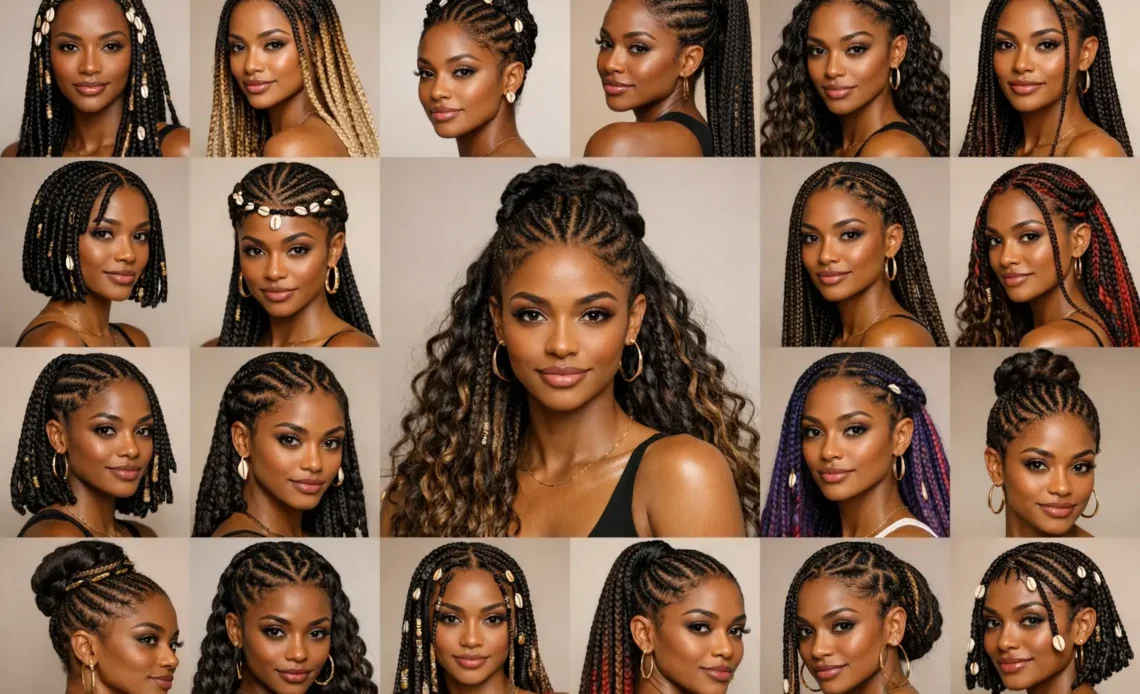
Few hairstyles in the world carry the combination of cultural depth, visual artistry, and practical versatility that Fulani braids bring to every woman who wears them. Originating from the Fulani people, a nomadic ethnic group who inhabit West Africa, Fulani braids have long been used to express identity, heritage, and social status, traditionally adorned with beads, cowrie shells, and other decorative elements that symbolize beauty, wealth, and cultural pride.Today, that tradition has evolved into a global hairstyle phenomenon that appears on red carpets, in everyday life, and across every creative space where beauty and cultural expression intersect.
What makes Fulani braids genuinely distinctive is the signature structure that defines them. A central cornrow runs down the middle of the head, side braids frame the face by beginning at the back and ending at the temples, and a braid is wrapped around the hairline to complete the traditional pattern. From this foundation, the possibilities are extraordinary. This article presents 17 chic Fulani braid hairstyles that honor the cultural roots of the style while showcasing the full creative range available to women who want to wear these braids with intention and personal style.
The Classic Traditional Fulani Braids
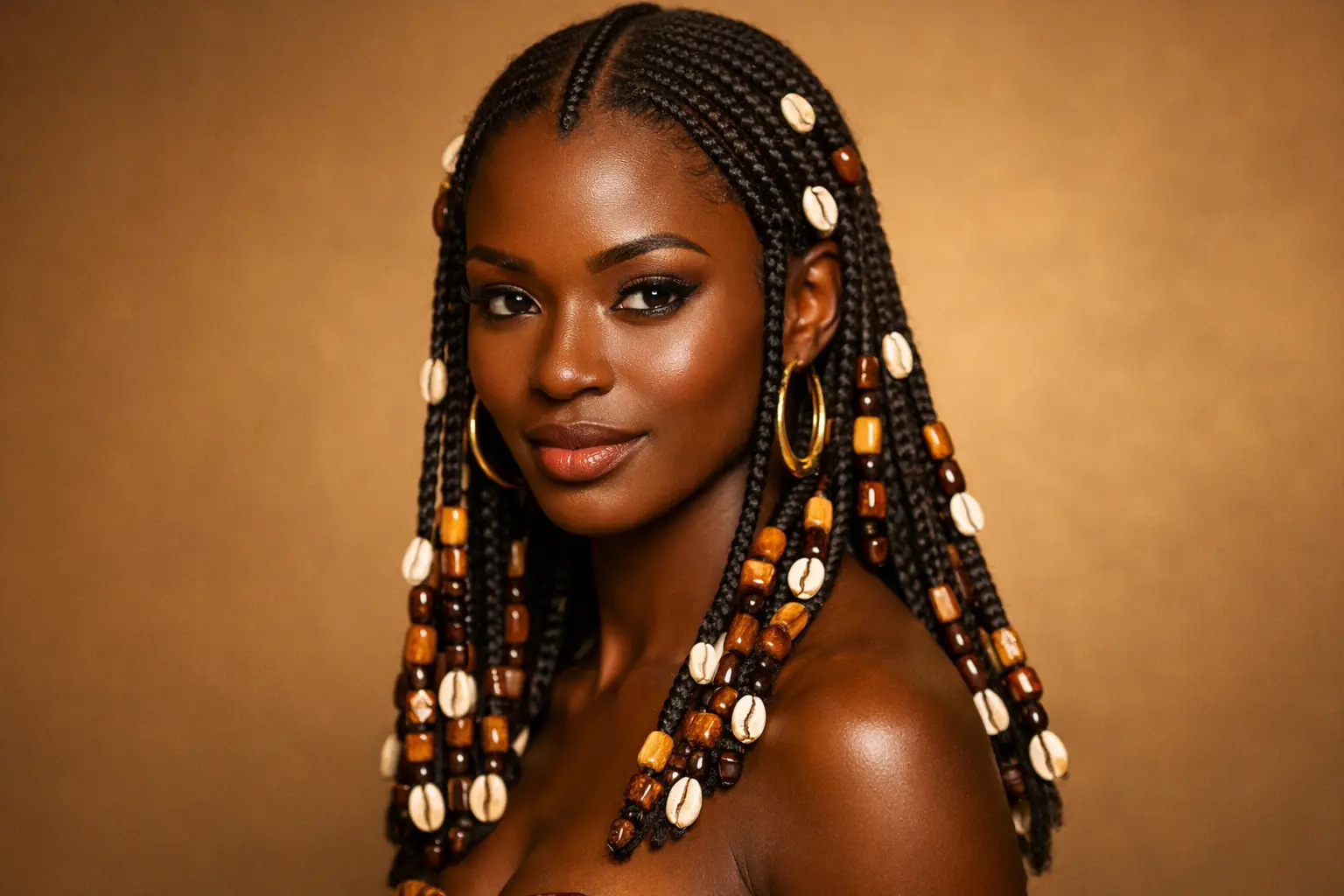
The classic traditional Fulani braid style is the purest expression of the hairstyle and the one that most directly honors its West African origins. A single cornrow runs precisely down the center of the head from the forehead to the nape, two cornrows run along each side of the face beginning at the temples, and individual braids fall from the crown downward, typically adorned with wooden or glass beads at the ends and cowrie shells at intervals throughout the length. The face-framing side braids create the signature look that distinguishes Fulani braids from all other cornrow and braid combinations. This version requires no extensions for women with enough natural hair length and produces a result that is simultaneously rooted in tradition and genuinely beautiful by any contemporary standard.
The Fulani Braids with Beads and Cowrie Shells
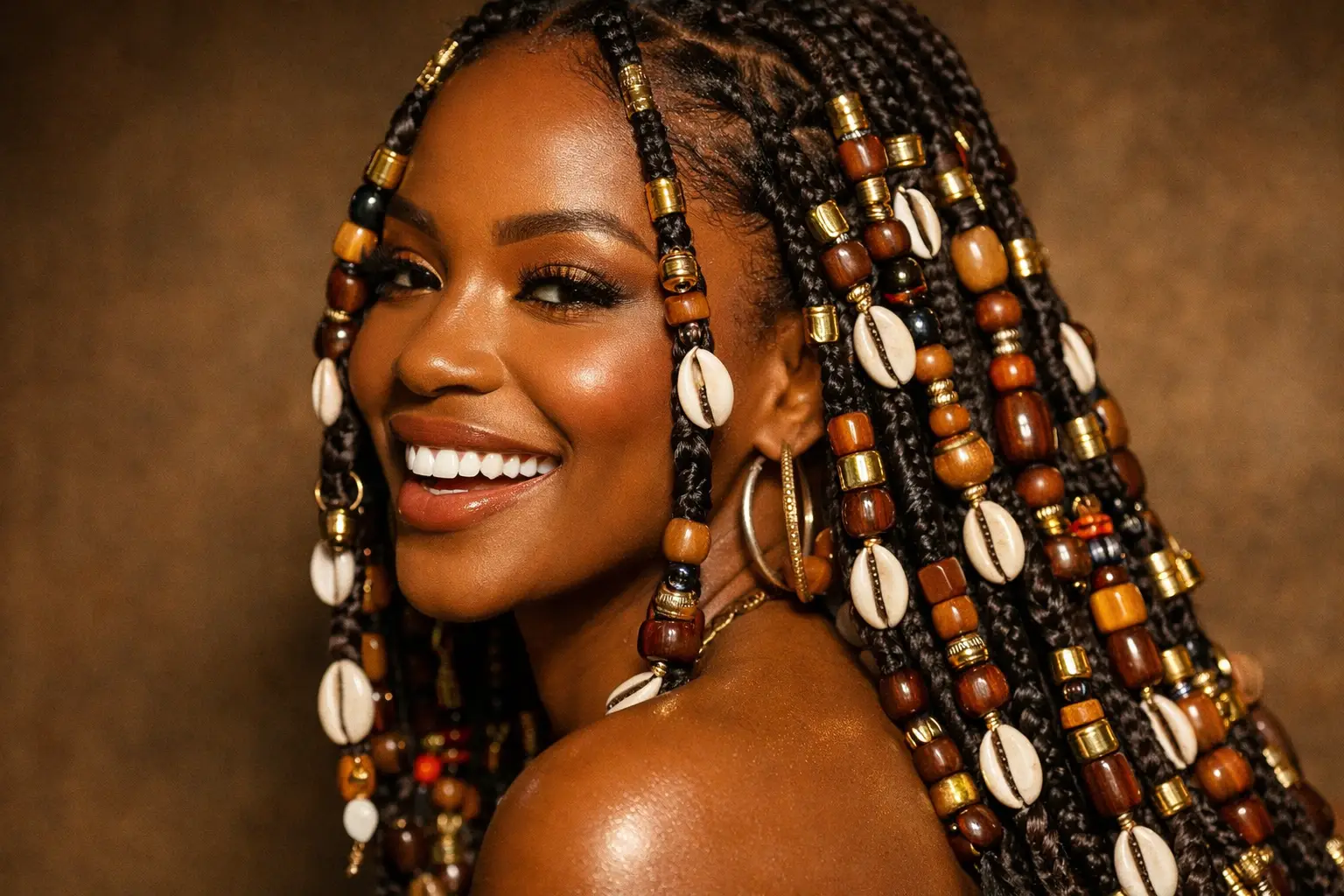
Beads and cowrie shells are not optional accessories in the Fulani braid tradition. They are fundamental elements that give the style its character, its cultural resonance, and its visual richness. Wooden beads in earth tones, glass beads in vivid colors, and natural cowrie shells threaded onto the individual braids at intervals from the scalp to the ends create a finished style with a tactile and visual complexity that plain braids cannot replicate. Metallic cuffs and rings added at the braid roots or mid-lengths introduce a contemporary element that honors the tradition of adornment while connecting the style to current fashion. The choice of bead color, size, and material allows each woman to personalize her Fulani braids in a way that makes the style distinctly her own.
The Bohemian Fulani Braids with Curls
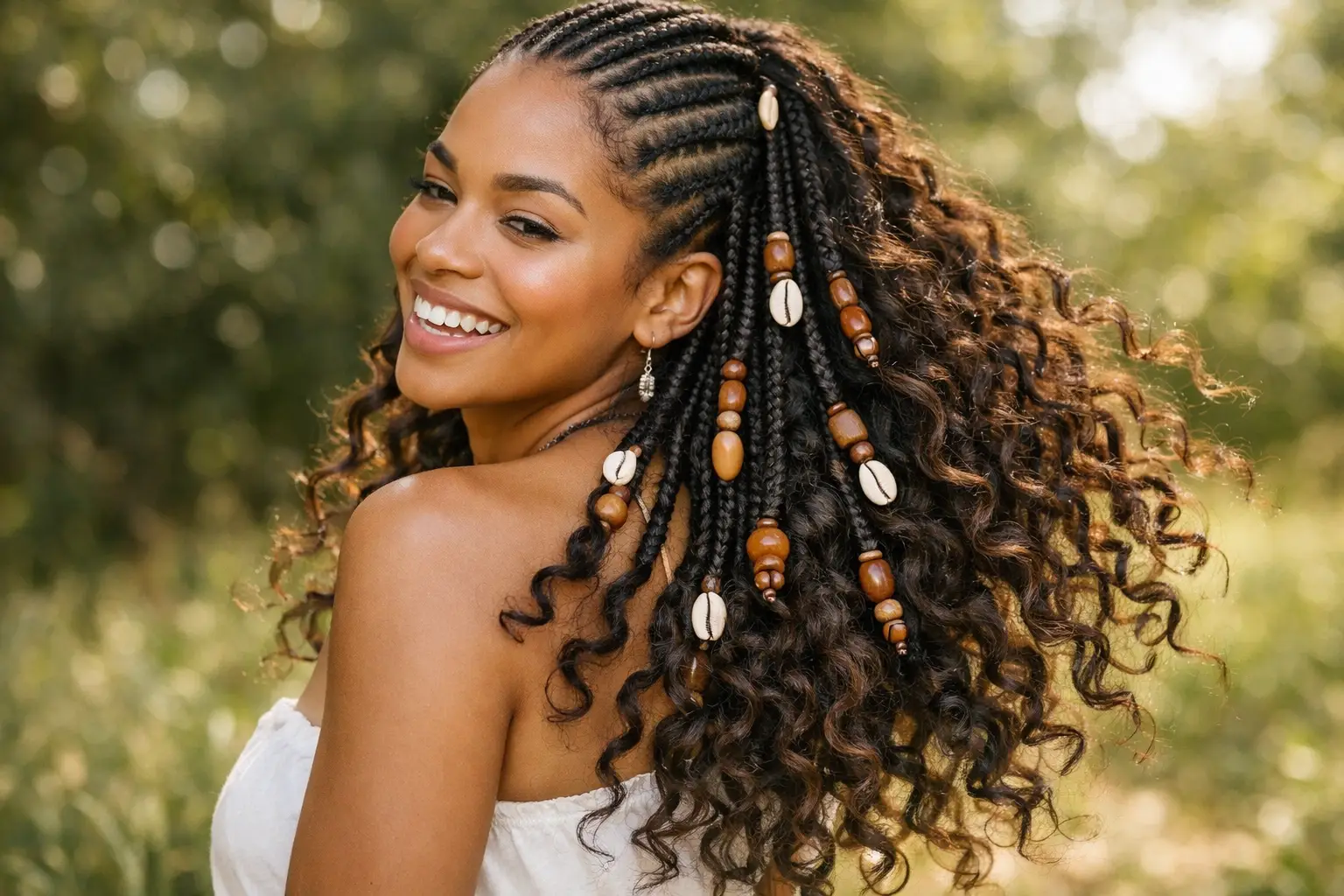
The bohemian interpretation of Fulani braids pairs the structured cornrow and individual braid foundation of the classic style with loose, free-flowing curls at the ends of the braids for a result that is romantic, relaxed, and visually abundant. Curly Kanekalon or synthetic braiding hair incorporated into the individual braids at the back produces the curl effect without any heat styling or chemical treatment. The contrast between the tight, close-to-scalp cornrow sections and the flowing curly ends creates a style with significant movement and a distinctly celebratory quality. This version works beautifully for outdoor events, vacations, and any occasion where an effortless, joyful aesthetic is the goal.
The Fulani Braids with Ombre Color
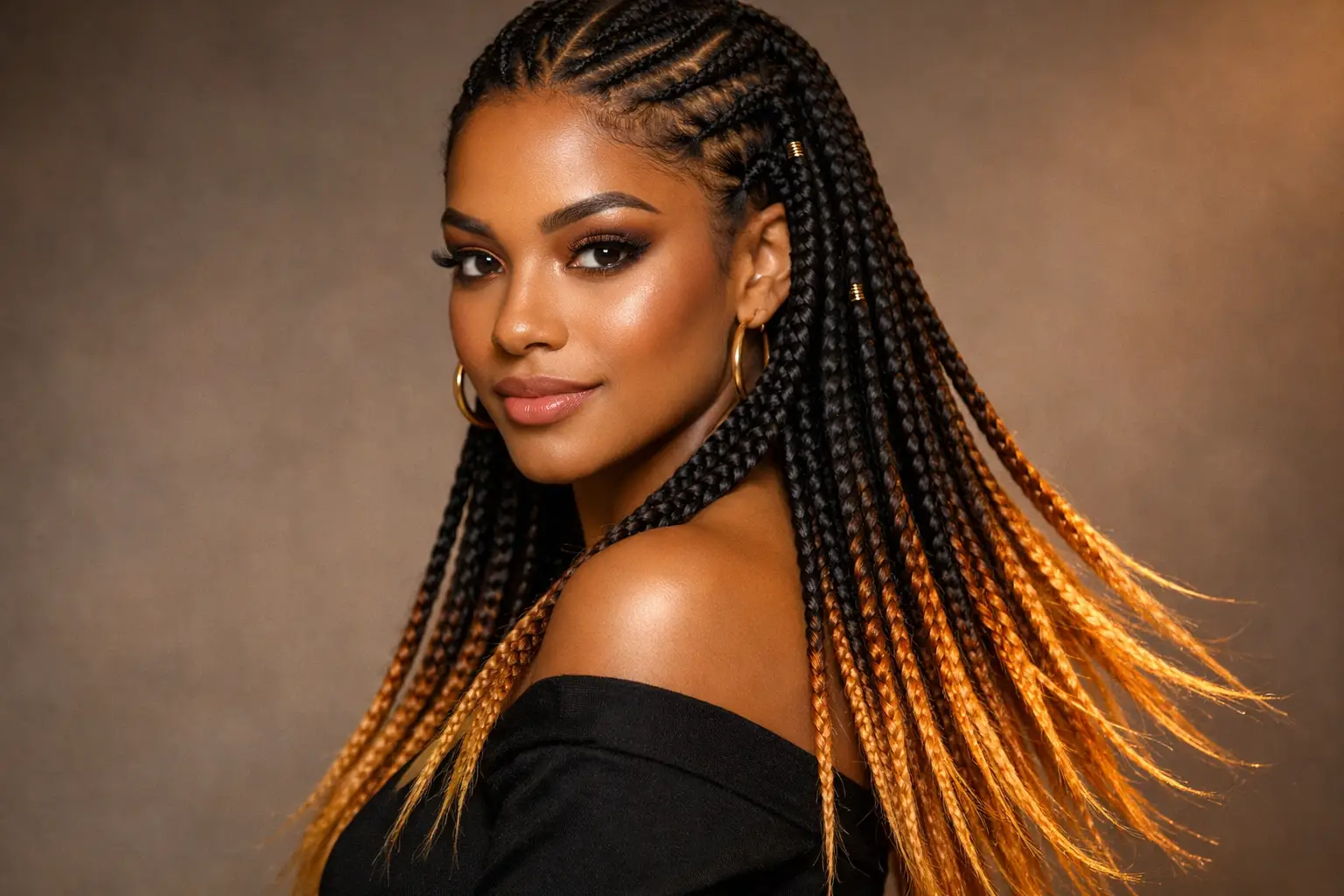
Color transforms Fulani braids from a beautiful style into a visual statement with an entirely different kind of impact. Ombre extensions that transition from a dark shade at the roots to a lighter or contrasting tone at the ends are incorporated during the braiding process, creating a gradient that runs the full length of every individual braid and produces a result with extraordinary dimensional appeal. Honey blonde transitioning from dark brown, copper fading from black, and burgundy deepening from a natural shade are among the most popular color combinations. The ombre effect is particularly effective at the ends of longer Fulani braids where the color gradient is most visible against movement and light.
The Micro Fulani Braids
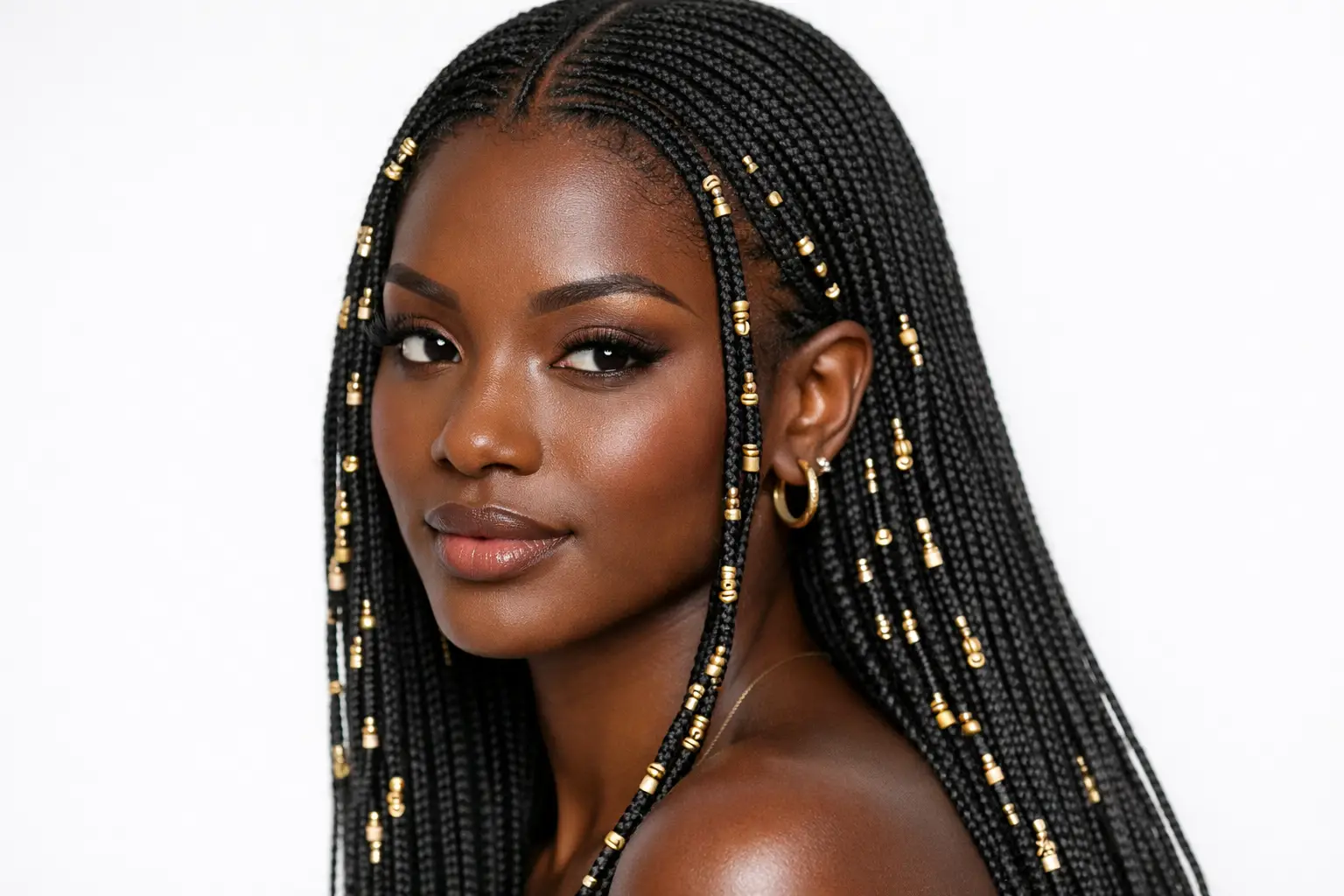
Micro Fulani braids take the traditional structure of the style and execute it at a dramatically smaller scale, creating a result with extraordinary detail and a delicate, intricate appearance that larger braid sizes cannot achieve. The individual braids at the back are very thin and densely packed, creating a surface texture that resembles a fine weave when viewed from a distance and reveals individual braid artistry on closer inspection. The micro scale also allows beads and cuffs to sit more densely throughout the style, enhancing the decorative richness of the finished look. This version requires more installation time than larger-braid alternatives but produces a result with a refined, labor-intensive quality that communicates genuine craft.
The Jumbo Fulani Braids
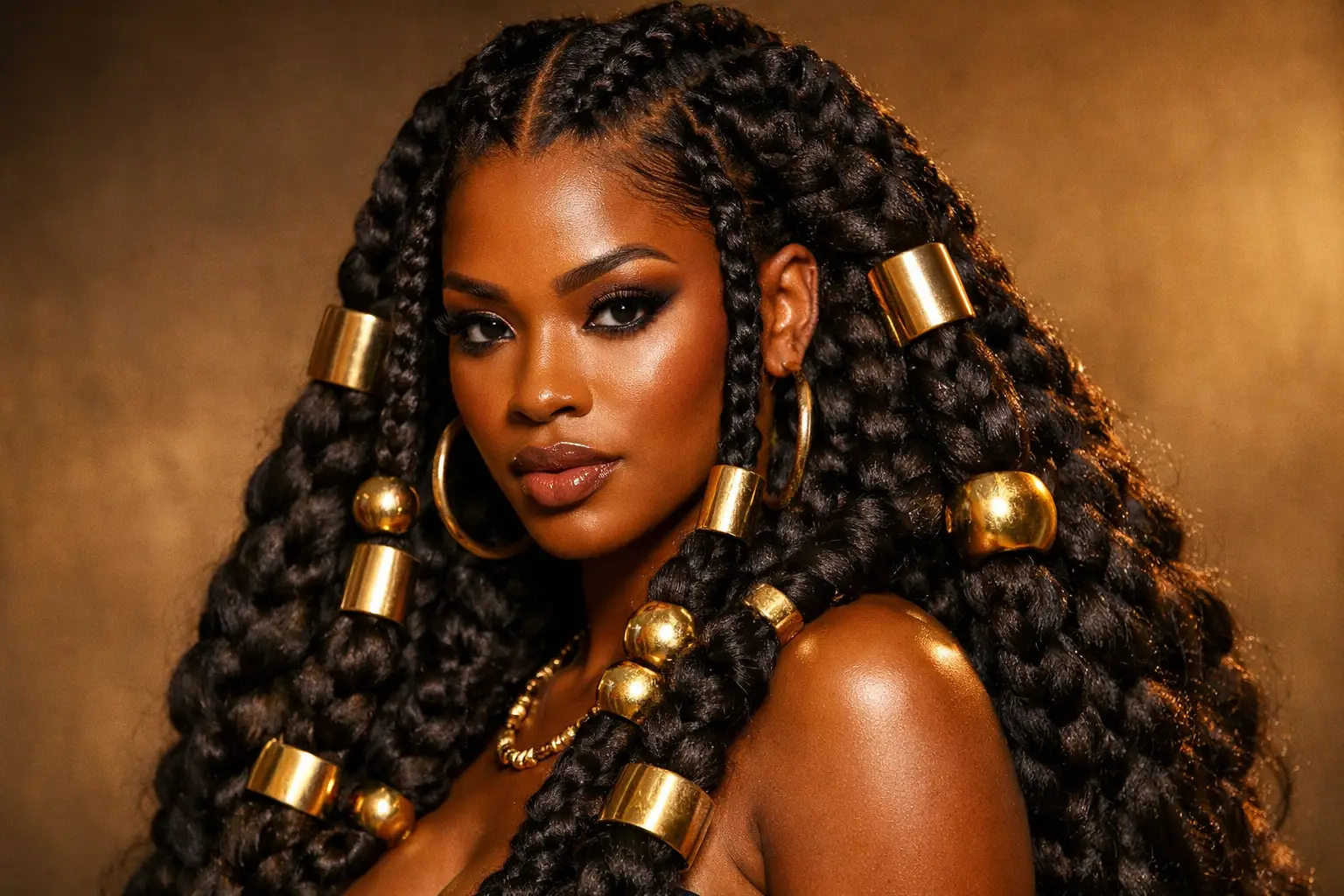
On the opposite end of the braid-size spectrum from micro braids, jumbo Fulani braids use thick, voluminous individual braids that create a style with bold visual weight and a confident, commanding presence. The larger braid size reduces installation time significantly, making this version one of the most practical choices for women who want the Fulani aesthetic without a lengthy salon appointment. Jumbo braids also suit women who prefer a style that reads from a distance and creates an immediate impression of fullness and volume. Large-scale beads and cuffs complement the jumbo braid proportions and prevent the accessories from appearing too small or delicate against the substantial braid thickness.
The Fulani Braids Half-Up Half-Down Style
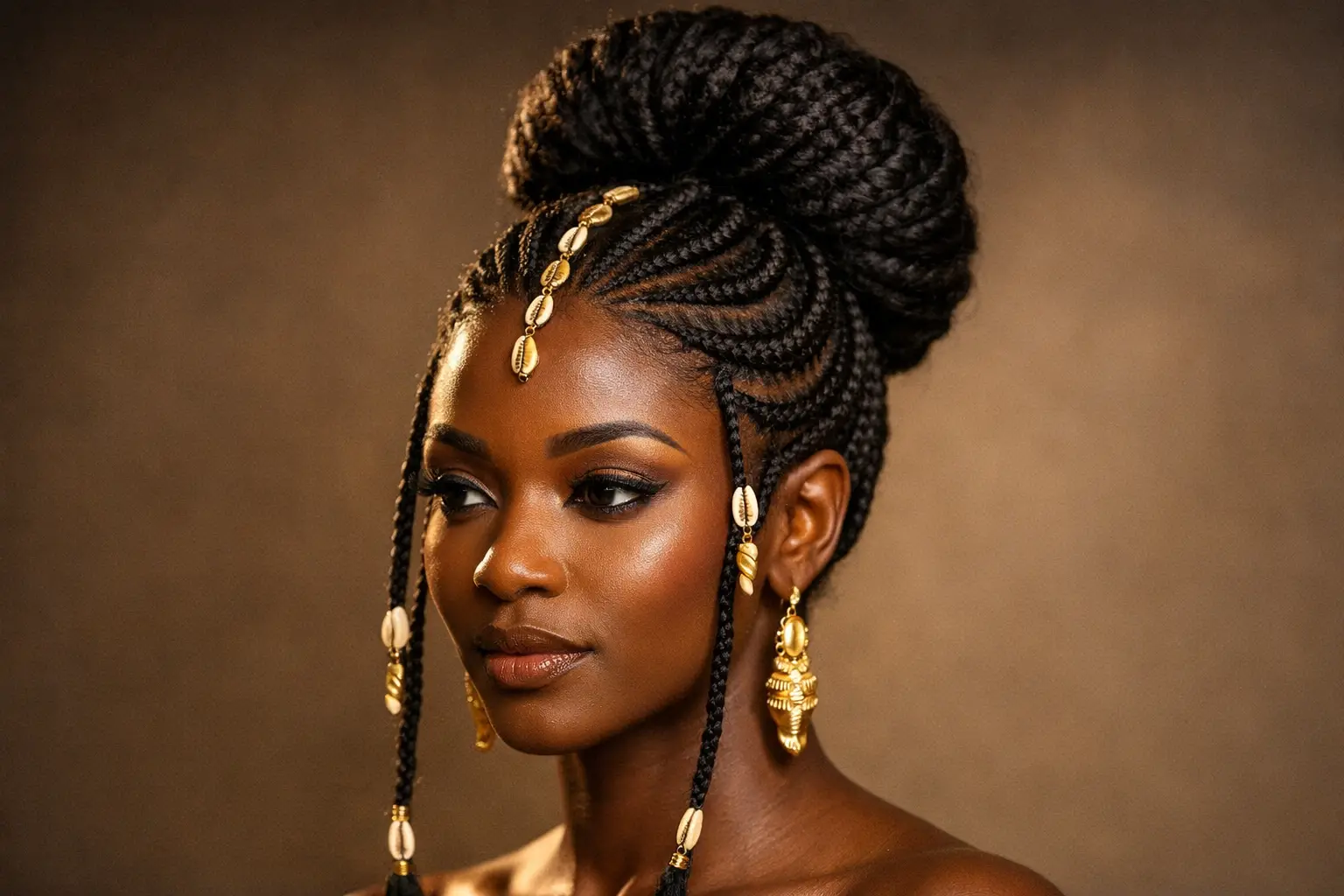
The half-up half-down styling approach gives Fulani braids an entirely different character that sits between the fully loose braid and the fully gathered updo. The top section of braids from the crown forward is gathered and secured into a small bun or knot at the top of the head, while the remaining braids fall freely below. The exposed cornrow sections and the gathered top bun create a style with visible structure at the crown and free movement at the lengths, combining the best qualities of an updo and a down style simultaneously. This version is particularly wearable for formal occasions, professional settings, and events where the fully loose braid might feel too casual.
The Fulani Braid Bun
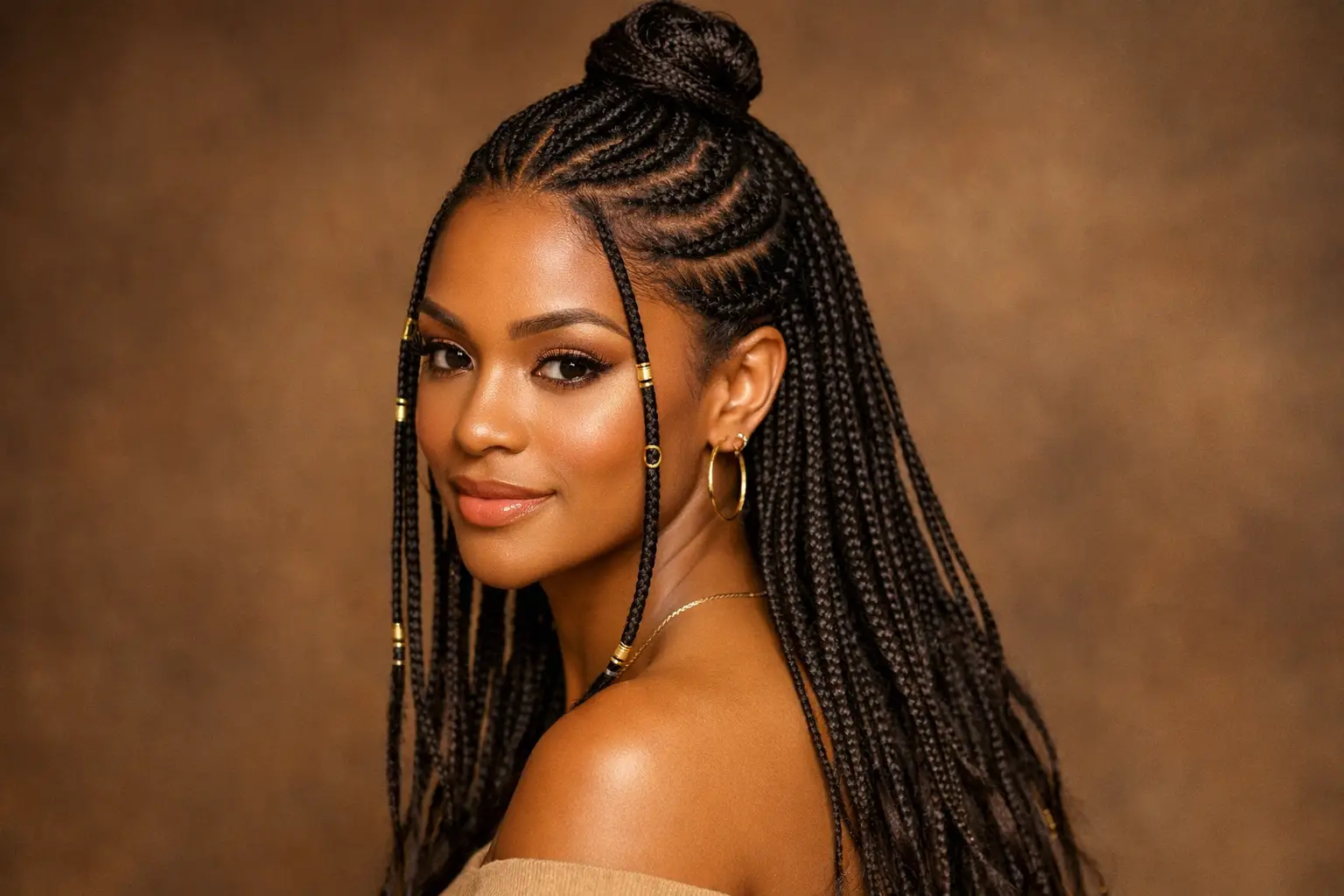
The Fulani braid bun gathers all of the individual braids into a full, rounded bun positioned at the crown or the nape of the neck, creating an updo that showcases the cornrow work on the scalp while gathering the braid lengths into an elegant, practical style. A bun at the crown creates a regal, elevated appearance. A bun at the nape produces a softer, more relaxed character. Gold rings or beads woven into the center cornrow and the face-framing braids remain visible regardless of the bun position, ensuring that the cultural elements of the style are present even when the individual braids are gathered. This is one of the most versatile styling approaches for Fulani braids and one that works across all occasions and environments.
The Fulani Braids Ponytail
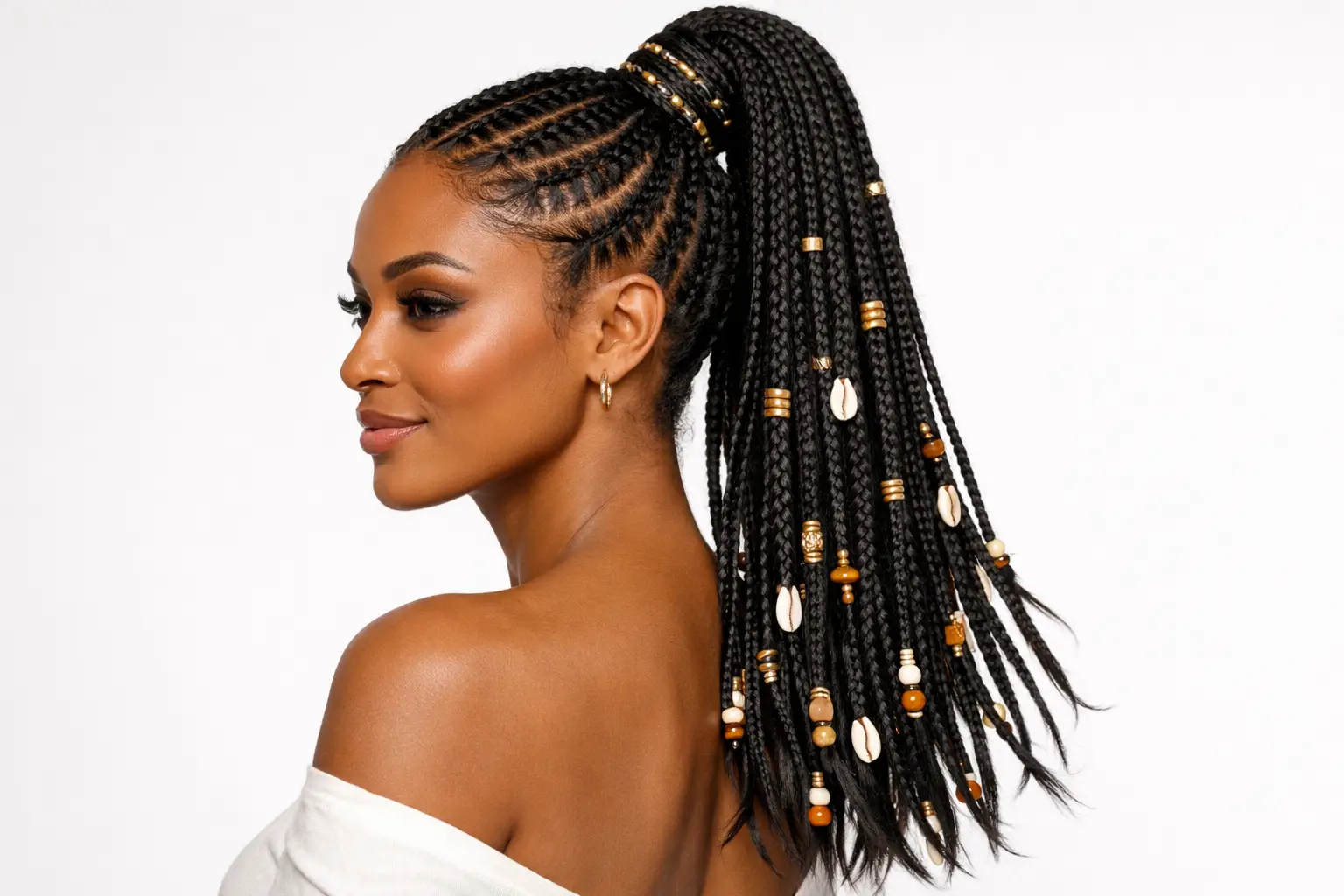
A high or medium ponytail created from Fulani braids is a style that combines the visual structure of the gathered braid with the movement and length of the individual braids flowing from the ponytail holder. The cornrow sections at the scalp remain fully visible as the braids are swept upward and gathered, creating a clean, elegant foundation for the ponytail. Decorated with a wrapped braid section around the base of the ponytail or a collection of gold rings, the Fulani braid ponytail has an almost sculptural quality that distinguishes it clearly from a plain ponytail. This version is a strong choice for active lifestyles, athletic occasions, and any setting where the hair needs to be off the face without sacrificing visual impact.
The Stitch Fulani Braids
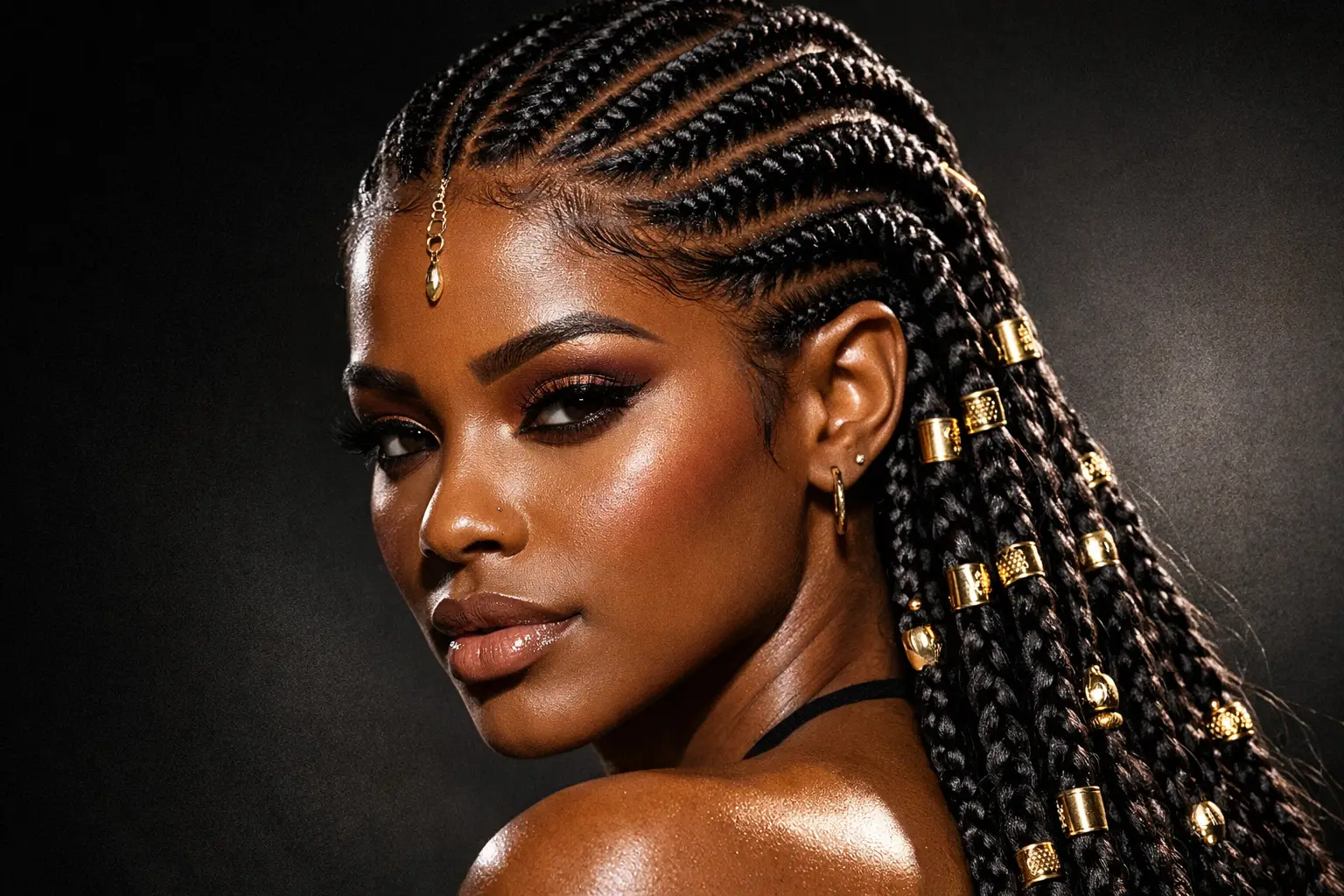
Stitch braids, sometimes called feed-in cornrows, bring a contemporary technique to the Fulani braid foundation that creates cornrows with a unique raised, three-dimensional appearance. Rather than flat cornrows lying close to the scalp, stitch braids have a visible ridge that runs along the length of each braid, creating a dynamic surface pattern that catches light and adds visual depth to the cornrow sections. Applied to the central and side cornrow sections of a Fulani braid design, the stitch technique elevates the traditional style into something with a distinctly modern, fashion-forward quality while retaining the essential Fulani structure and adornment elements.
The Triangle Part Fulani Braids
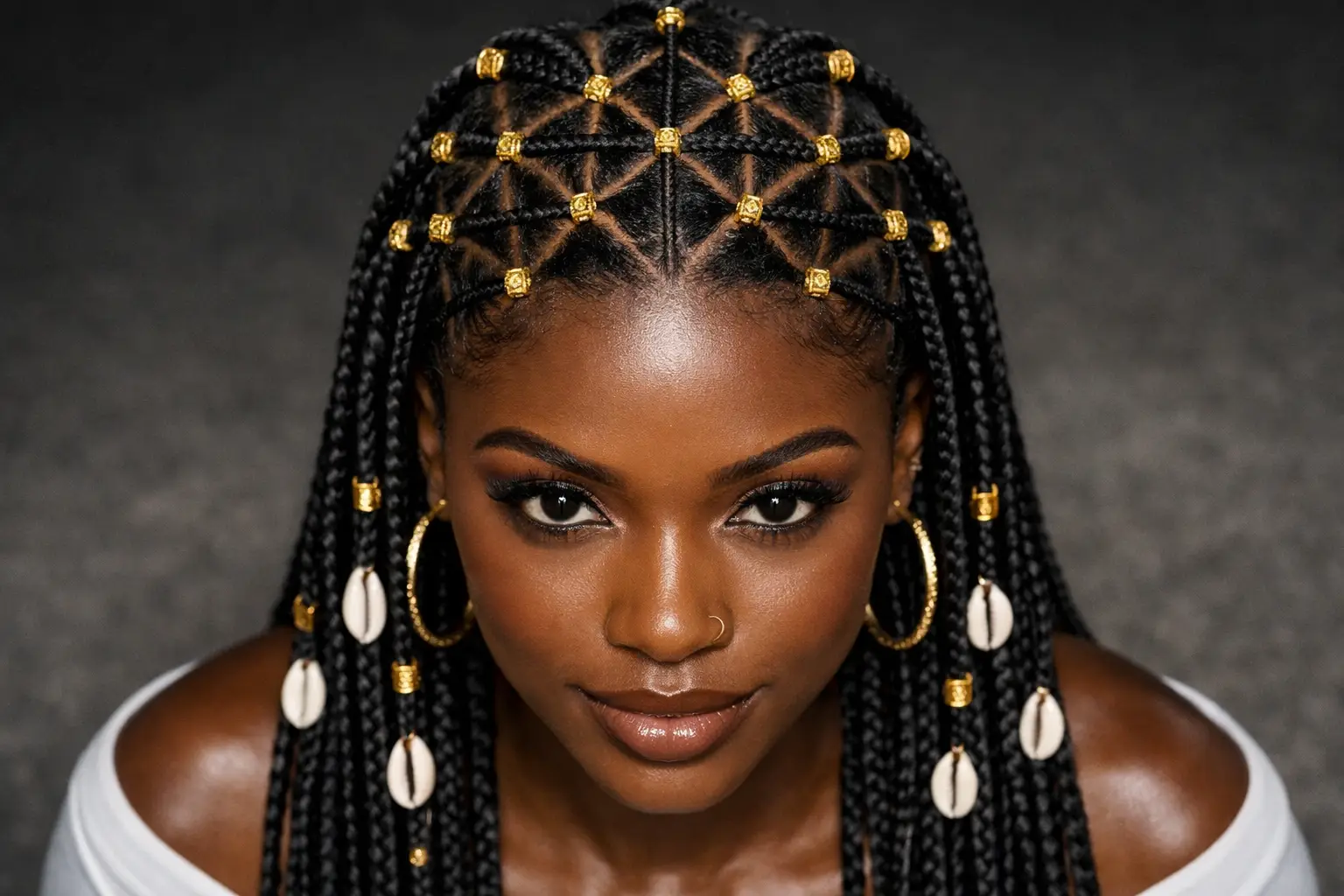
Triangle parting creates a distinctive geometric pattern at the scalp that replaces the standard straight-line parts of traditional Fulani braids with triangular sections that produce a visually striking, almost graphic quality across the top of the head. The triangle sections are particularly visible with beads or cuffs placed at the roots where each triangle meets the next, creating a pattern that is part braiding artistry and part geometric design. This version suits women who want their Fulani braids to make a clear creative statement and works well for events, performances, and any occasion where the hair is as much a form of personal expression as any other element of appearance.
The Zig Zag Part Fulani Braids
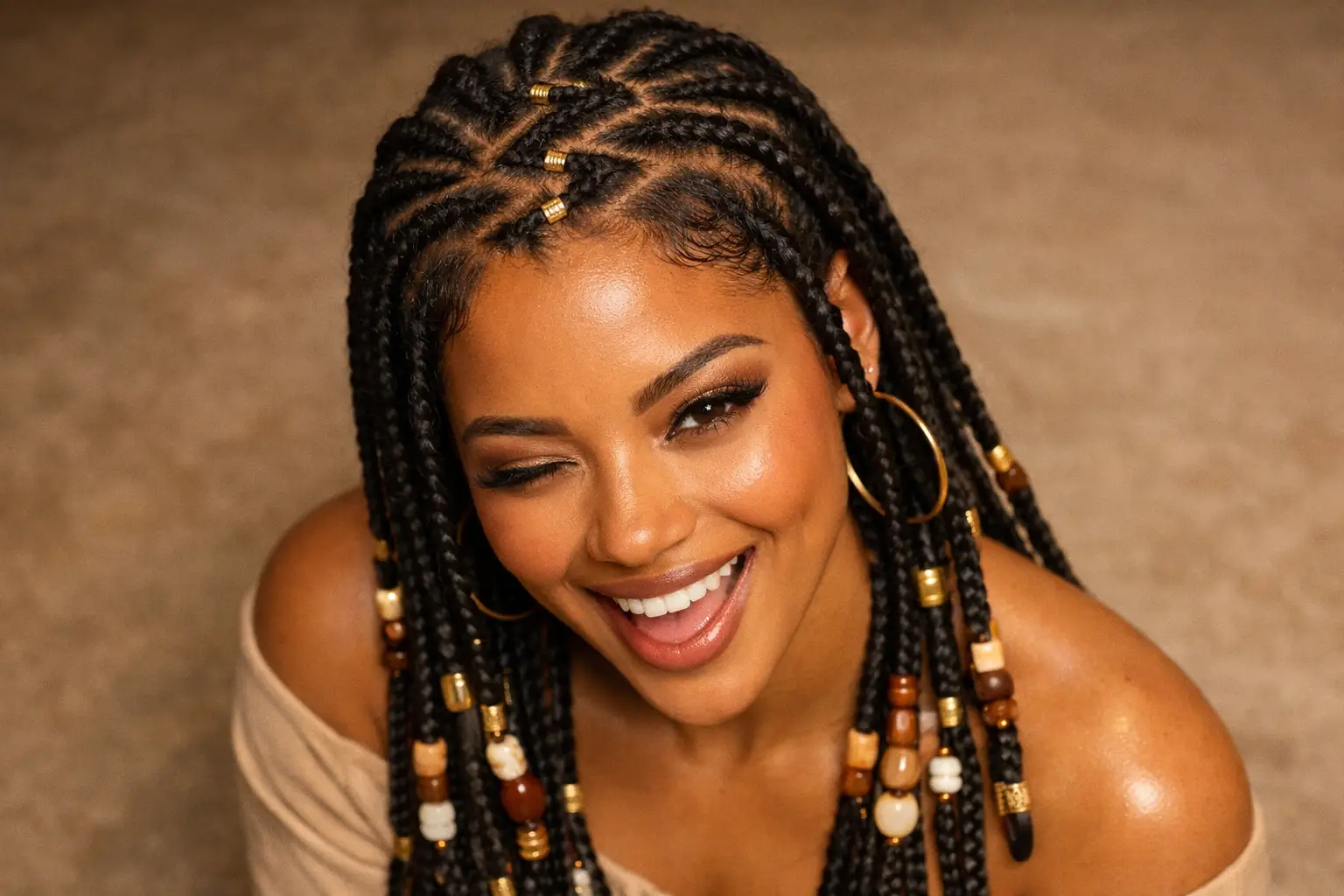
A zig-zag part replacing the standard center part in a Fulani braid design adds a playful, unexpected element to the scalp pattern that makes the style immediately distinctive. The zig-zag line running from the forehead to the crown creates a dynamic, energetic quality at the scalp that the straight center part cannot achieve, and it works particularly well with metallic cuffs placed along the zig-zag line to draw attention to the pattern. This variation suits creative personalities who want to honor the Fulani braid tradition while introducing a personal design element that makes the style uniquely theirs.
The Fulani Braids with Colored Extensions
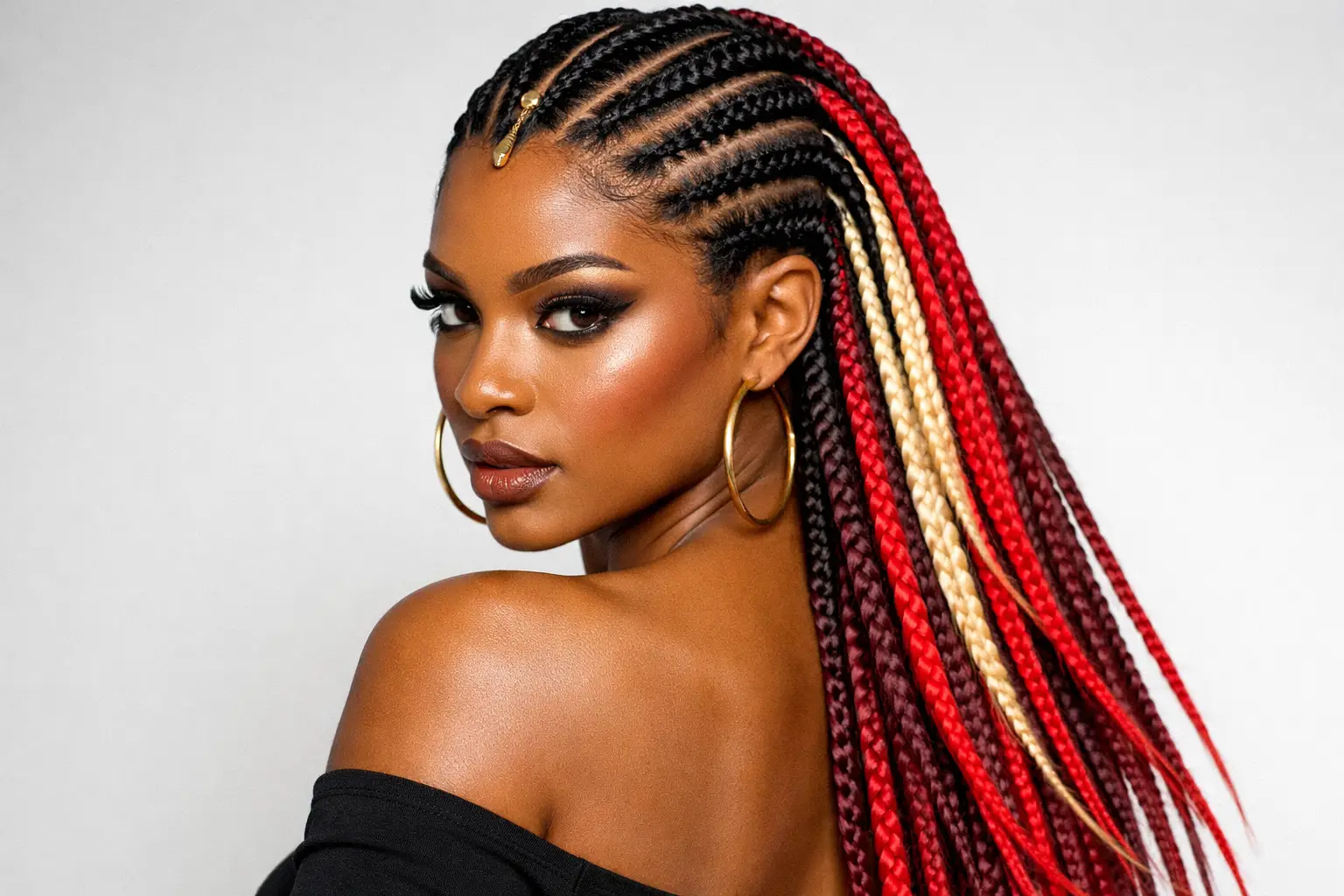
Bold, vivid color incorporated through extensions gives Fulani braids a contemporary fashion energy that connects the traditional style to current color trends without requiring any chemical treatment of the natural hair. Red, blonde, blue, burgundy, and two-tone combinations are all achievable through colored braiding hair woven into the individual braid sections. The cornrow sections at the scalp can remain the natural hair color while the individual braids incorporate the extensions, creating a two-tone contrast that makes the structural difference between the cornrow front and the individual braid back more visually apparent. This version is ideal for women who want to experiment with color in a completely reversible, damage-free way.
The Short Fulani Braids
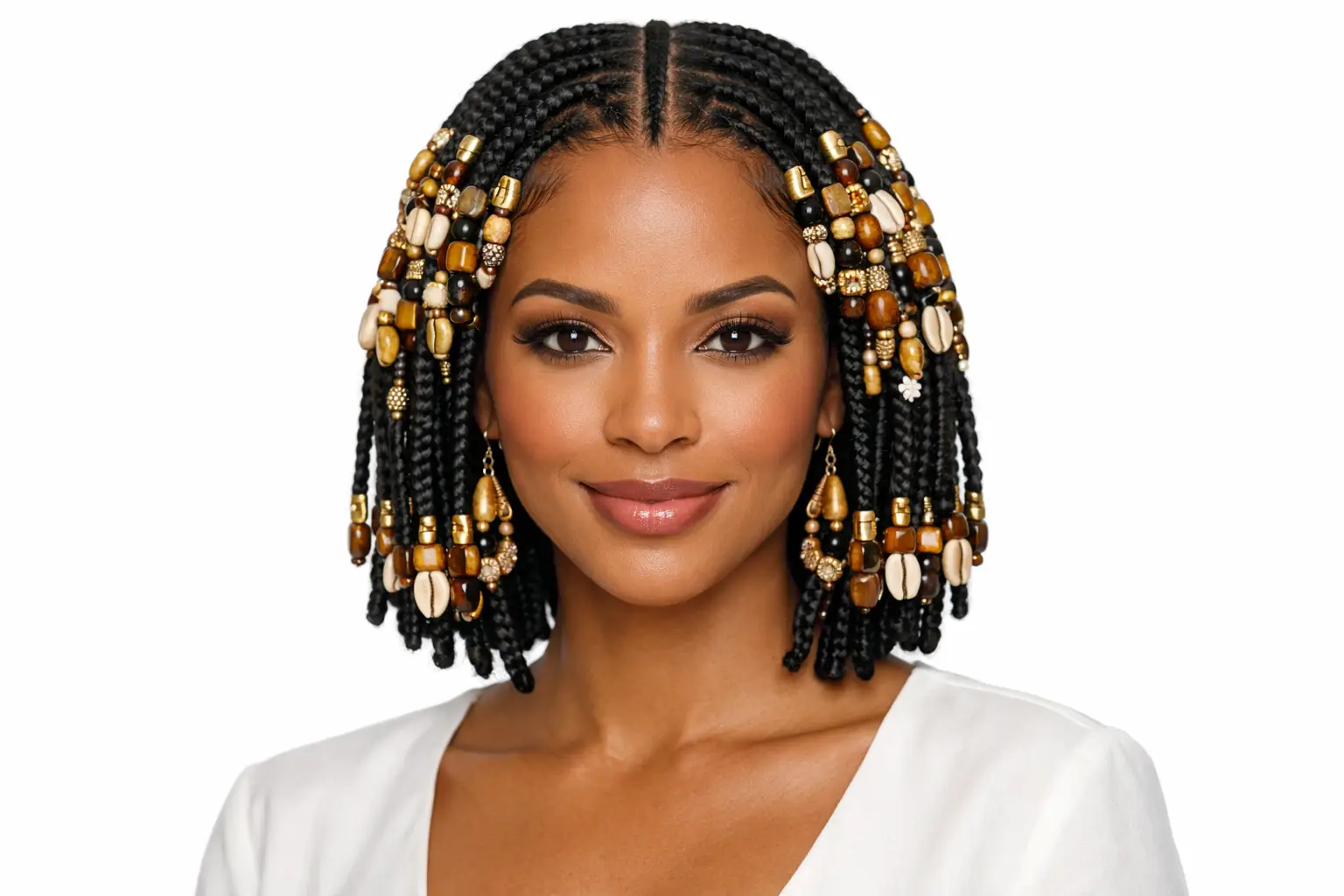
Short Fulani braids ending at the shoulder or above challenge the common assumption that Fulani braids are exclusively a long-hair style. At shorter lengths, the style retains every element of its traditional character including the center cornrow, the face-framing side braids, and the beaded accessories while offering a significantly more lightweight and manageable result. Short Fulani braids are particularly practical for professional environments where very long braids may feel formal, and they are easier to maintain at night and during physical activity. The beads and cuffs sit closer to the scalp at shorter lengths, creating a denser, more concentrated decorative effect that has its own distinct appeal.
The Long Waist Length Fulani Braids
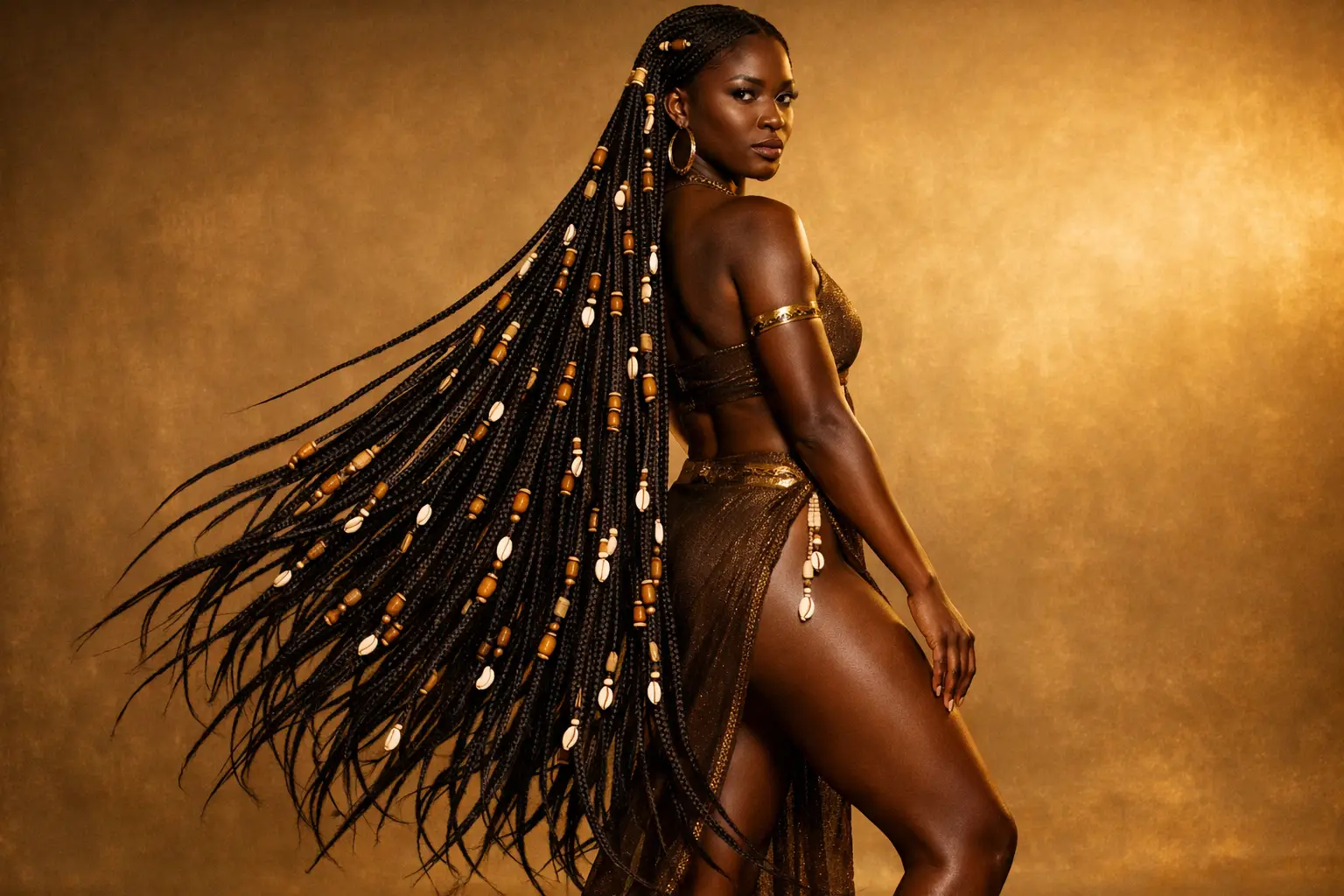
Waist-length Fulani braids represent the maximum visual expression of the style, creating a result with an unmistakable presence and a flowing, goddess-like quality that shorter versions cannot replicate. The weight and movement of braids reaching the waist or beyond produce a style that commands attention in any room and photographs with extraordinary impact. Maintaining waist-length Fulani braids requires commitment to nighttime care with a satin scarf, regular light oiling of the scalp, and gentle handling to prevent frizz and maintain the braid definition over the four to six weeks of wear. The investment in both installation time and maintenance is repaid by a style that is genuinely unlike anything else available in long protective styling.
The Fulani Braids with Wrapped Accessories
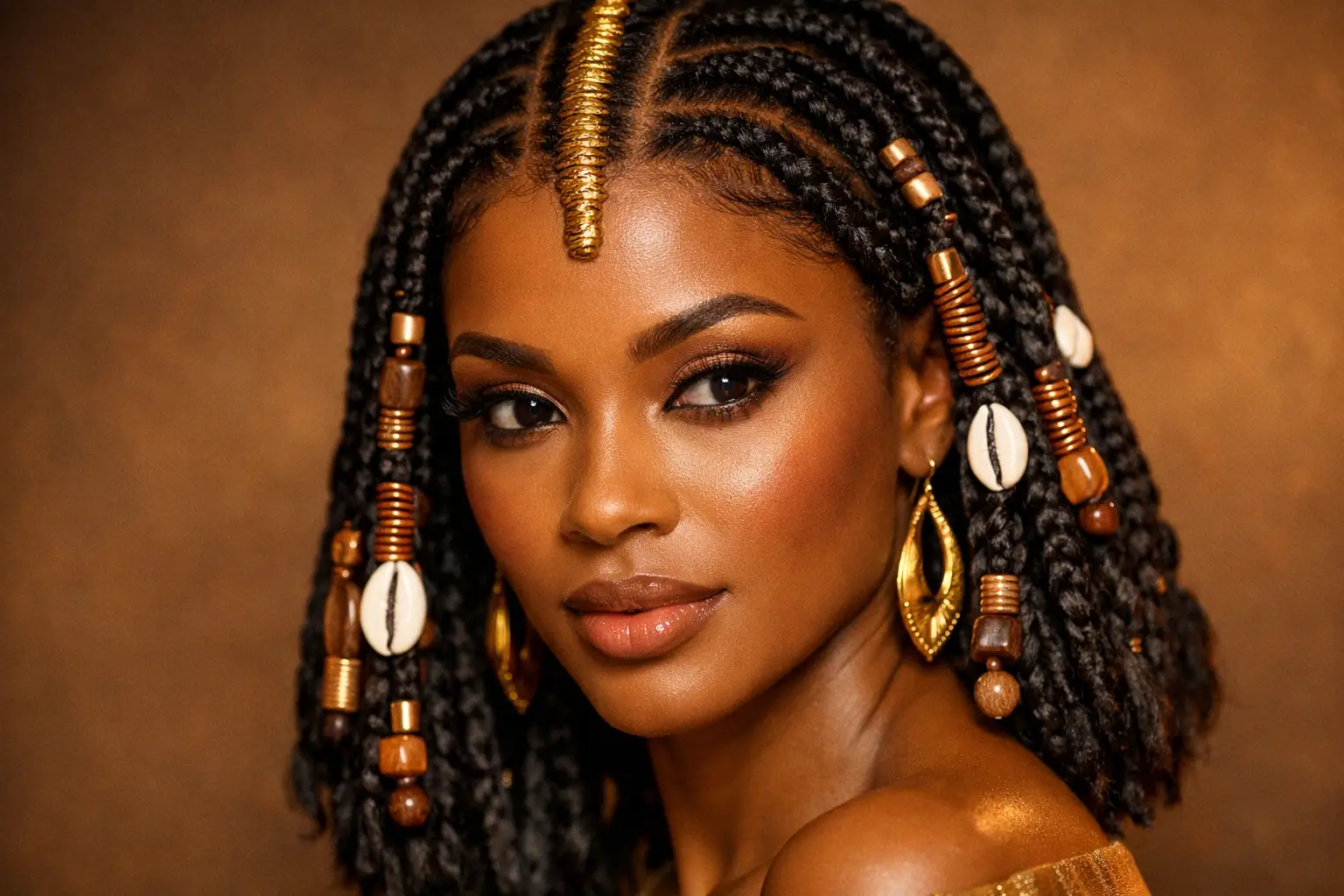
Beyond beads and cowrie shells, Fulani braids can be elevated with thread wrapping, gold wire, fabric ribbon, and decorative cord wound around sections of the individual braids or cornrows to create a textural element that adds warmth, color, and artisanal quality to the finished style. Metallic gold or copper thread wrapped around the center cornrow from root to mid-length creates a particularly striking effect that photographs beautifully and gives the style a regal, luxurious character. This technique connects directly to the tradition of adornment that is central to Fulani braiding culture and allows for a completely custom, one-of-a-kind result with every installation.
The Fulani Braids with Cornrow Crown Pattern
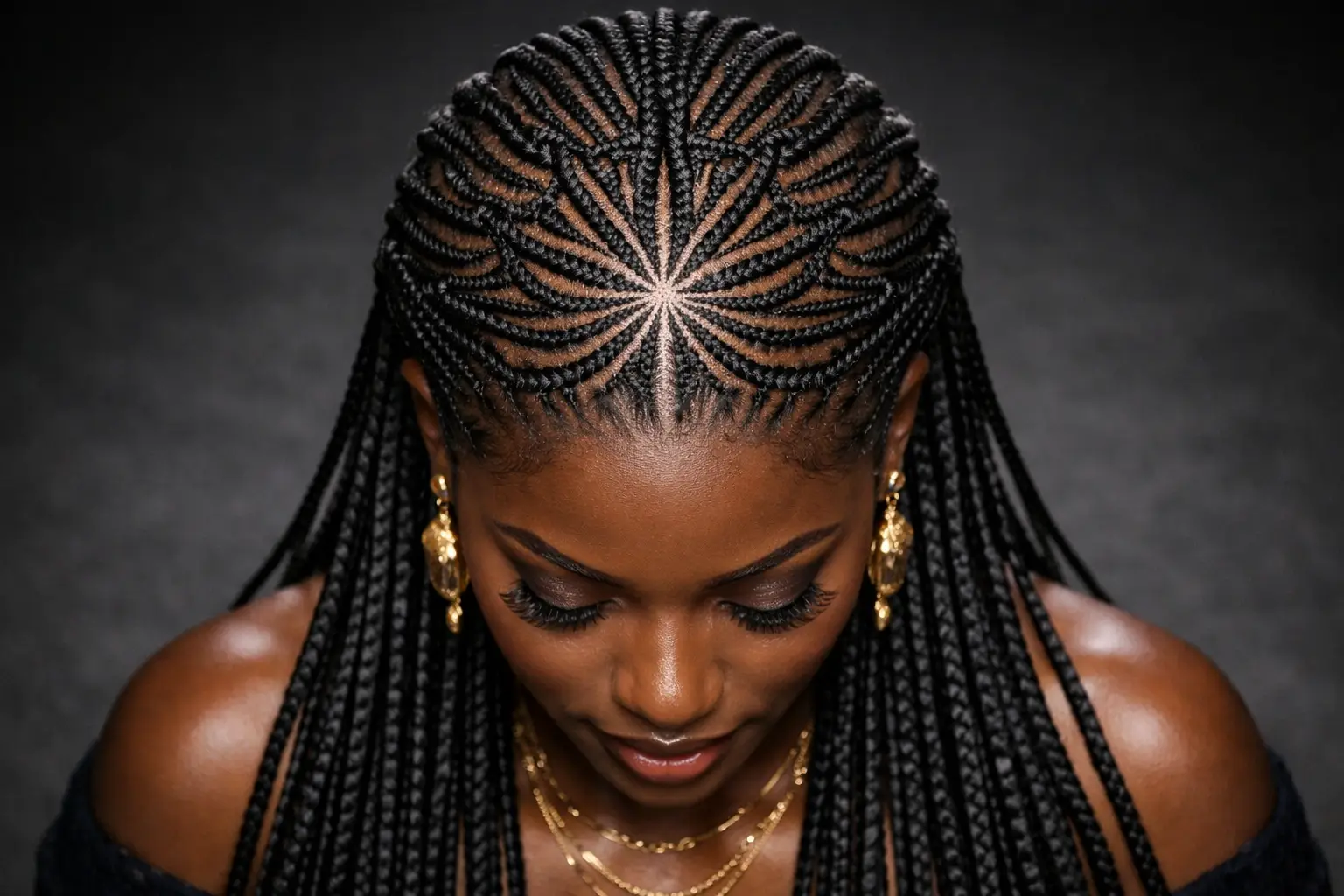
The cornrow crown pattern variation elevates the traditional Fulani braid structure by creating a more elaborate cornrow design across the entire top of the head rather than just the standard central and side braids. Multiple cornrows are braided in sweeping curved patterns that converge toward the crown, creating a design that functions as a crown itself before the individual braids fall freely below. This interpretation requires the most skilled braider of all the variations presented here because the pattern must be both geometrically consistent and visually symmetrical across the full scalp. The result is a style that sits at the intersection of art and culture, producing a Fulani braid hairstyle that is truly extraordinary in its scope and execution.
How to Care for and Maintain Fulani Braids
Fulani braids are a protective style, but their protective benefit depends entirely on how well they are maintained throughout the period of wear. A silk or satin bonnet or scarf worn at night prevents friction between the braids and the pillow surface that causes frizz at the roots and disrupts the neatness of the cornrow sections. A light natural hair oil or braid spray applied to the scalp two to three times per week prevents dryness and itching without weighing the braids down. Washing the scalp gently with diluted shampoo applied with a soft brush or cloth cleanses the scalp without disturbing the braid structure. Most Fulani braid installations last between three and six weeks with proper care, and removing the braids before the six-week mark prevents the excessive matting of shed hair that makes removal difficult and risks damaging the natural hair during the process.
Conclusion
Fulani braids are one of the most complete hairstyle options available to any woman who wears them. They are simultaneously a protective style, a cultural statement, a canvas for personal creativity, and a connection to one of the richest braiding traditions in the world. The 17 variations explored in this article demonstrate that the Fulani braid is not a single fixed look but a living, evolving style framework that accommodates every aesthetic preference from the most traditionally faithful to the most creatively ambitious. Whether you choose the classic version adorned with cowrie shells and wooden beads or an ombre colored style with micro braids and metallic cuffs, the most important thing is that you wear your Fulani braids with an awareness of the culture and the craft behind them and the confidence that comes from knowing you are participating in something genuinely beautiful and historically significant.
You may also like this: 18 Classy Old Money Bob Hairstyles That Are Timeless
Frequently Asked Questions
How long do Fulani braids typically last?
Fulani braids last between three and six weeks with proper care. Regular scalp moisturizing, nighttime satin bonnet protection, and gentle cleansing of the scalp extend the wear period. Removing the braids before six weeks prevents excessive matting of shed hair and protects the natural hair during the removal process.
What is the difference between Fulani braids and regular cornrows?
Fulani braids combine cornrows at the front with individual braids at the back, unified by a central cornrow running down the middle of the head and side braids that begin at the back and frame the face at the temples. Regular cornrows are braided flat to the scalp throughout the entire head without the individual braid section at the back. The beaded and accessorized adornment is also a defining characteristic specific to the Fulani style.
Can Fulani braids be done on natural hair without extensions?
Yes, Fulani braids can be created on natural hair without extensions if the hair has sufficient length for both the cornrow and individual braid sections. Extensions are commonly added to achieve greater length, thickness, and braid definition, particularly for women with shorter or finer natural hair who want the full visual impact of the style.
How do I prevent frizz in my Fulani braids?
Wearing a satin or silk bonnet or scarf at night is the most effective single step for preventing frizz. A light braid spray or natural oil applied to the edges and along the braid lengths two to three times per week keeps the braids smooth and prevents the dryness that leads to frizz. Avoiding excessive manipulation or pulling of the braids after installation also preserves their neatness.
Are Fulani braids suitable for all hair types?
Yes, Fulani braids can be achieved on most hair types with the appropriate preparation and technique. Natural afro-textured hair holds the style most naturally without extensions. Looser curl patterns and straight hair may benefit from extensions to provide the grip and texture that keep the cornrows and individual braids tight and defined. A skilled braider experienced with multiple hair types will be able to adapt the technique to produce the best result for any individual’s specific texture.
1 Comment