
Introduction
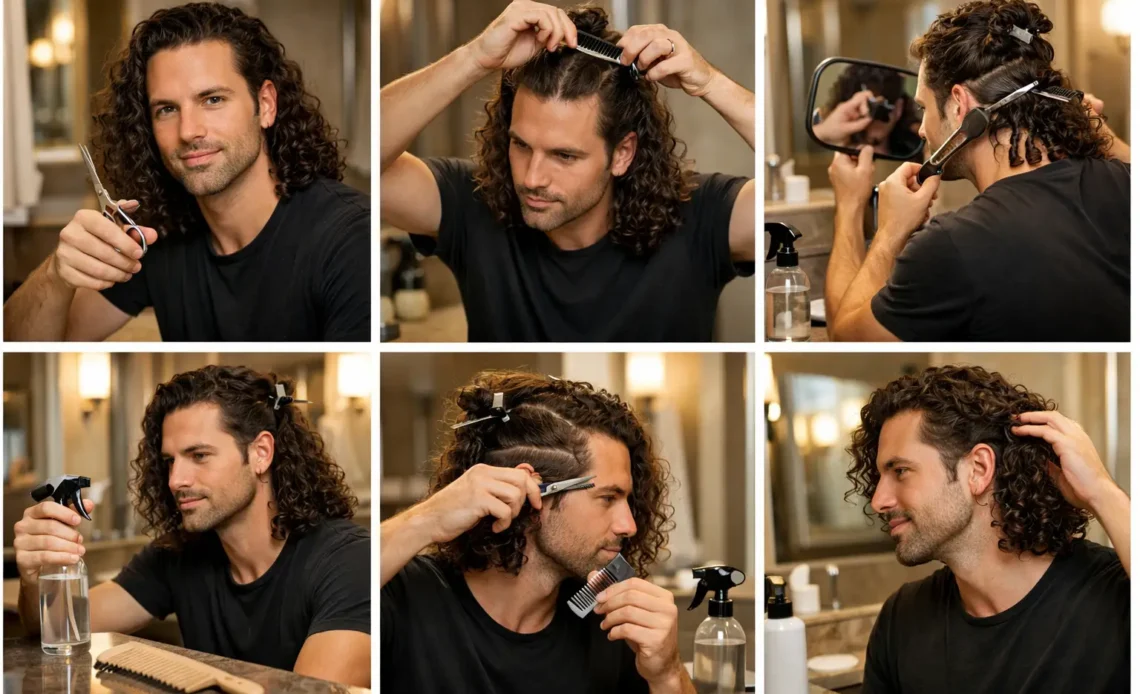
Long curly hair on men is one of the most striking and personality-driven looks available, but it comes with a unique set of challenges that straight hair simply does not present. The curls have a mind of their own. They shrink when dry, expand in humidity, and react differently to every cut depending on the technique used. For men who want to maintain their long curly hair at home, the learning curve is real but entirely manageable with the right knowledge, the right tools, and a clear understanding of what each design idea requires. Cutting your own long curly hair does not mean settling for a rough result. Done correctly, it means having complete control over a style that reflects your personality and works with your natural texture every single day.
This article walks through 15 distinct design ideas for men with long curly hair and explains how each one can be approached at home. Before the designs, the foundational technique is covered so that every cut you attempt builds on a solid base of knowledge.
Understand Your Curl Pattern Before You Cut Anything
The single most important step before picking up any scissors is identifying your curl pattern. Curly hair is generally categorized from type 2 wavy through type 3 curly to type 4 coily, and each type behaves differently when cut. Type 2 wavy hair has gentle S-shaped waves that lie relatively flat and have minimal shrinkage. Type 3 curly hair has well-defined spirals that spring up considerably when dry. Type 4 coily hair has tight, densely packed coils with the most significant shrinkage of all. Knowing your type allows you to calculate how much extra length to leave when cutting, since curls always appear shorter once dry than they do when wet and stretched.
Gather the Right Tools Before You Start
Cutting long curly hair at home without the correct tools produces uneven results regardless of technique. Sharp haircutting scissors are non-negotiable because blunt blades crush the hair shaft rather than cutting it cleanly, leading to split ends and frizz. A wide-tooth comb for detangling, sectioning clips to separate the hair into manageable portions, a handheld mirror for checking the back, and a spray bottle filled with water for dampening sections are all essential. For anyone who wants to fade or taper the sides, a quality clipper with adjustable guards from number one through number six provides the range needed to blend lengths accurately.
The Foundational Cutting Technique for Long Curly Hair at Home
Before any design idea can be executed well, the foundational technique must be understood. Always wash and condition the hair before cutting to remove product buildup and reveal the true curl pattern. Section the hair into four quadrants using clips: two at the front and two at the back. Begin at the nape, working upward section by section. Take a small section of hair between two fingers, hold it at a 90-degree angle from the scalp, and cut straight across to establish your guide length. Every subsequent section is matched to this guide. Leave the hair slightly longer than your intended final length to account for shrinkage once the hair dries. Point cutting, which involves angling the scissors vertically and cutting into the ends rather than straight across, removes bulk and adds texture without creating a blunt, heavy line.
The Long Curly Shape Up and Trim
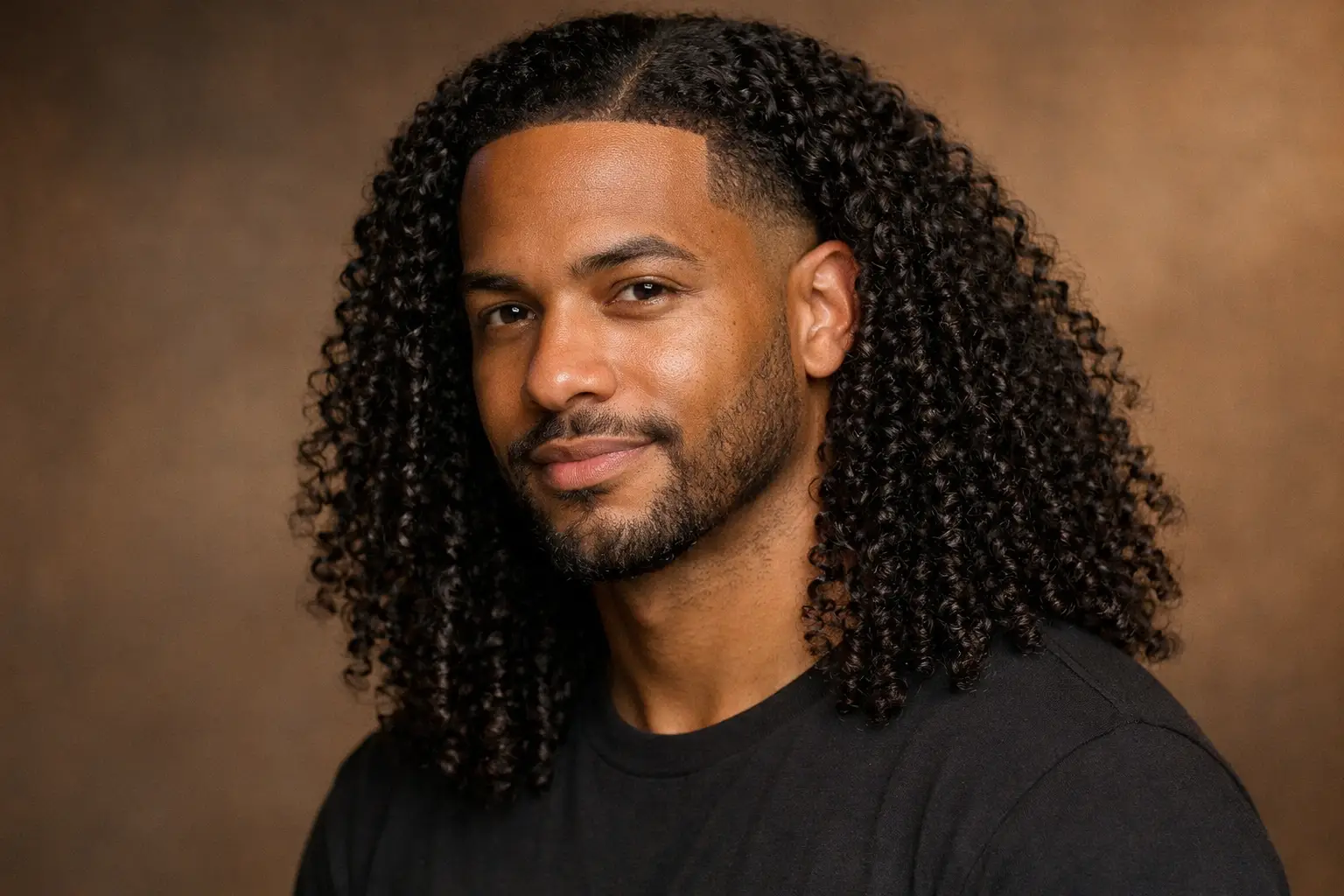
The shape-up and trim is the most essential home maintenance task for men with long curly hair. It involves trimming approximately half an inch to one inch from the ends to remove split ends and refresh the overall shape without reducing the length significantly. Working on dry hair allows you to see exactly how each curl sits naturally and prevents the over-cutting that wet hair stretch often causes. Trim any curls that visibly extend below the general length line of the style and clean up the hairline around the forehead and temples with a trimmer for a polished, intentional finish.
The Long Curly Layers Cut
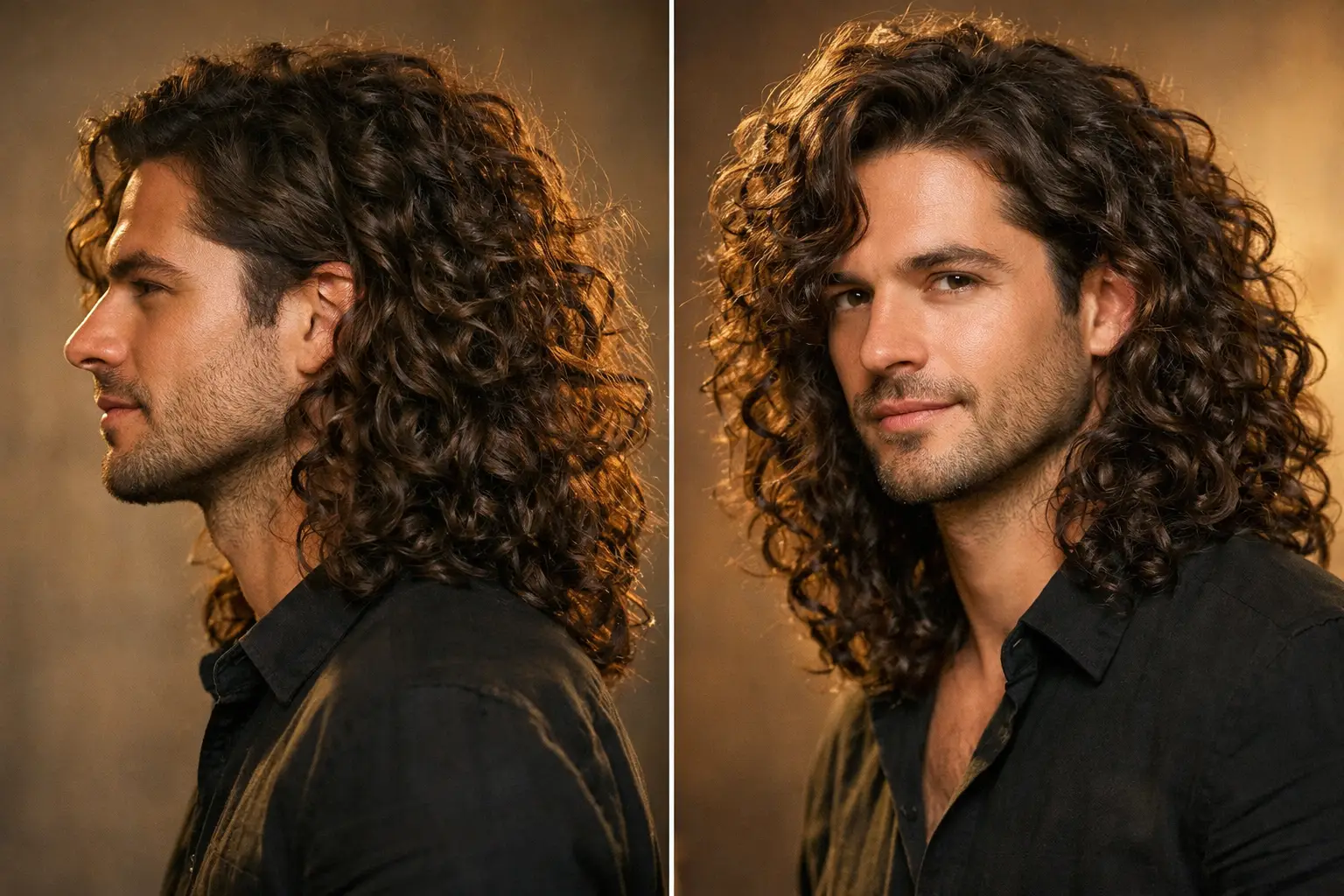
Adding layers to long curly hair creates movement, reduces bulk, and allows the curl pattern to express itself more freely at different lengths. To create layers at home, separate the hair into sections, hold each section upward at a 90-degree angle from the scalp, and cut to the desired shorter length. The contrast between the shorter layers on top and the longer lengths below creates depth and prevents the triangle-shaped silhouette that uncut long curly hair can develop. Layers also make the hair easier to manage on a daily basis because they reduce the overall weight pulling on each curl.
The Curly Undercut at Home
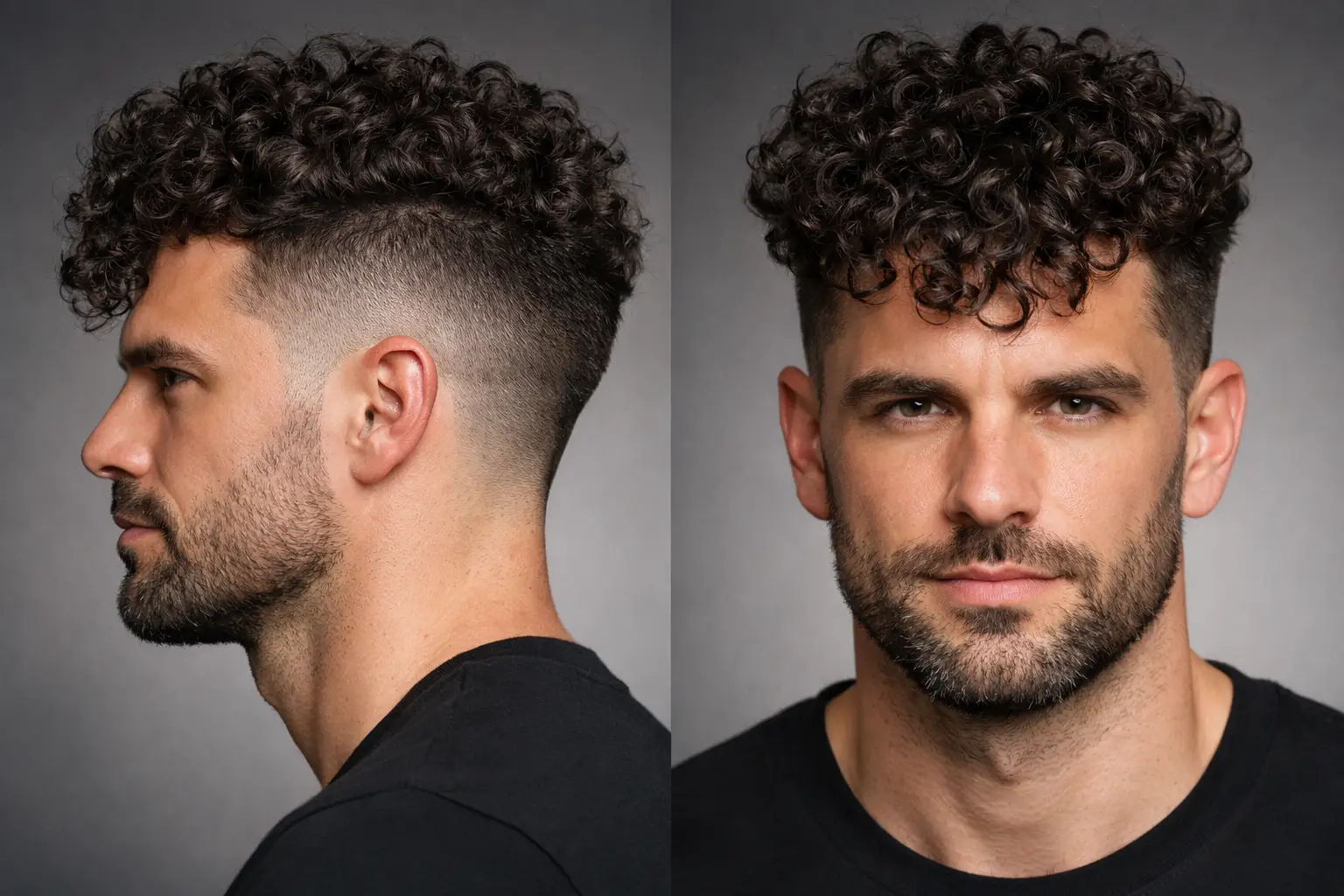
The curly undercut keeps the top long and curly while cutting the sides and back closely with clippers. At home, use a number two or number three guard on the sides and back, working upward in smooth, steady strokes from the nape toward the top. Leave a clear line where the clipper work ends and the longer curly top begins, or blend the transition gradually using a higher guard number to soften the contrast. The curly undercut is one of the most striking designs for men with long curls because it provides contrast, structure, and a framing effect that makes the curls on top the undisputed focal point.
The Long Curly Taper Fade
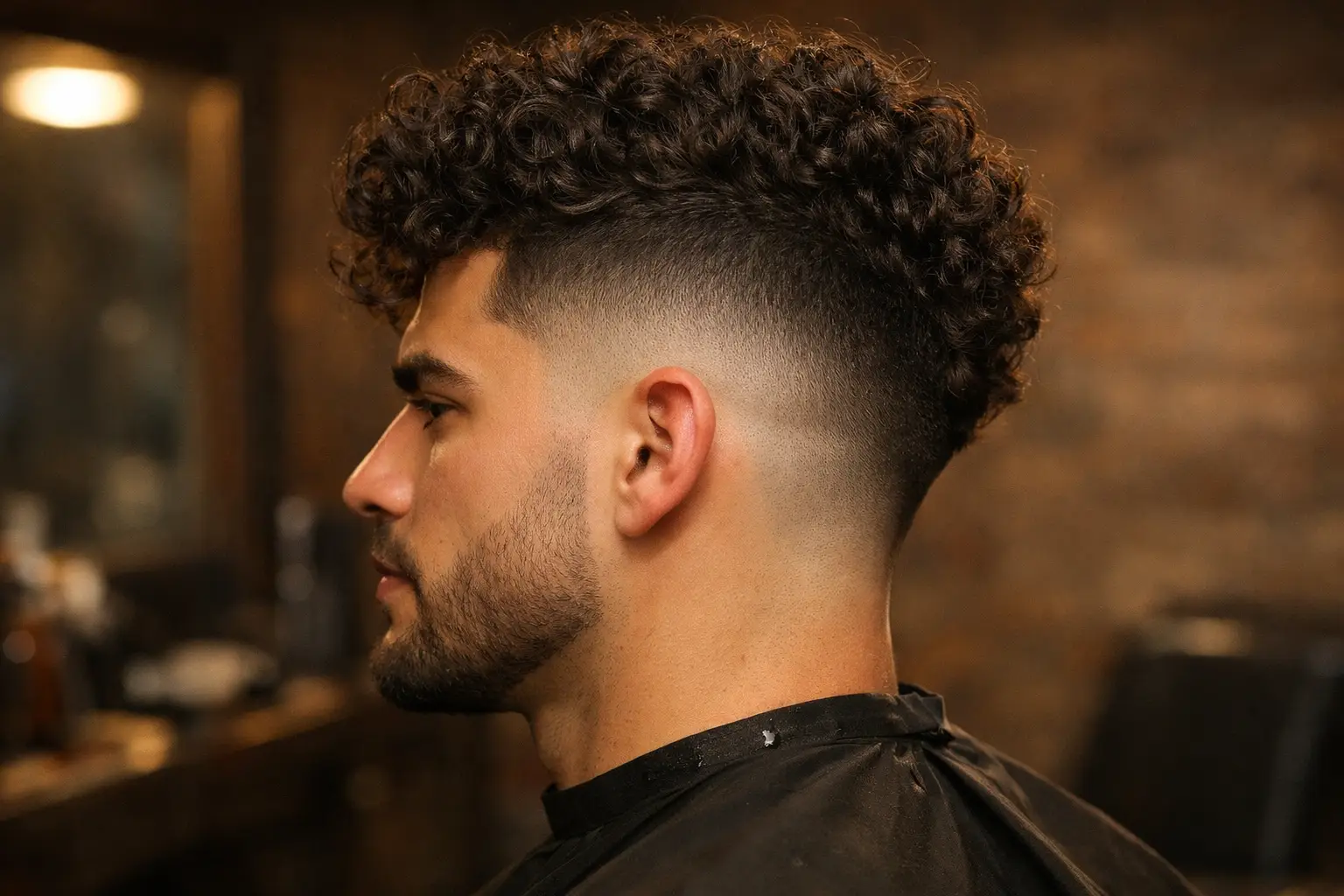
The taper fade on long curly hair takes the undercut concept further by blending the sides and back from a skin or very short length at the bottom up into the longer curls on top. Executing a clean taper fade at home requires patience and two mirrors to check the back. Begin with a number one guard at the base and gradually switch to higher guards as you move upward, blending each transition carefully before moving to the next. The fade should reach the point where the top curls begin to fall naturally, creating a clean, graduated transition from short at the bottom to full curly volume at the crown.
The Curly Man Bun Trim

The curly man bun is a style that requires the overall length to be maintained while keeping the ends healthy and the shape manageable. Trimming for a man bun involves dampening the hair, sectioning it into the position it would occupy in the bun, and trimming any visibly damaged or uneven ends. The goal is not to reshape the style dramatically but to keep the length consistent and the ends clean so that when the hair is gathered into a bun it has a full, intentional appearance rather than a scraggly, neglected one. Regular trims every six to eight weeks keep the man bun looking its best.
The Curly Mohawk Shape
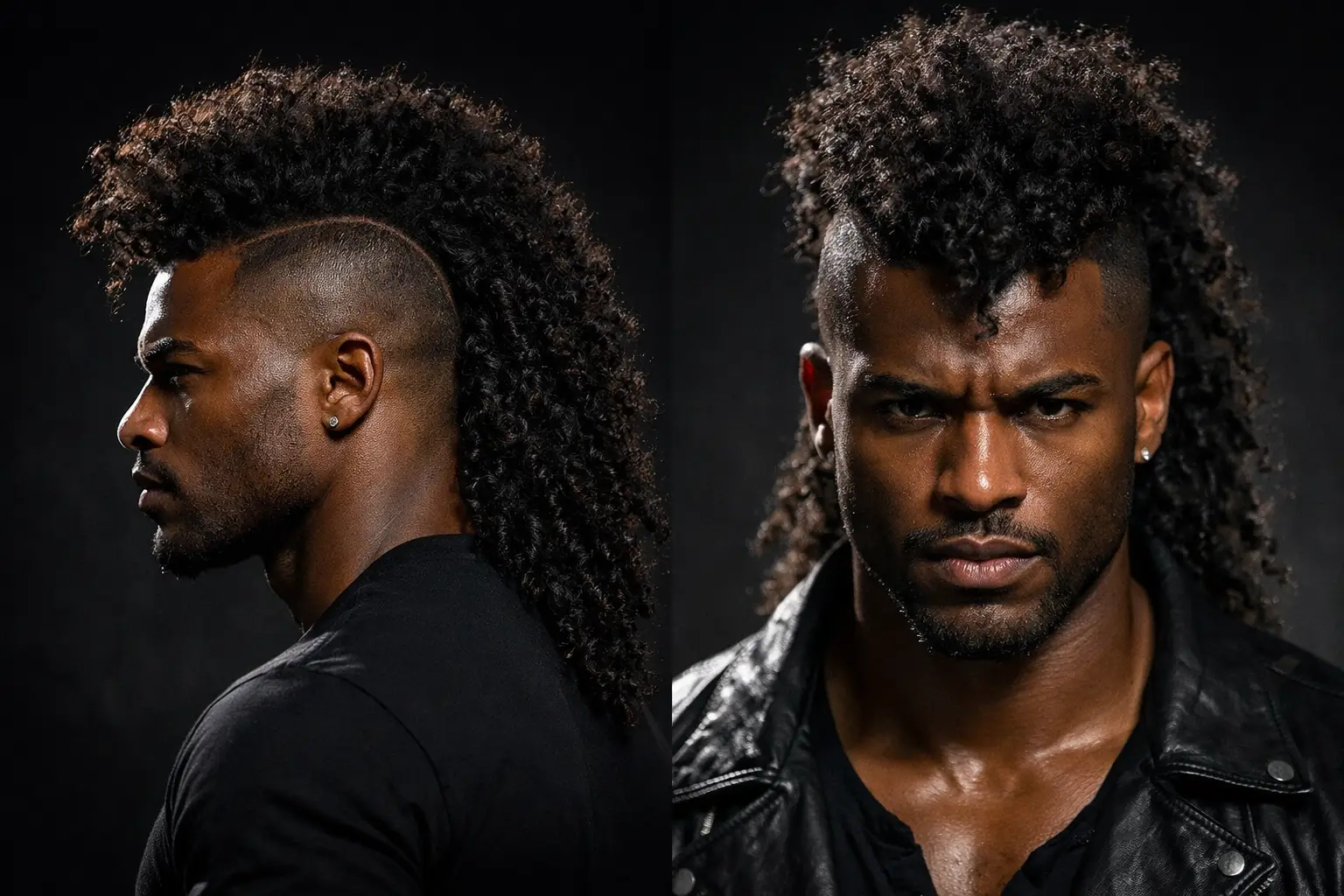
The curly mohawk for men with long hair involves close-cutting or shaving the sides while leaving the central strip of curly hair from the forehead to the nape at its full length. At home, use clippers with a low guard on the sides and work carefully around the ears. Define the edges of the central strip with a trimmer for a clean, precise line. The long curly strip in the center can be worn loose for a dramatic effect or gathered partially to create a flowing, textured finish. This design suits men who want a bold, high-impact style that still honors the natural curl pattern.
The Long Curly Side Part Cut

A side part on long curly hair is created by combing the hair to one side while still damp and encouraging the curls to fall in their natural direction from that part. Cutting for this design involves trimming the falling side slightly shorter to prevent it from overwhelming the face and leaving the opposite side fuller to create asymmetry. At home, apply a matte paste to damp hair to help manage the curls during cutting and use point cutting scissors to shape the ends without creating a harsh line. The result is a romantic, laid-back style that suits oval and heart face shapes particularly well.
The Curly Shag Cut at Home

The curly shag cut is characterized by layered texture throughout the entire length of the hair, creating a style with movement, volume, and a distinctly relaxed quality. To achieve a shag at home, cut multiple layers at different heights across the head starting from the longest desired length and working upward. Curtain bangs or a light fringe can be added by pulling the front section down toward the nose and point-cutting at an angle to create soft, face-framing pieces that blend naturally into the longer sides. The curly shag works best for type 2 and light type 3 curl patterns where the layers encourage genuine movement rather than simply adding volume.
The Square Layer Cut for Long Curls
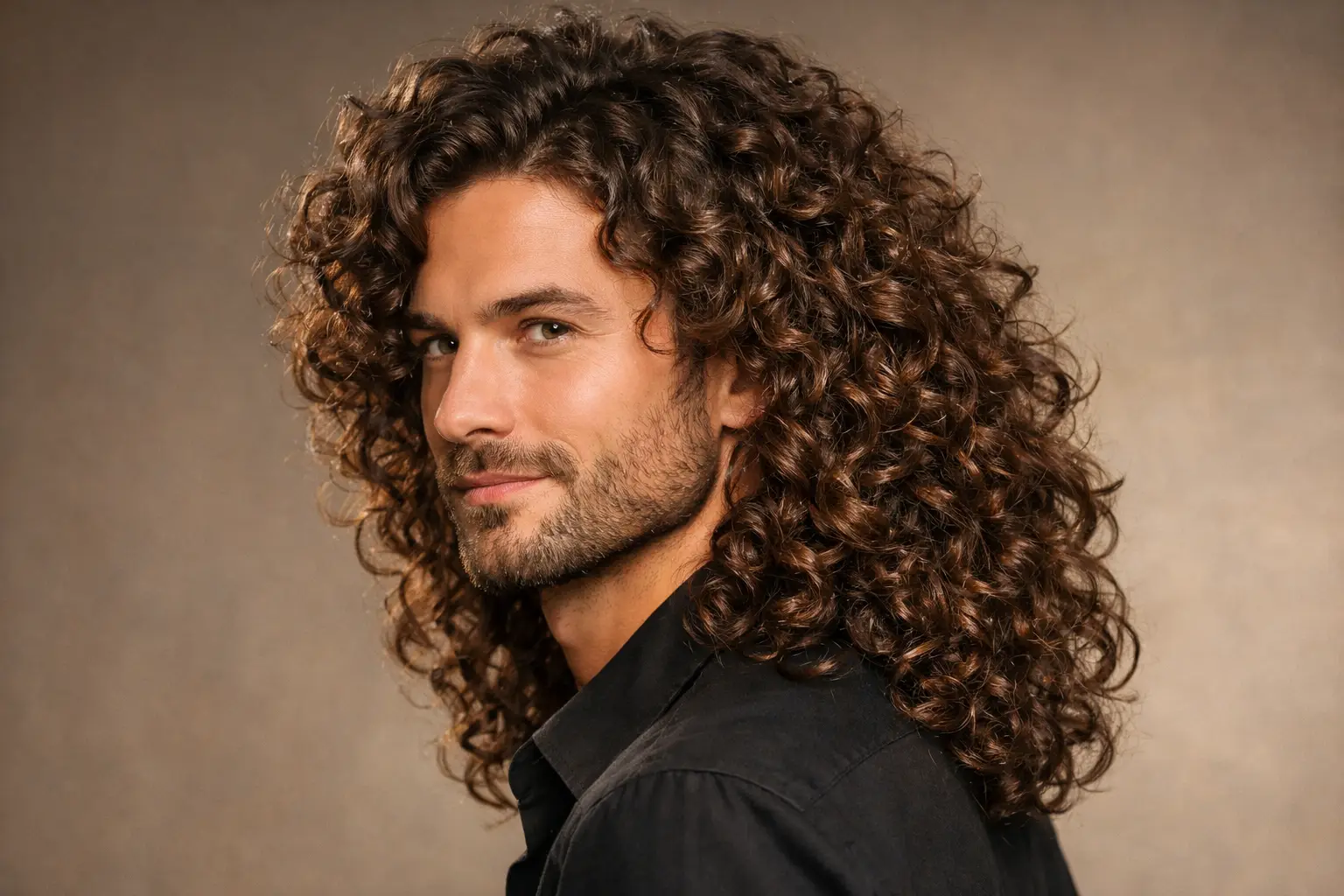
The square layer technique involves cutting the top sections of the hair to a shorter length while the bottom sections retain more length, creating a stacked, voluminous effect that suits long curly hair extremely well. At home, separate the top section into a horizontal part across the crown and cut it to the desired shorter length using the established guide. Then slice through the layers at a 45-degree angle with the scissors held diagonally to blend them into the longer lengths below. The result is a style with considerable body and a rounded, full silhouette that looks professional and intentional rather than DIY.
The Long Curly Wolf Cut
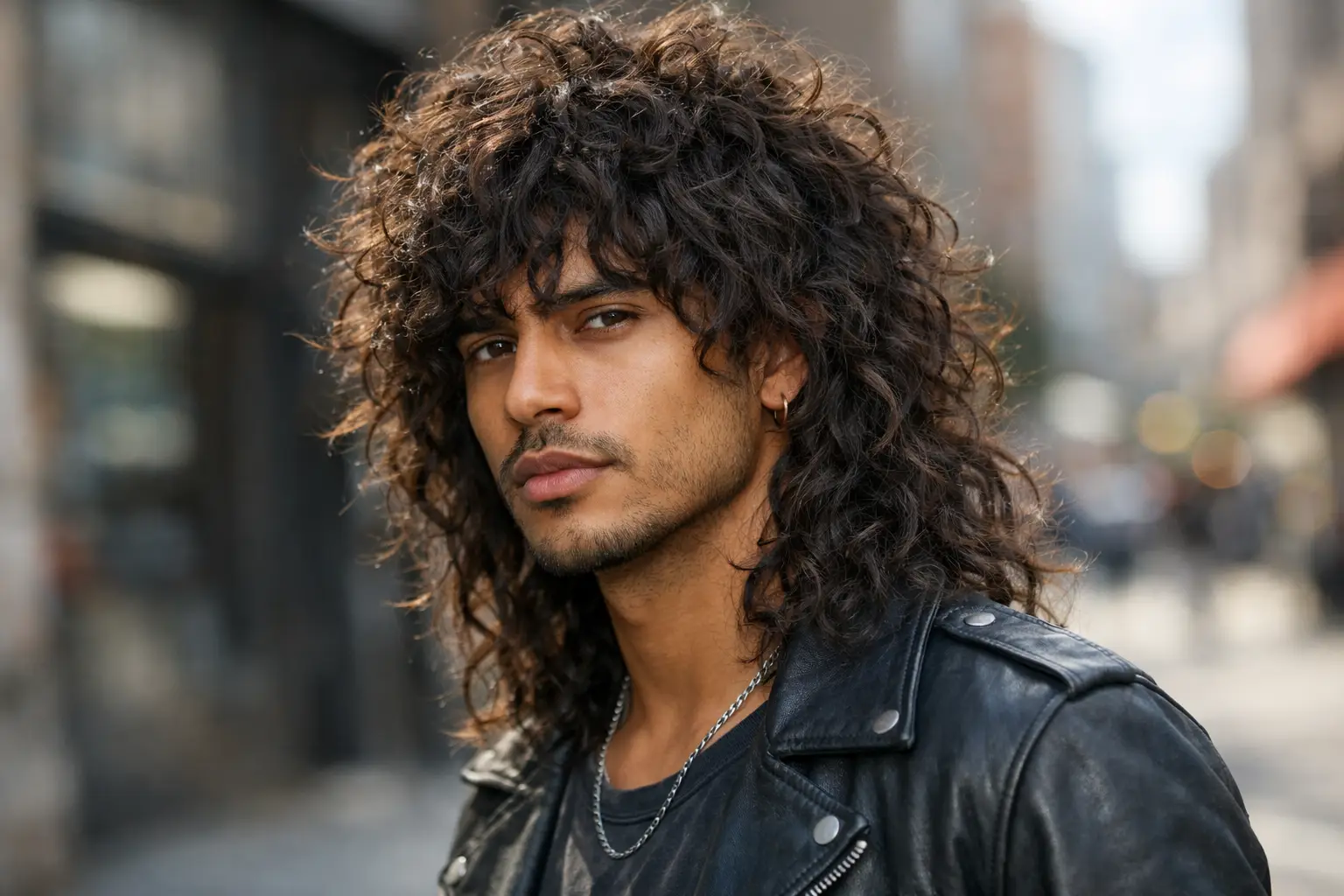
The wolf cut combines elements of the shag and the layered cut to produce a style with heavy layers at the crown, wispy ends, and maximum volume throughout. For long curly hair, the wolf cut is an extremely flattering design because the natural curl pattern fills out the heavy layers and prevents the style from looking flat. At home, create the crown layers first by elevating sections at a 90-degree angle from the top of the head and cutting them to approximately chin length or slightly below. Then work outward and downward, graduating the length toward the desired final length at the ends. Point cut throughout to maintain texture.
The Curly Ponytail Trim Method
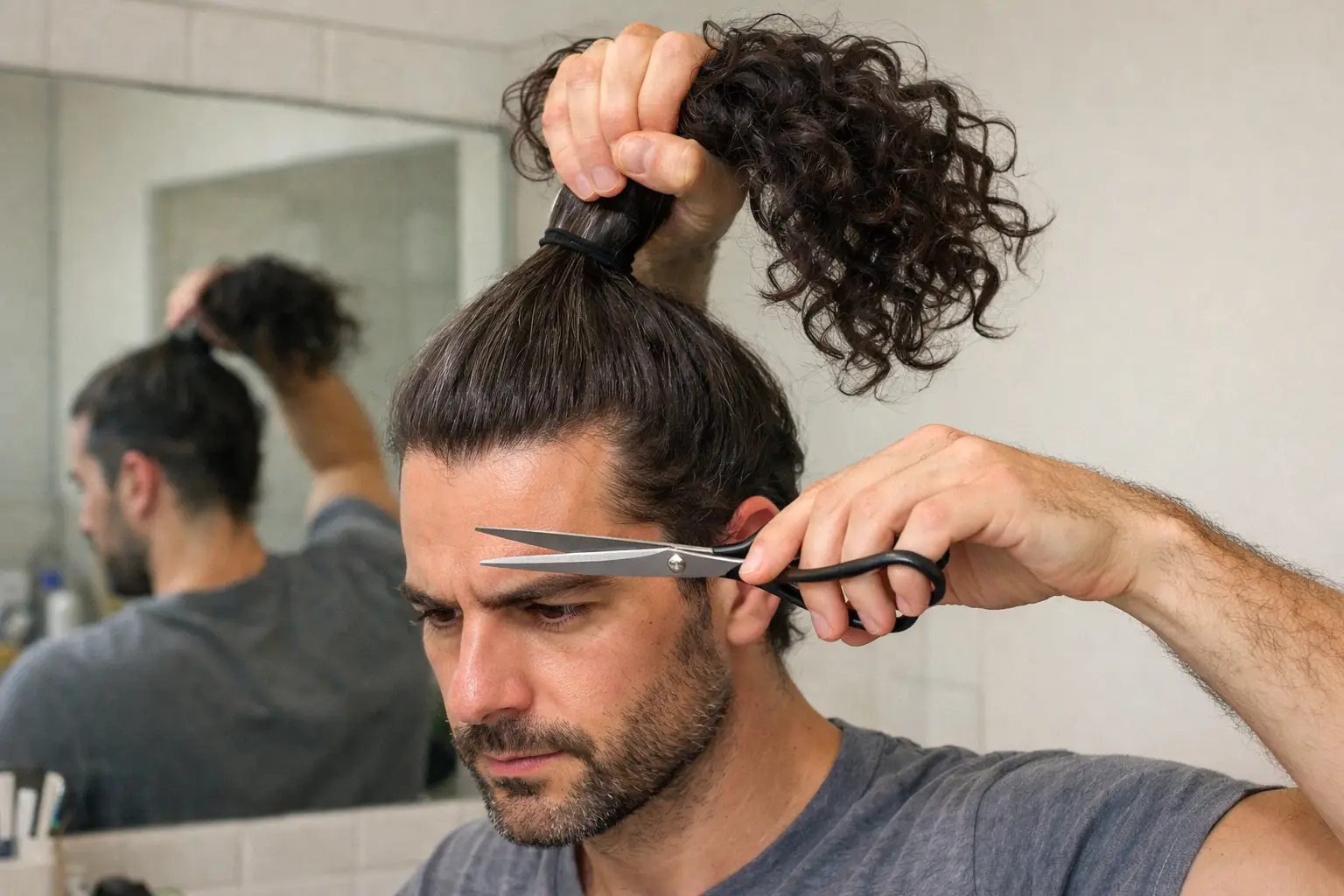
The ponytail method is one of the simplest and most forgiving home trimming techniques available for men with long curly hair. Gather all the hair into a high ponytail at the very top of the head and secure it firmly. Pull the ponytail straight upward and cut straight across at the desired length. When the hair is released and falls naturally, the cut creates automatic layering because hair from the crown falls shorter than hair from the sides and nape. The result is a style with built-in layers and face-framing pieces that required nothing more than a single straight cut.
The High Top Long Curly Style

The high top long curly style keeps the sides closely faded while allowing the curly hair on top to grow to a significant length, creating a dramatic column of curly volume above a clean fade. At home, maintain the fade on the sides and back regularly with clippers while leaving the top entirely untrimmed or trimming it only for shape. The key is keeping the fade line sharp and well-defined so that the contrast between the close sides and the long curly top reads as intentional. This style works best for type 3 and type 4 curl patterns that have enough density to hold height and volume without flopping.
The Twist Cut for Weight Removal
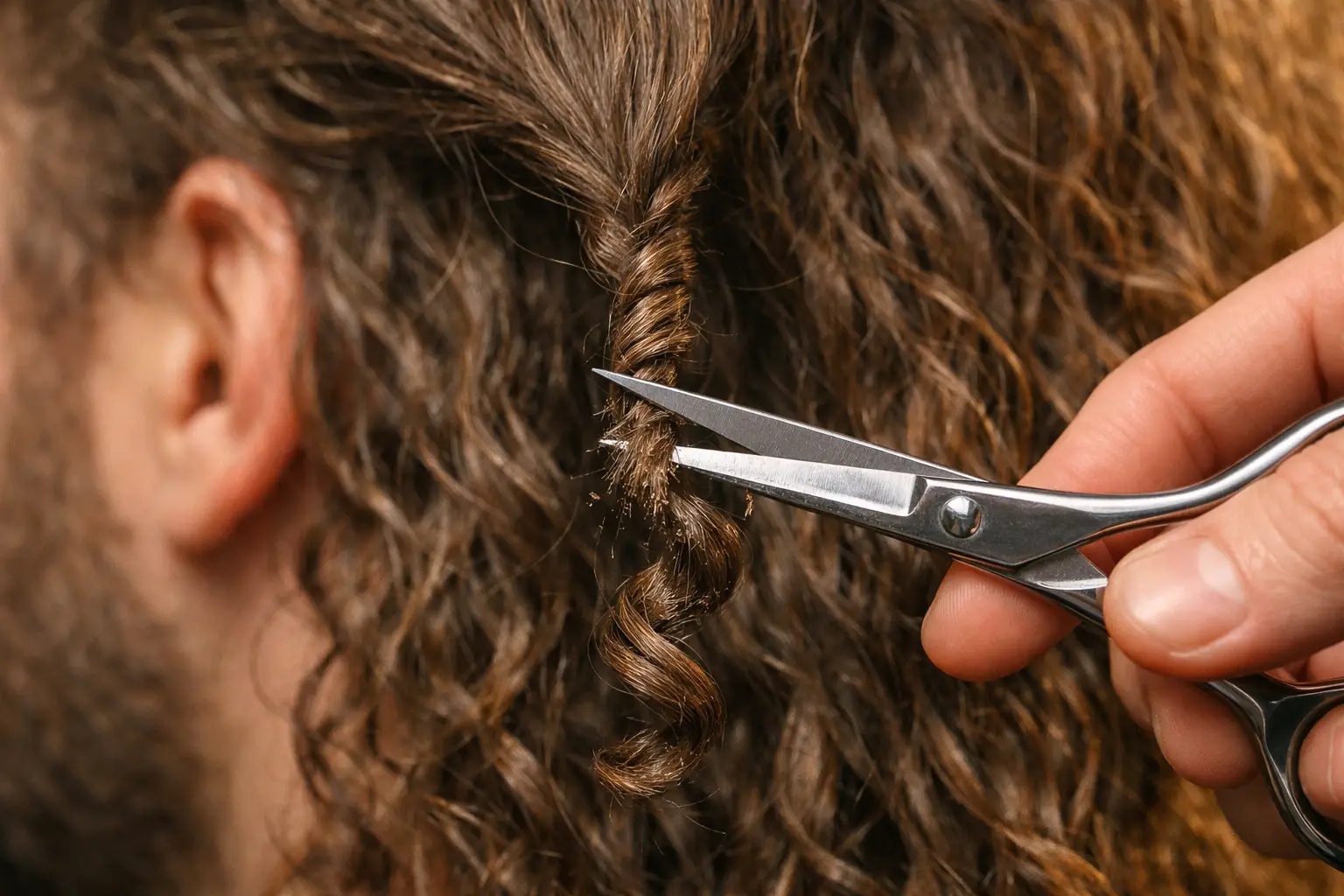
The twist cutting technique is invaluable for men with long curly hair that has become heavy and lost definition. Take small sections of hair, twist them in the same direction the curl naturally spirals, and trim the twisted ends with point-cutting scissors. The twisted position reveals any protruding hairs that extend beyond the curl’s natural boundary, allowing precise removal of bulk and damaged ends without reducing the overall length significantly. Twist cutting is particularly effective for type 3 and type 4 hair where weight at the ends causes curls to stretch and lose their shape over time.
The Diffuser-Finish Home Cut
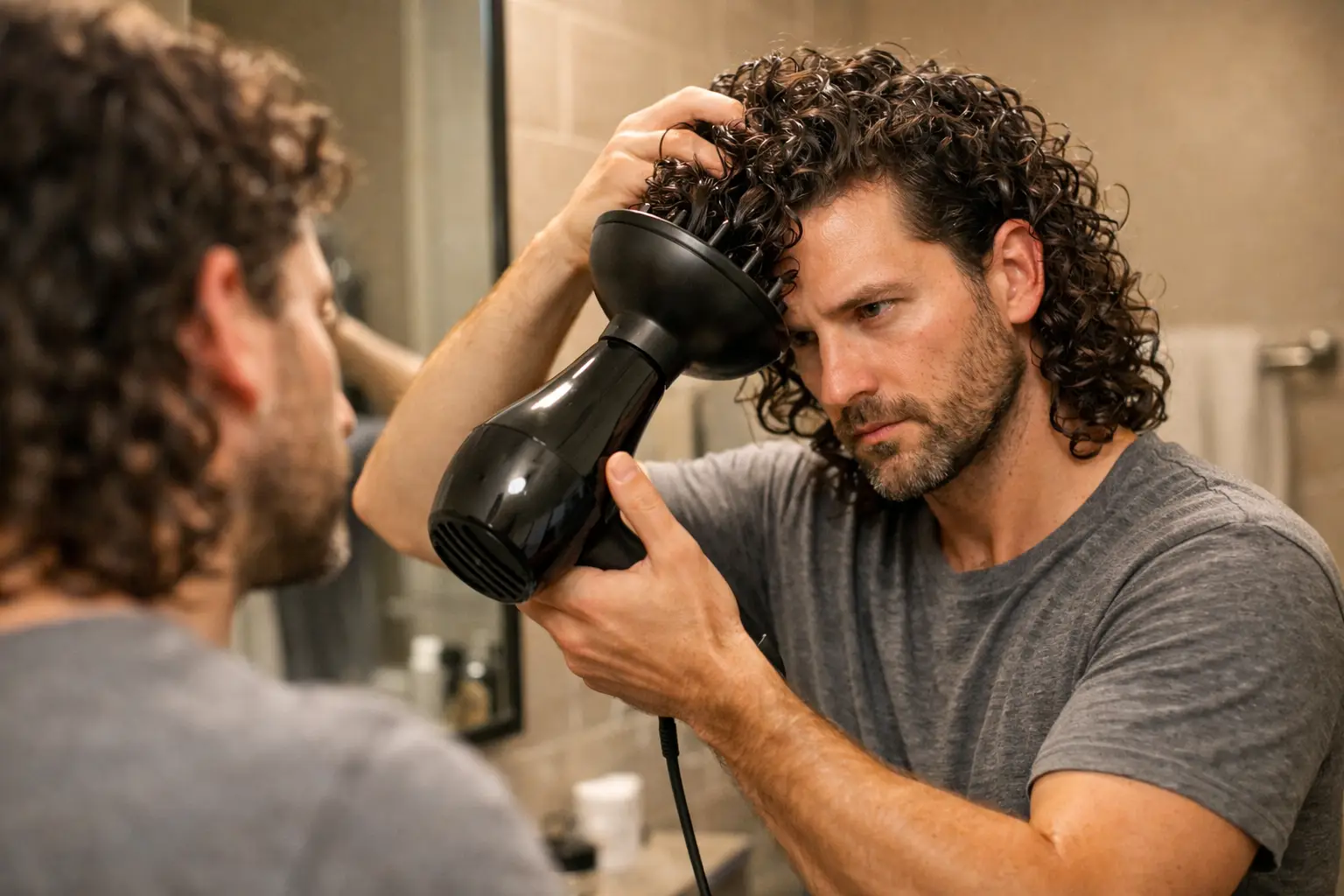
The diffuser-finish method involves cutting the hair while dry, styling it with curl cream applied to damp hands, and then diffusing it on low heat before doing any final trimming. This approach allows you to see exactly how each curl sits in its finished state before making any final adjustments, preventing the over-cutting that commonly occurs when cutting wet stretched curls. Any curls that stand out visibly below the main length line after diffusing can be trimmed individually with point-cutting scissors. This is the most precise method available for at-home long curly hair maintenance.
The Regular Maintenance Trim Schedule
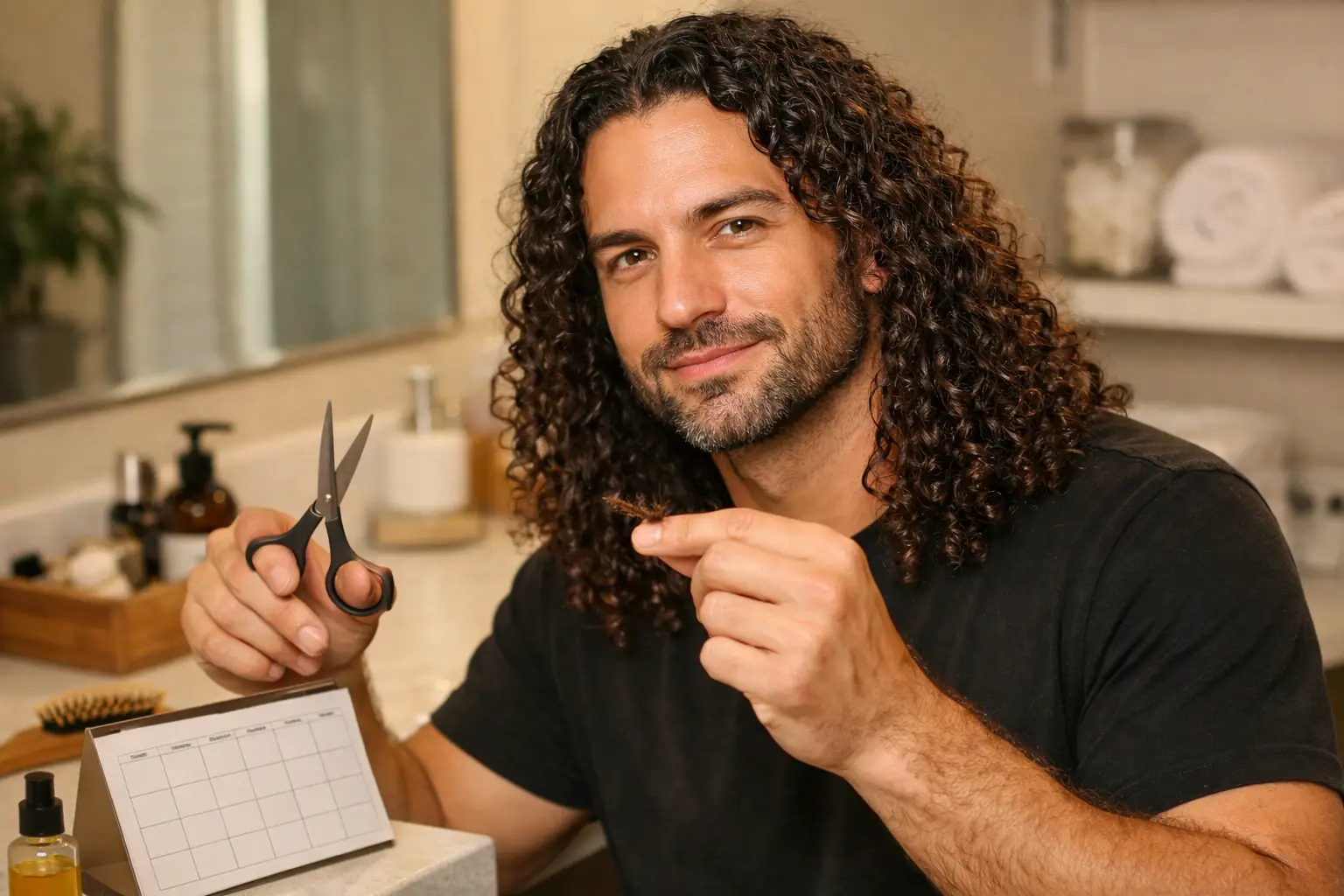
Consistency is what separates men whose long curly hair looks intentional from those whose hair looks overgrown. Scheduling a maintenance trim every four to six weeks removes split ends before they travel up the hair shaft, keeps the chosen style in its intended shape, and prevents the bulk buildup that makes long curly hair difficult to manage. A maintenance trim does not require removing significant length. It simply refreshes the ends, corrects any growth that has pushed the style out of shape, and keeps the hair healthy enough to showcase the curl pattern at its best. Committing to this schedule at home is the single most impactful grooming decision any man with long curly hair can make.
How to Care for Long Curly Hair After Cutting at Home
Post-cut care begins immediately after the scissors are put down. Apply a curl defining cream or leave-in conditioner to damp hair and scrunch the curls upward toward the scalp to encourage definition. Diffuse on medium heat rather than allowing the hair to air dry flat, which can distort the new shape. Avoid heavy oils or thick butters immediately after cutting as they can weigh the freshly shaped curls down and prevent them from bouncing into their natural position. A satin pillowcase or bonnet at night protects the cut from friction during sleep and preserves the curl definition into the following day.
Conclusion
Cutting men’s long curly hair at home is a skill that rewards patience, preparation, and a genuine willingness to learn how your specific curl pattern behaves. The 15 design ideas in this article represent a full range of styles from simple maintenance trims to bold architectural cuts, and each one can be executed at home with the right tools and technique. The most important principle running through every design is this: always account for shrinkage, always work in sections, and always point cut rather than cut straight across for a result that looks textured and natural rather than blunt and heavy. Your curls are an asset. Learning to cut and shape them yourself puts that asset entirely in your own hands.
You may also like this: 12 men’s long curly haircuts styles tips grooming
Frequently Asked Questions
Should I cut my long curly hair wet or dry at home?
Both methods work but produce different results. Cutting dry allows you to see exactly how each curl sits naturally and prevents over-cutting due to wet hair stretch. Cutting damp gives more control during sectioning. For beginners, dry cutting with a light mist of water is the safest approach as it combines control with accuracy.
How much length should I leave for shrinkage when cutting long curly hair?
As a general rule, leave at least half an inch to one inch more than your intended final length when cutting wet or damp hair. Type 4 coily hair can shrink by up to 75 percent of its wet length, while type 2 wavy hair shrinks considerably less. Always err on the side of leaving more length since you can always trim more but cannot undo an over-cut.
What is point cutting and why is it important for curly hair?
Point cutting involves holding the scissors vertically and cutting into the ends of the hair rather than straight across. This technique removes bulk and creates a textured, natural finish that blends with the curl pattern rather than creating a blunt line that disrupts it. It is the single most important cutting technique for anyone working with curly hair at home.
How often should I trim my long curly hair at home?
A trim every four to six weeks keeps long curly hair healthy and maintains the shape of any design. Men who use heat styling regularly may benefit from trimming slightly more often. A maintenance trim does not need to remove significant length, just enough to refresh the ends and correct any growth that has pushed the style out of shape.
Can I add a fade to my long curly hair at home without professional experience?
A basic taper or low fade can be achieved at home with quality clippers, adjustable guards, and two mirrors to check the back and sides. Start with a higher guard number than you think you need, work slowly, and blend each guard transition carefully before moving to the next. A skin fade that goes completely to the scalp is more difficult and carries more risk of a visible mistake, so beginners are better served by a taper that stops at a number one or number two rather than going to bare skin.
1 Comment