
Introduction
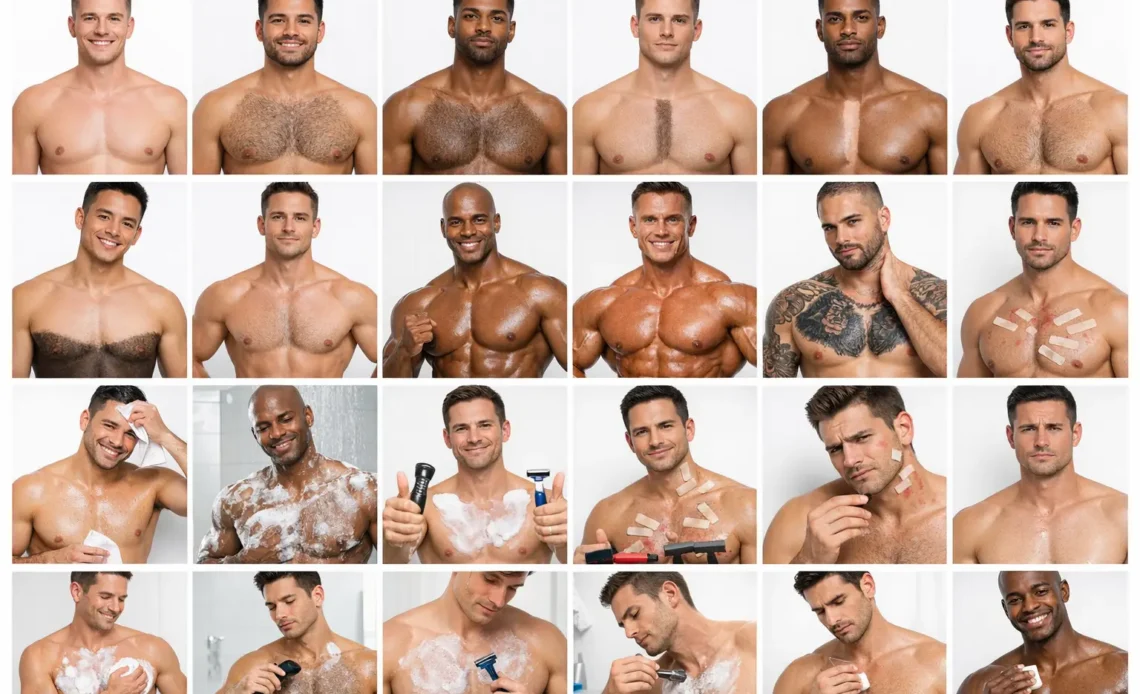
Chest hair grooming is one of the great unspoken debates in men’s grooming. There are no rules, just a wild mix of personal preference, cultural trends, and whatever your partner happens to like. What was once a niche concern has become a mainstream grooming practice. The numbers show that 94% of men aged 18 to 29 are grooming their chest hair every single month. Even 88% of guys in their 30s to 50s are doing it. Chest hair grooming is not some niche thing anymore, it is mainstream.
At the end of the day, chest hair grooming is not about masculinity. It is about comfort, confidence, and personal style. Whether you shave it off, trim it down, or let it run wild, the key is to do it intentionally. This guide covers 16 chest shaving and grooming design ideas along with a clear breakdown of the pros, cons, and step-by-step how-to process so that every man who reads it finishes with a complete understanding of what chest shaving involves and what it can achieve.
The Completely Smooth Shaved Chest
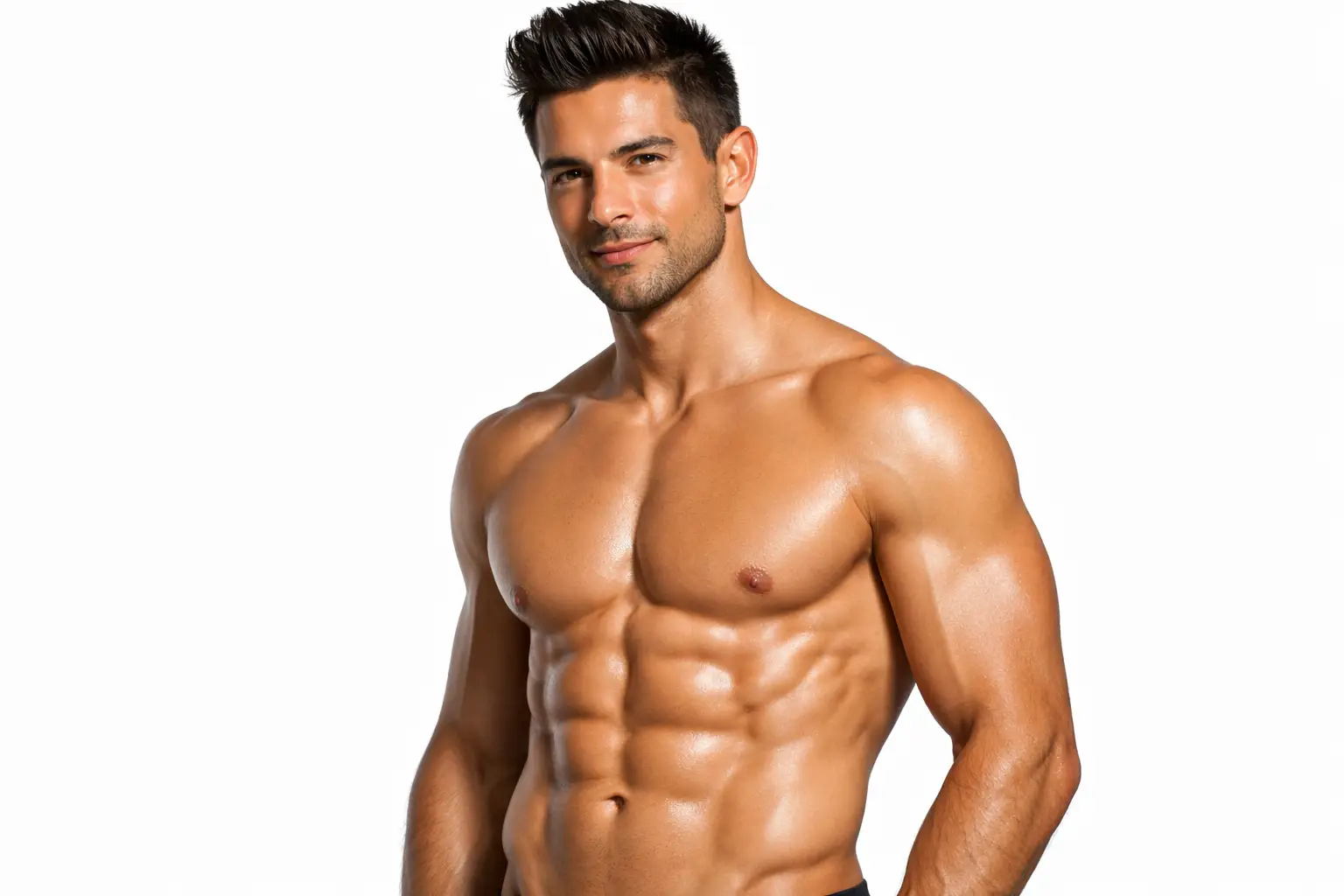
Smooth chests will always have their place in the world. They are at their best when you have not been skipping any workouts. The lack of chest hair will highlight your cut muscles, and it looks good. Watch any superhero movie and you will see when a smooth chest is at its best.The completely smooth chest is the most committed of all chest shaving choices and the one that requires the most consistent maintenance schedule. Shaving can give you a more groomed and on-trend look, boosting your confidence at the gym or the beach.It suits athletes, bodybuilders, swimmers, and any man who wants maximum muscle definition visibility without any hair obscuring the surface contours of the chest.
The Naturally Trimmed Chest Look
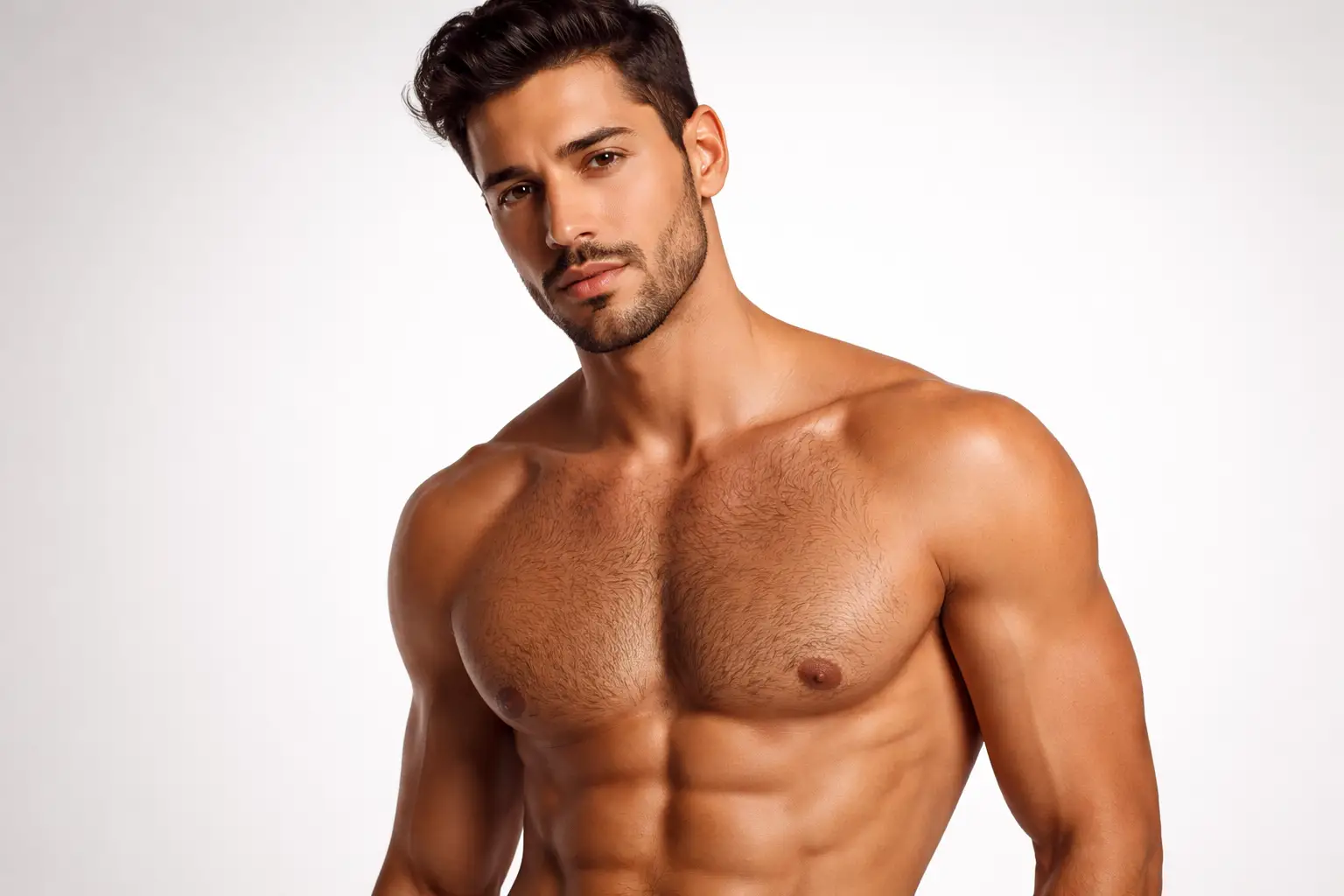
This style is the ideal option for most guys. You want to go for a natural chest hair look but you are getting things clearly under control. There is enough hair to convey masculinity but it is groomed in a way that highlights and accentuates what you are packing under your shirt. The grooming is intended to make you look good. For this style you are going to remove plenty of hair but you are going to leave enough that it is never stubble. The naturally trimmed look requires a body trimmer with a half-inch guard or longer and produces a result that reads as groomed and intentional without requiring the ongoing maintenance commitment of a full shave.
The Chest Hair Fade Design
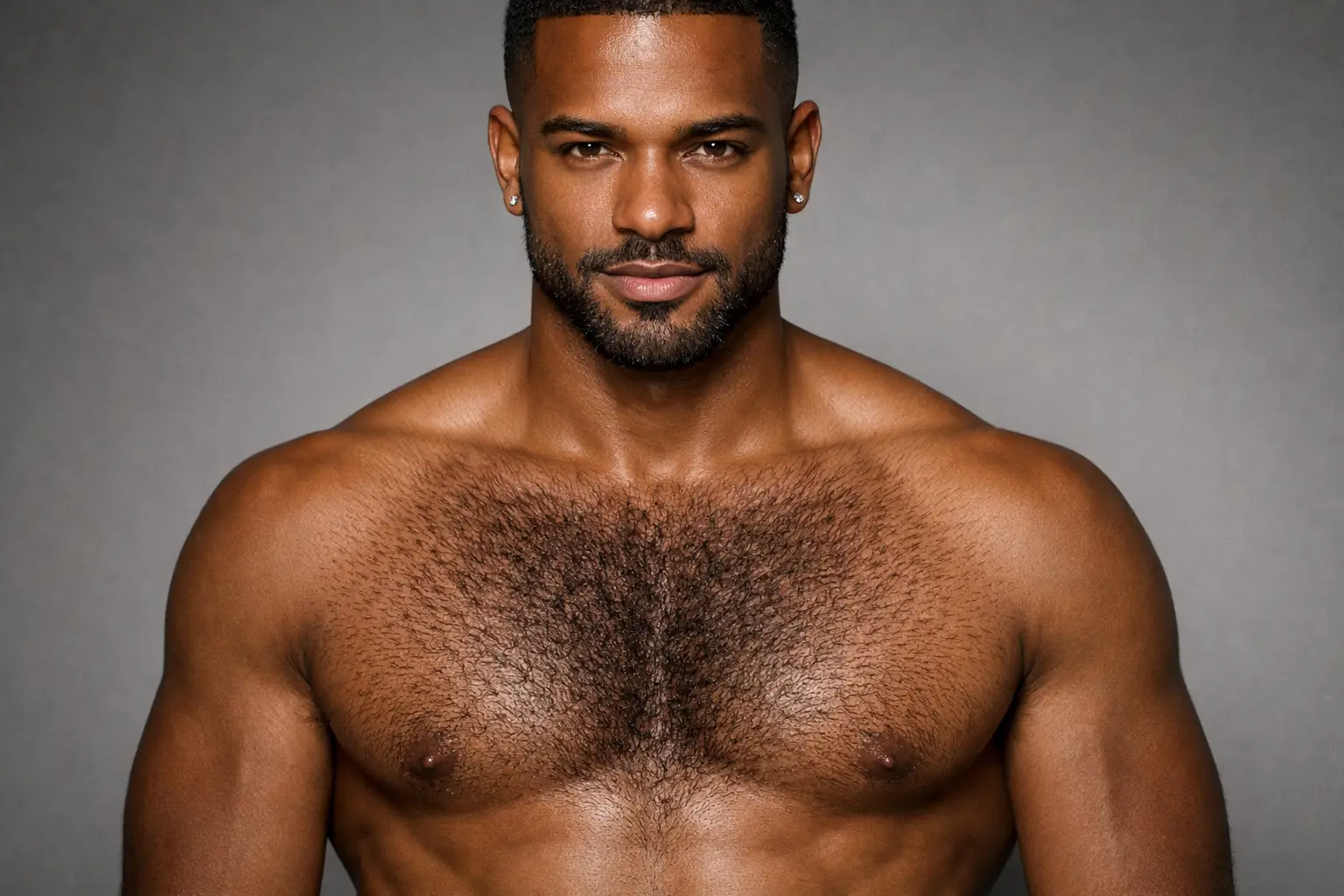
The chest hair fade takes the trimmer-based approach to a more creative level by using progressively shorter guard settings to create a gradient effect from denser hair at the center of the chest to shorter, lighter coverage toward the outer edges. Rather than buzz cut your chest, use an upward flared cutting stroke. This will result in the hairs being cut at different lengths but there will be order to the chaos. You get a gradient and the result is a controlled, natural look that suits the majority. The fade design suits men with denser chest hair who want a groomed appearance without completely removing the hair.
The Clean Sternum Strip Design
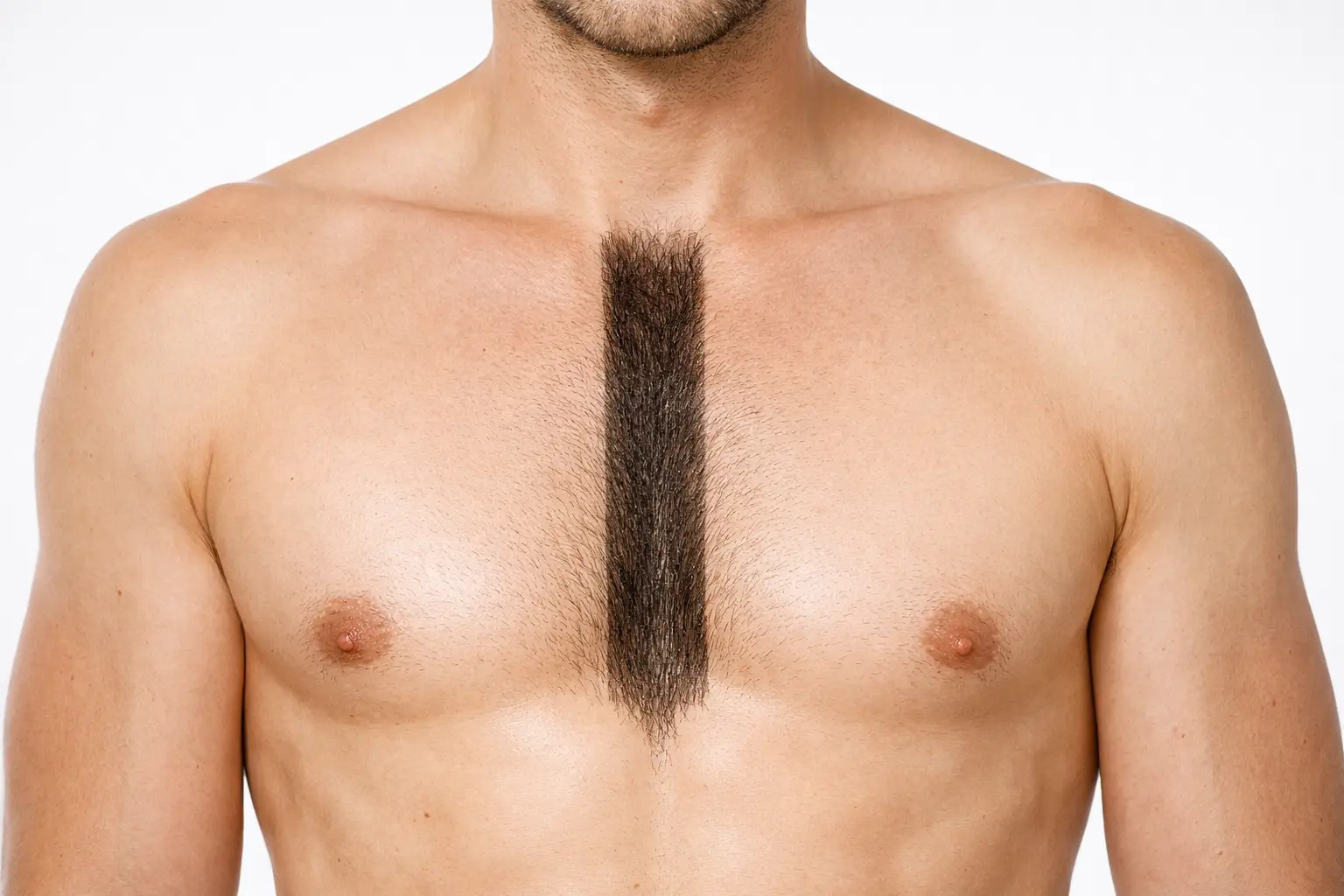
The clean sternum strip design shaves the sides and outer chest areas smooth while leaving a defined strip of trimmed hair running down the center of the chest along the sternum. This creates a deliberate and architecturally considered chest hair design that provides a middle ground between the fully smooth chest and the naturally trimmed look. The strip width and length can be adjusted to suit individual preference, and maintaining clean edges with a razor on each side of the strip produces the precise, intentional quality that elevates this design above a simply unshaved appearance.
The Upper Chest Only Shaved Design
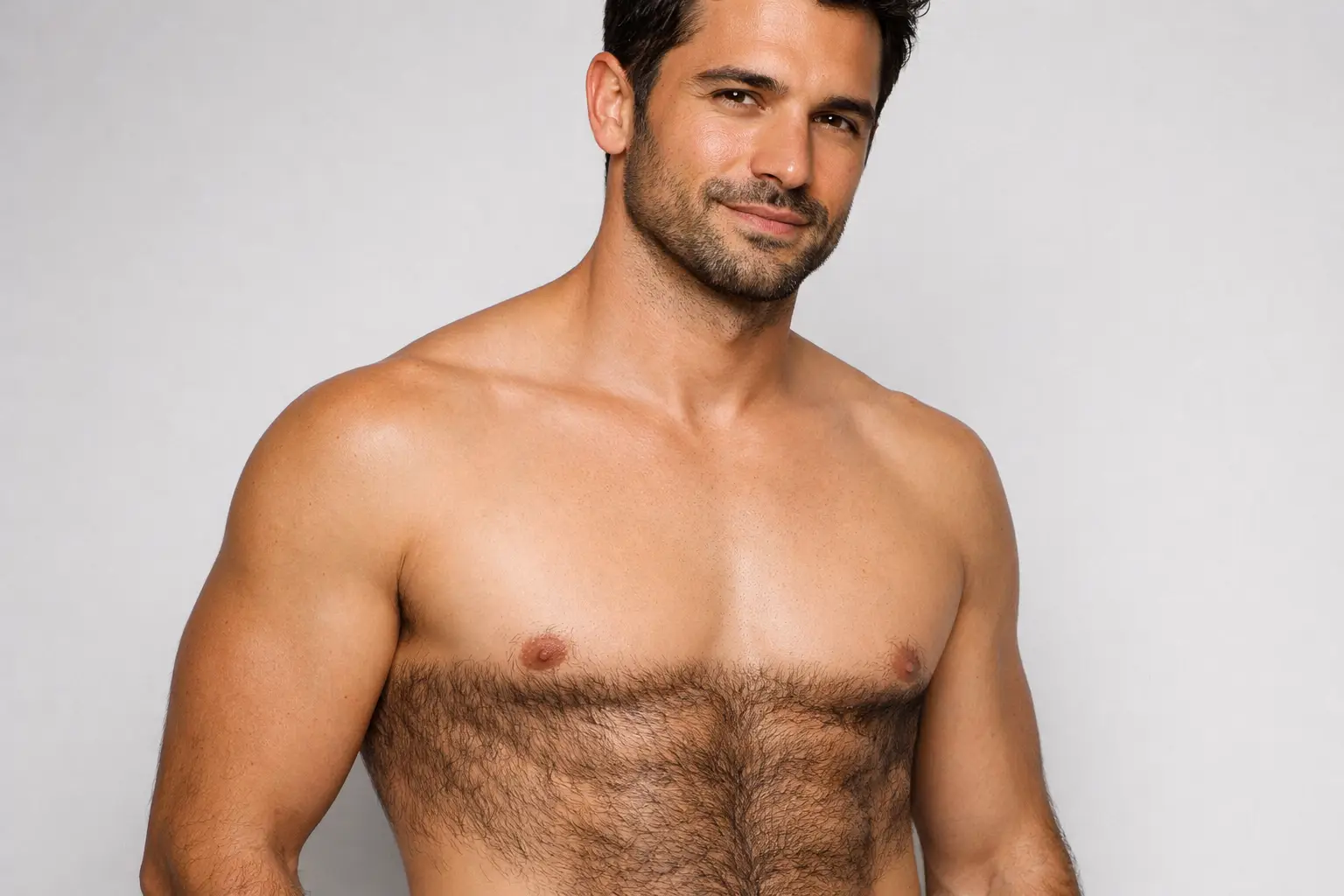
The upper chest only design shaves the hair from the pectoral area and collarbone region while leaving the lower chest and abdominal region with natural or trimmed hair. This approach suits men whose chest hair is denser or more visible at the upper chest and who want to prevent hair from being visible above shirt necklines. Some guys shave because they feel self-conscious about excessive chest hair poking through shirts. Others just prefer the smooth feel. The upper chest shave requires attention to the transition line between shaved and trimmed sections to ensure the boundary looks deliberate rather than accidental.
The Athletic Performance Shave
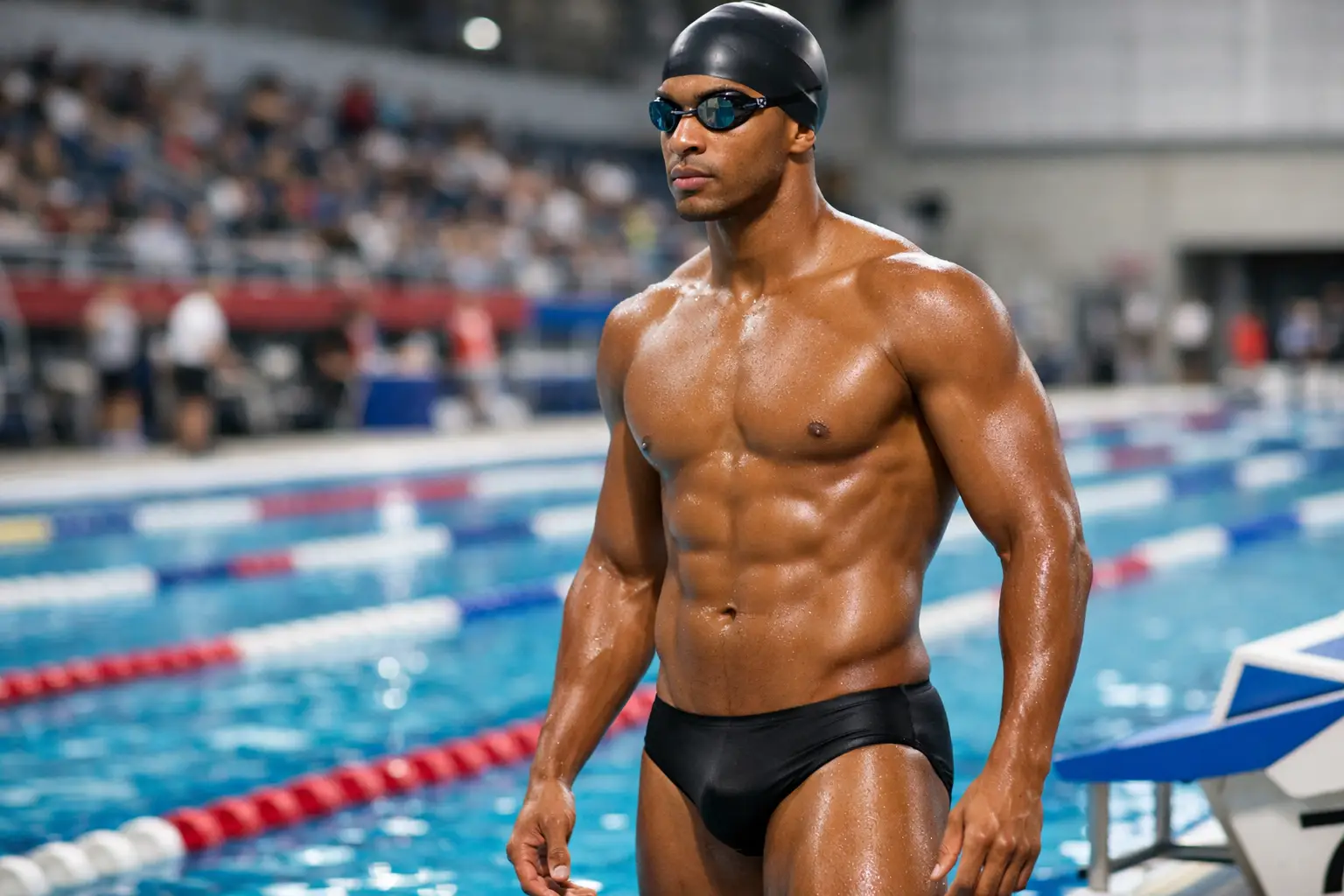
Swimmers, cyclists, and triathletes shave their whole bodies for a reason. Less drag means faster times. For cyclists, crashes are brutal enough without the added torture of bandage removal. The athletic performance chest shave removes all hair from the chest and torso for functional rather than purely aesthetic reasons. This approach is standard preparation for competitive swimmers before major events and is increasingly adopted by cyclists, triathletes, and other endurance athletes who benefit from the marginal gains that reduced drag and easier wound care provide during training and competition.
The Bodybuilder Competition Shave
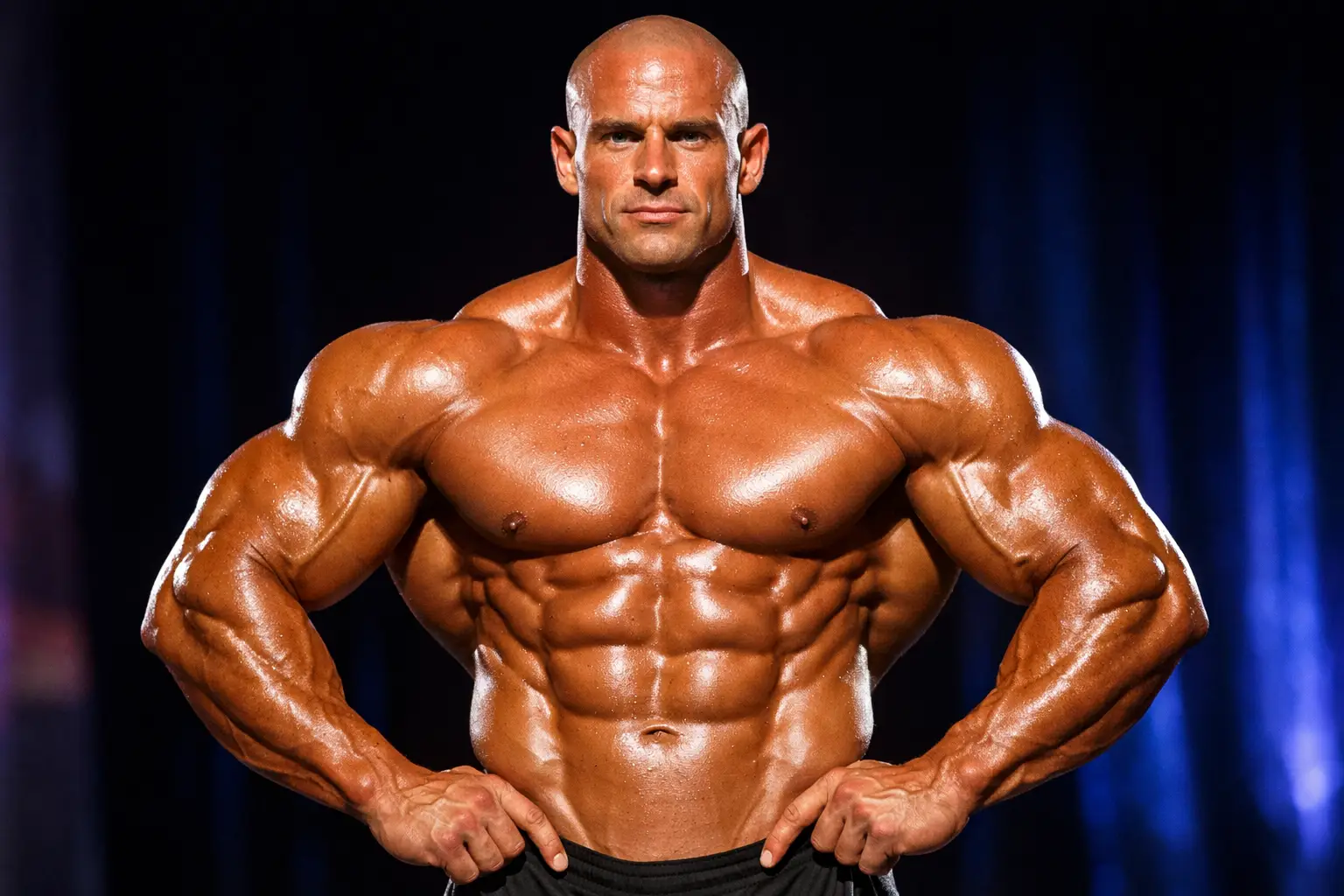
Bodybuilders shave for competitions because smooth skin shows definition better than hairy skin ever could. Show Off Muscle Definition. Hair hides all that hard work. Shaved pecs make every muscle pop especially if you are lean. The bodybuilder competition shave removes all body hair from the chest, abdomen, and upper body to maximize the visual impact of muscle definition under competition lighting. Combined with competition tan and posing oil, a completely smooth chest allows every striation and muscle group to be seen by judges with maximum clarity. This is the most specifically functional of all chest shaving design ideas and the one with the clearest performance justification.
The Tattoo Enhancement Shave
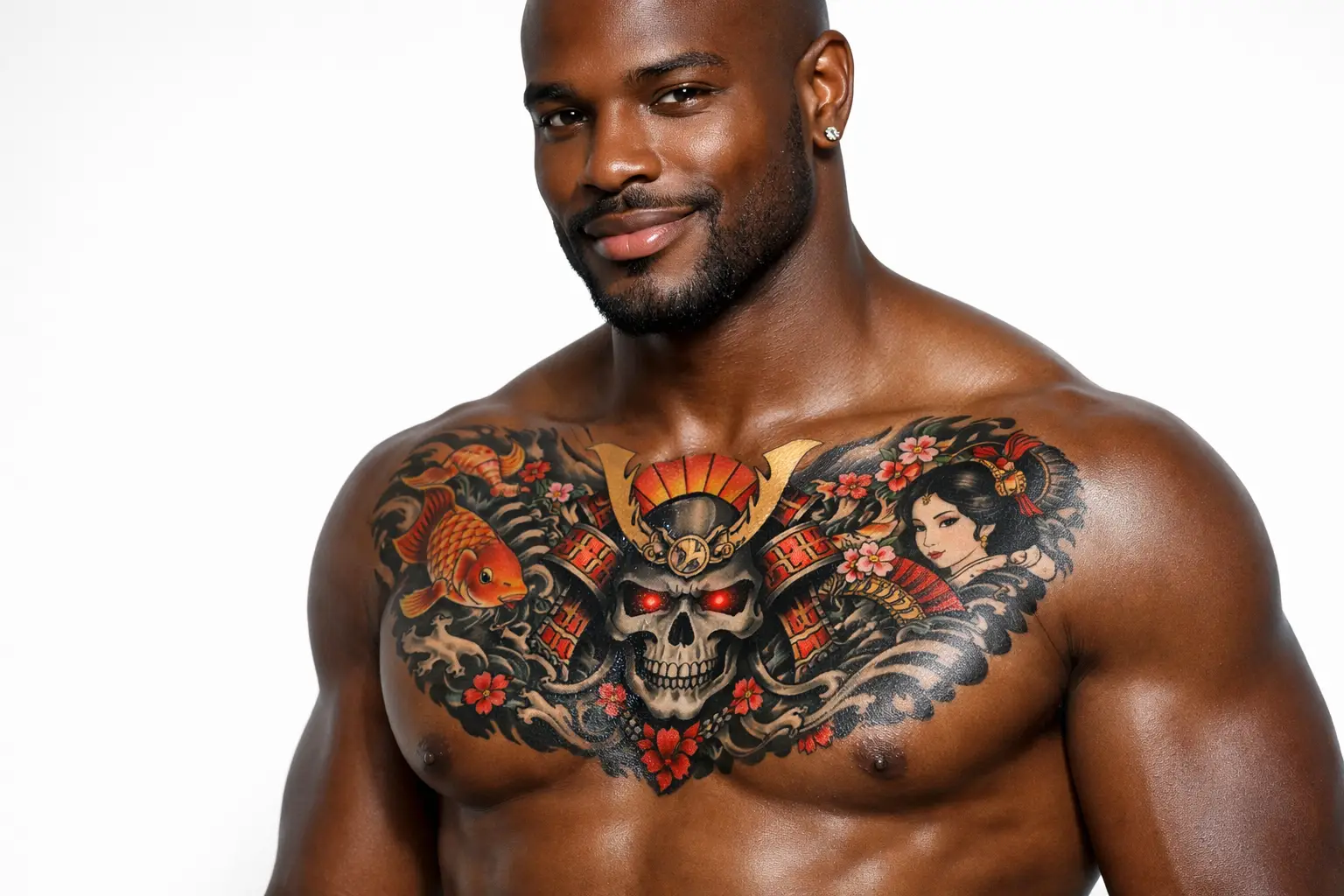
Got chest ink? Hair covers up your expensive artwork. A shaved chest makes tattoos look crisp and vibrant exactly how the artist intended. A chest tattoo that is partially or completely obscured by chest hair loses a significant portion of its visual impact, and shaving the area around and over a tattoo restores its full artistic visibility. The tattoo enhancement shave is one of the most personally motivated chest shaving decisions available and one of the clearest examples of grooming that serves a specific aesthetic goal beyond simple hair removal.
The Summer Heat Management Shave

Thick chest hair traps heat like a sweater. Smooth skin lets air circulate better. You will feel noticeably cooler on hot days or in humid weather.The summer heat management shave is motivated by thermal comfort rather than aesthetics, and the functional benefit it provides during hot weather activity is genuine and immediate. Men who exercise outdoors in warm climates, work physically demanding jobs, or simply live in consistently hot environments find that chest shaving meaningfully improves comfort throughout the day by eliminating the insulating layer that dense chest hair creates against the skin.
The Hygiene-Focused Chest Shave

Hair traps sweat, dead skin, and bacteria. Better Hygiene: Products like moisturizers, sunscreen, and acne treatments work better on bare skin. They actually reach your skin instead of coating the hair. Men who experience chest acne, folliculitis, or skin irritation from sweat and bacteria trapped in dense chest hair may find that regular chest shaving significantly improves their skin condition by eliminating the environment in which bacteria accumulate. The hygiene-focused shave is particularly relevant for men who exercise heavily and frequently, work in hot environments, or have a history of chest skin issues that have not responded adequately to topical treatments alone.
The Chest Shaving Pros
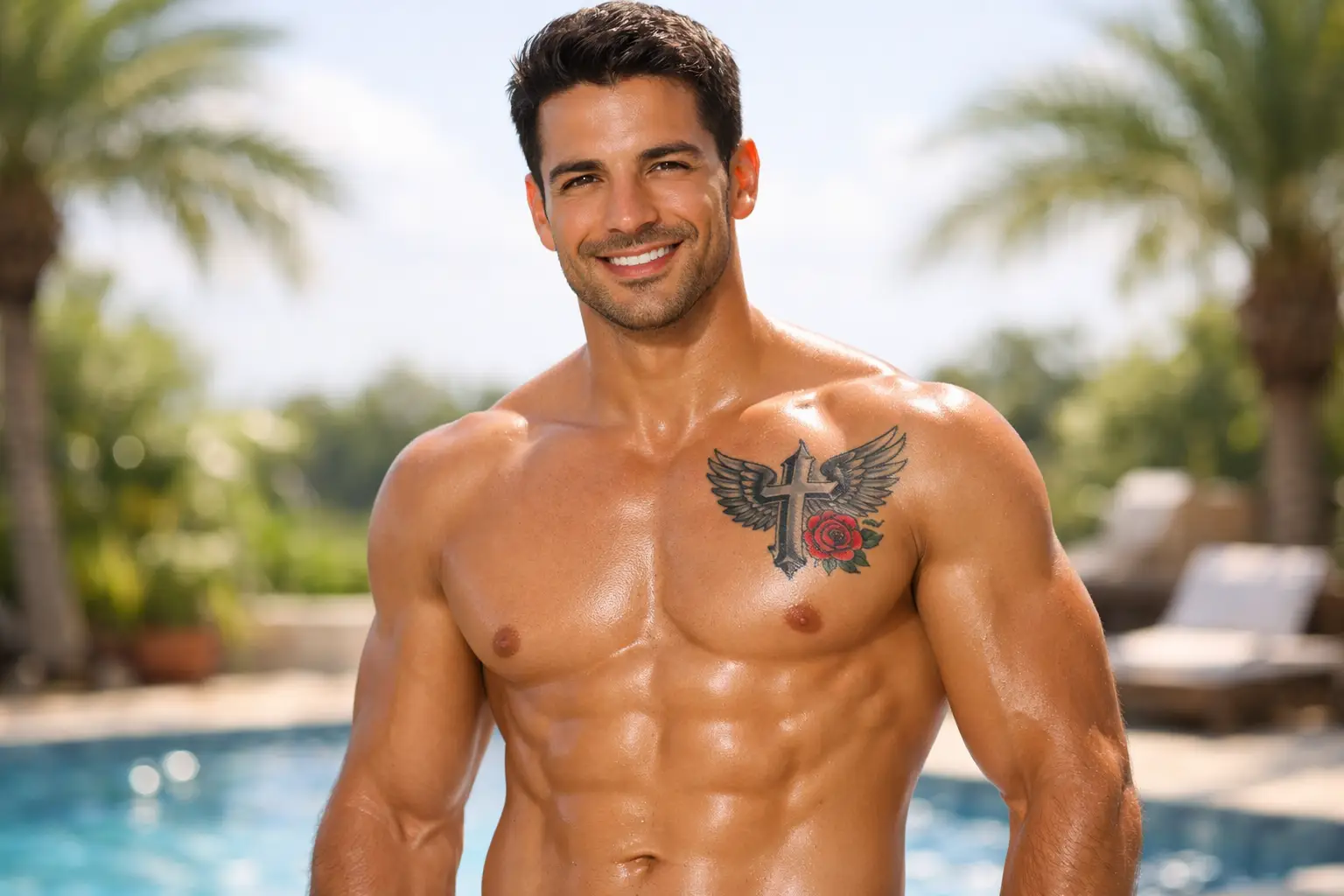
The advantages of chest shaving are genuine and broadly applicable across a wide range of men and situations. Show Off Muscle Definition: Shaved pecs make every muscle pop especially if you are lean. Show Off Tattoos: A shaved chest makes tattoos look crisp and vibrant exactly how the artist intended. Confidence Boost: If shaving makes you feel more confident that is reason enough. Cooler in Summer: Smooth skin lets air circulate better. Better Skin Care: Products actually reach your skin instead of coating the hair. Athletic performance benefits, improved hygiene, and the aesthetic advantages of a clean and groomed appearance across both shirtless and clothed situations complete the list of reasons men consistently cite for maintaining a chest shaving routine.
The Chest Shaving Cons
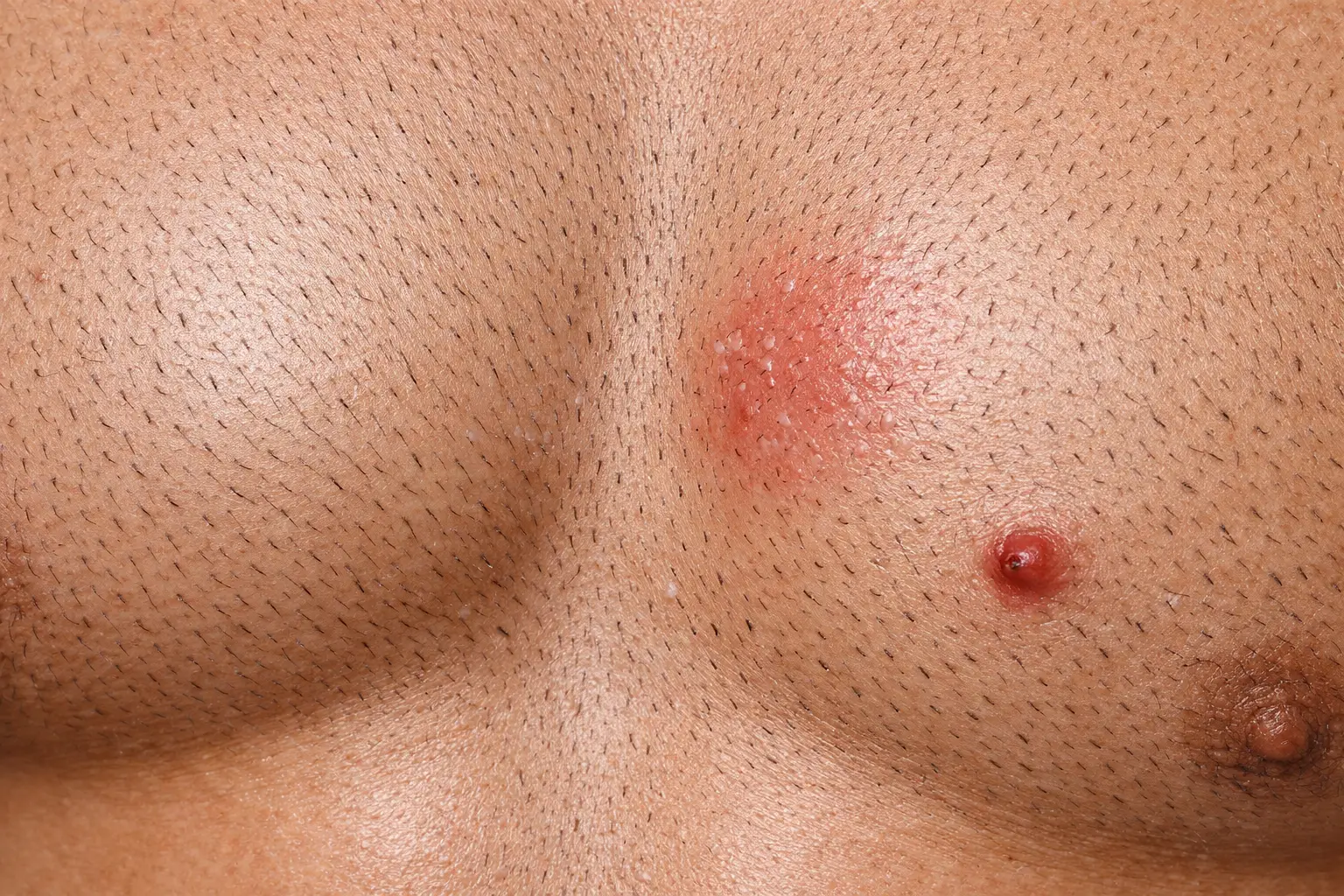
Shaving is considered one of the worst methods for grooming chest hair due to the risk of stubble, ongoing maintenance, itchiness, and irritation. Stubble Trouble: Short prickly stubble feels like Velcro rubbing against your shirt. Walking moving and even sitting become annoying. Endless Maintenance: Once you start you are locked in. Chest hair grows back fast. You will need to shave every 4 to 7 days to maintain a smooth appearance. That is 60 to 90 shaves per year. Shaving coarse or curly chest hair can be more challenging as it may increase the risk of ingrown hairs and irritation. The time commitment for the first chest shave and the ongoing maintenance required represent the most significant practical disadvantages that men encounter when starting a chest shaving routine.
How to Prepare Your Chest Before Shaving
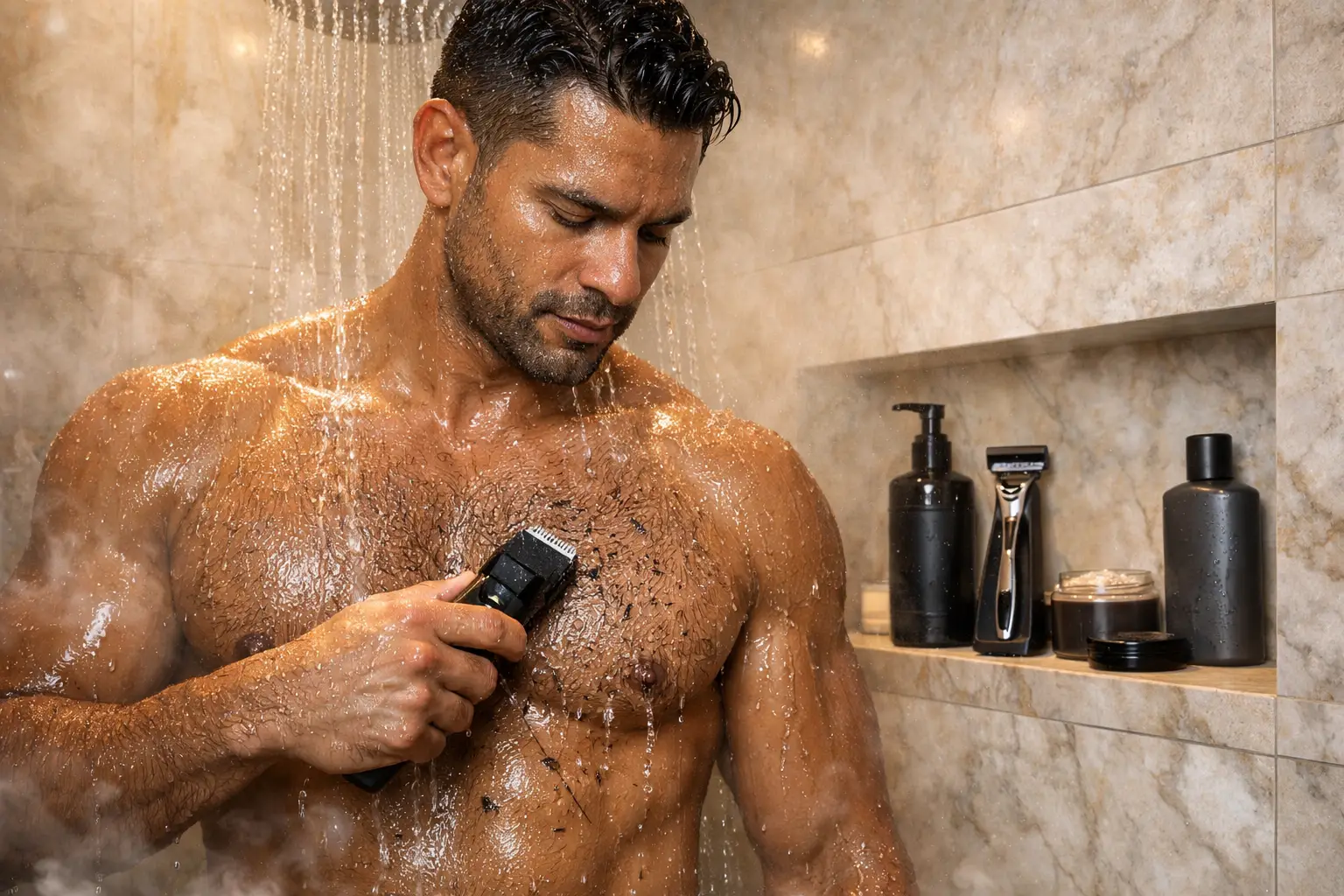
It is always a good idea to shave your chest during or straight after a shower. Soaking your skin with hot water opens your pores and softens the hairs making it easier for your razor to cut through them. If you have got a lot of hair on your chest you may want to give it a trim before you start shaving to avoid clogging your razor blades. Clean skin is essential. Wash your chest with warm water and a mild cleanser to remove sweat, oil, and dead skin. For added protection against ingrown hairs exfoliate lightly before trimming. Trimming the chest hair down to a manageable length with a body trimmer before applying a razor is the single most important preparation step for any first chest shave, as attempting to shave long chest hair with a razor alone clogs the blades immediately and produces an inconsistent result.
The Step-by-Step Chest Shaving How-To Guide
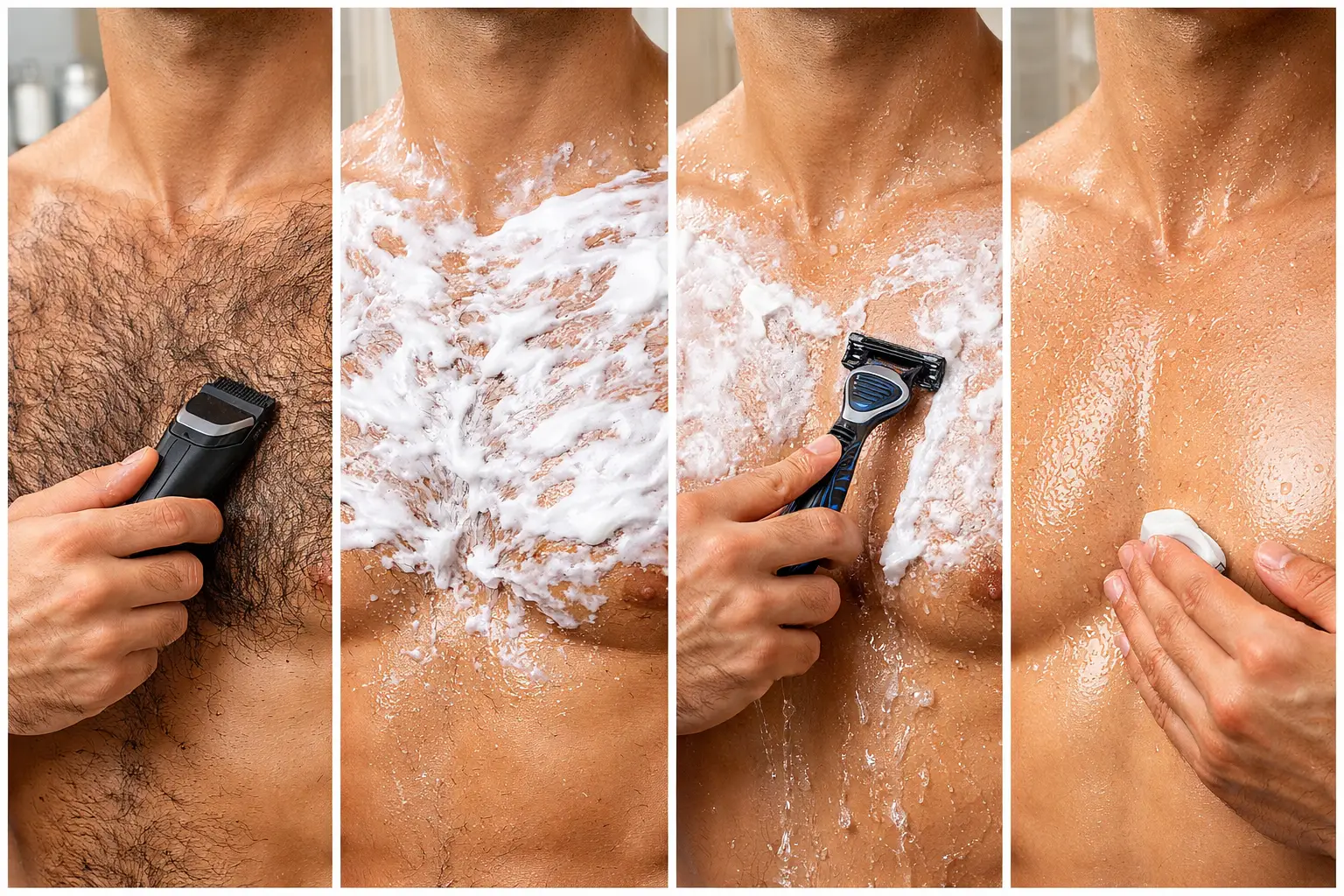
For those who prefer a smooth and clean-shaven chest follow these steps to achieve the best results. Prepare your chest for shaving by taking a warm shower to soften the hair. Use a razor or trimmer specifically designed for sensitive skin. Use a moisturizing shaving gel or foam that is suitable for sensitive skin. Shave or trim with light pressure and avoid going over the same area multiple times. After shaving rinse your chest with cool water and apply a gentle moisturizer or aftershave balm. In order to lubricate your razor and allow it to glide smoothly over your chest without causing irritation you will need to use plenty of shaving cream, soap, or gel. For the closest possible shave a manual razor specially designed for body hair is the best tool for the job. Work in sections across the chest from top to bottom, rinsing the razor frequently to prevent clogging and maintaining consistent light pressure throughout.
How to Prevent Ingrown Hairs and Razor Burn

Shaving coarse or curly chest hair can be more challenging as it may increase the risk of ingrown hairs and irritation. If you prefer a clean-shaven look consider using a trimmer to maintain a shorter length rather than shaving it completely. This can help minimize the chances of ingrown hairs while still achieving a groomed appearance. Trimming in the natural direction of hair growth minimizes pulling and irritation. For men with longer or dense chest hair begin with a longer guard setting then adjust downward as needed. A gentle exfoliating scrub used two to three times per week on the shaved chest area loosens dead skin cells that would otherwise trap growing hair beneath the surface and cause the ingrown hairs that represent the most uncomfortable and most common side effect of regular chest shaving.
Post-Shave Chest Skincare and Aftercare Routine
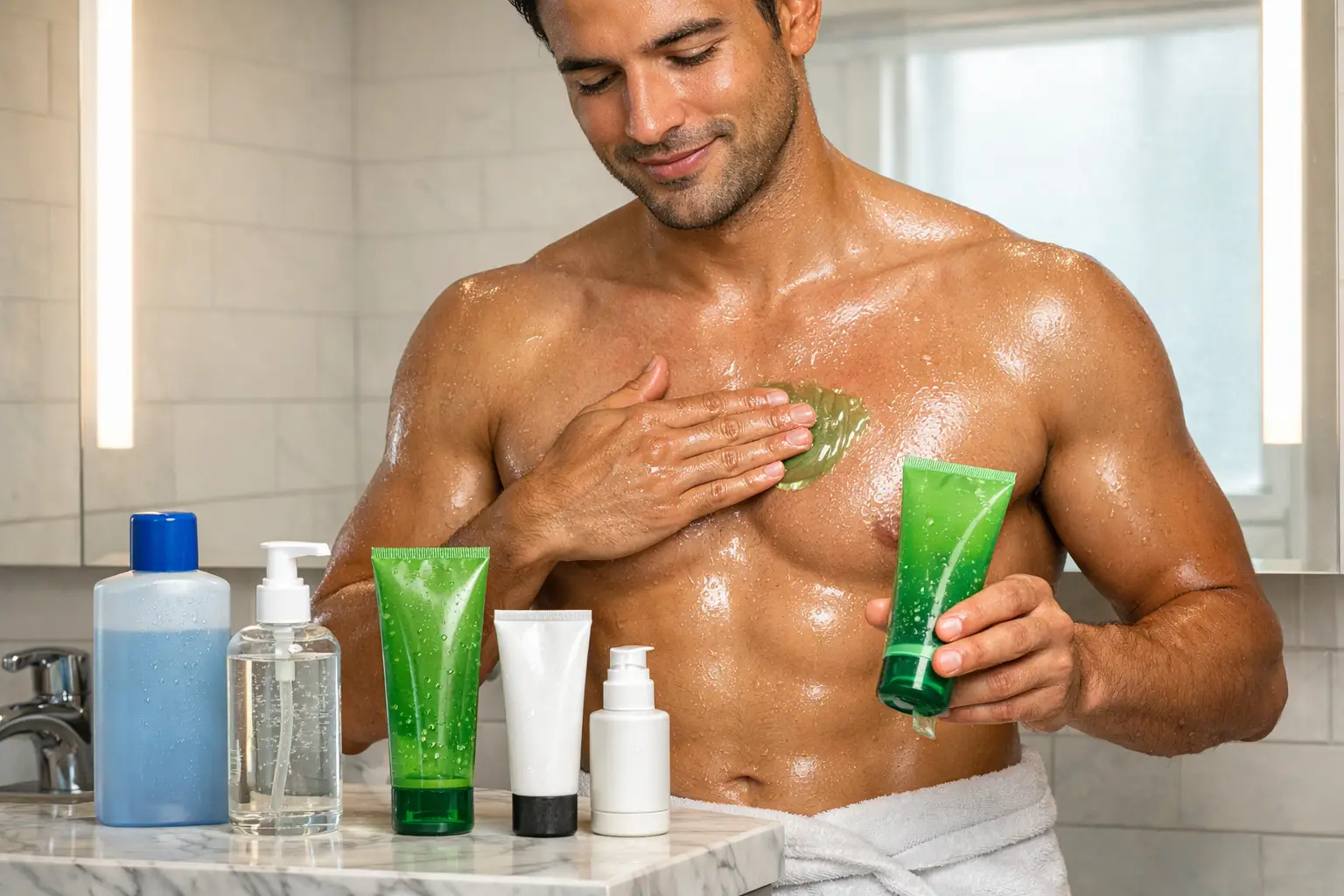
When you get out of the shower it is essential to moisturize properly especially if you tend to get dry skin. Using moisturizing creams or lotions which contain aloe vera can be a brilliant option as its soothing properties help to counter the effects of razor burn. After you groom you should take a shower. You want to use a cleanser that is designed for both skin and hair. If you shaved showering with a body wash is still the first step. What is also important is that you exfoliate during this shower. Apply a light non-greasy moisturiser or a post-shave balm if you went short to calm things down and keep skin smooth. A consistent aftercare routine applied every time the chest is shaved accumulates into significantly better skin condition over months of regular grooming compared to shaving without any follow-up skincare.
Conclusion
There is no universal rule here, just what works for you. If you have got a chiseled chest you want to show off shaving can sharpen your look. If your chest hair grows in patchy and uneven going smooth might give you a cleaner more confident feel. And if you are just tired of sweating through your shirt at the gym, shave away, no judgement. On the flip side if you like the look of chest hair or just do not want to deal with upkeep own it.The 16 design ideas, comprehensive pros and cons, and step-by-step how-to guide in this article collectively provide everything a man needs to make an informed decision about chest shaving and execute that decision with confidence. Chest hair or no chest hair the best way to approach body grooming is to decide what will make you most comfortable.
You may also like this: Top 15 Trending Shaggy Hairstyles For Men 2026 & 2027
Frequently Asked Questions
How often do I need to shave my chest to maintain a smooth appearance?
Chest hair grows back fast. You will need to shave every 4 to 7 days to maintain a smooth appearance. That is 60 to 90 shaves per year. Miss a week and you are dealing with uncomfortable stubble. Men with faster hair growth may need to shave every four days while those with slower growth can maintain a smooth chest for up to a week between sessions.
Does chest shaving cause the hair to grow back thicker or darker?
Chest shaving does not cause the hair to grow back thicker, darker, or faster. This is one of the most persistent myths in men’s grooming. Shaving cuts the hair at its thickest point at the skin surface, which makes the regrowth feel stubbly and coarse initially, but the actual hair shaft itself is unchanged in diameter, color, or growth rate. The perception of thicker regrowth is entirely a tactile illusion created by the blunt cut end.
Can I use the same razor for shaving my face and my chest?
Using the same razor for both is technically possible but not recommended. A razor used for the face should ideally remain dedicated to that use, as chest hair is coarser and more dense than facial hair and dulls razor blades faster. A body-specific razor or trimmer is a more practical and hygienic tool for chest shaving, producing better results with less irritation than repurposing a facial razor.
What is the best way to prevent ingrown hairs when shaving the chest?
Regular exfoliation performed two to three times per week loosens dead skin cells that trap growing hairs beneath the surface and cause ingrown hairs. Shaving in the direction of hair growth rather than against it, using a sharp clean razor, applying a generous layer of shaving gel before each shave, and moisturizing with an aloe-based product immediately after rinsing all collectively reduce the frequency and severity of ingrown hairs to a manageable level for most men.
Is chest shaving or chest trimming the better option for most men?
Shaving is considered one of the worst methods for grooming chest hair due to the risk of stubble, ongoing maintenance, itchiness, and irritation. Trimming is the recommended approach for chest hair grooming. Trimming provides a groomed and intentional appearance with significantly less maintenance frequency, no stubble discomfort, and a dramatically lower risk of ingrown hairs and razor burn. Full shaving is the better choice for competitive athletes, bodybuilders, men with tattoos they want to display, and those who specifically prefer the completely smooth aesthetic and are willing to commit to the required maintenance schedule.