
Introduction
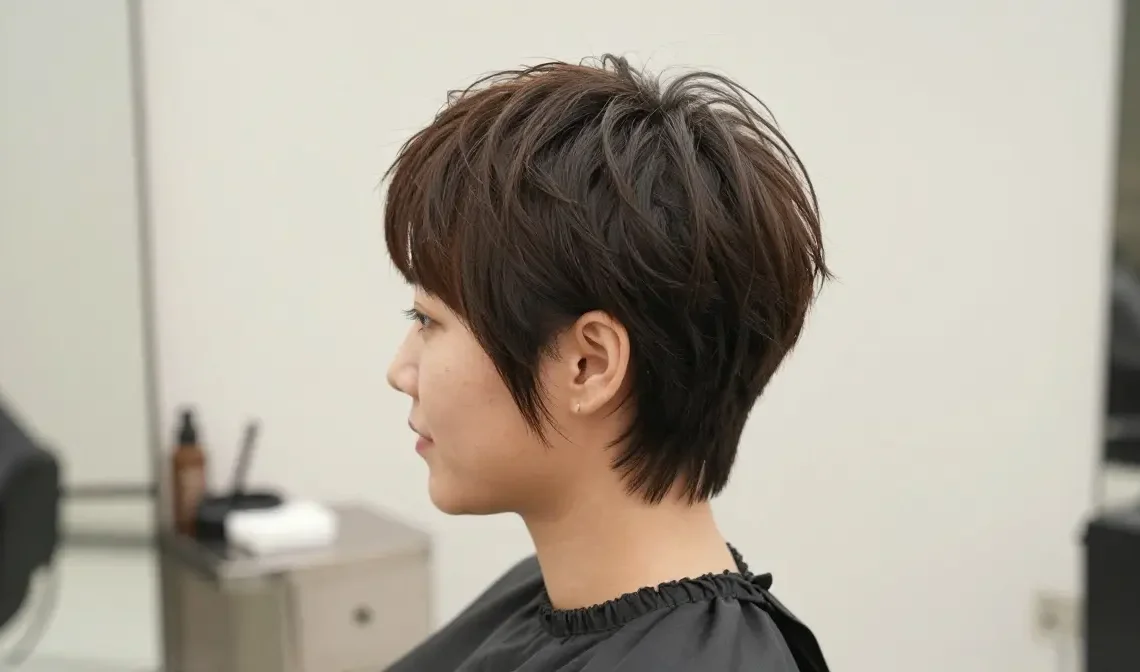
Fine hair has a mind of its own. One humid afternoon and it’s flat against your scalp by lunchtime, no matter how much product you used that morning. If you’ve spent years fighting limp roots and styles that look full in the mirror but deflate the second you step outside, a short pixie haircut might be the simplest fix you haven’t tried yet.
Short pixie haircuts for fine hair work because they strip away the weight that drags thin strands down. Less length means less pull on the root, which means your hair can actually stand up and do something instead of collapsing under its own bulk. Add the right layers, a good cut angle, and a few smart styling habits, and you get a look that reads thick and healthy even when your hair density says otherwise.
This guide walks through twenty-two pixie ideas built specifically with fine hair in mind, plus the styling logic, maintenance habits, and common mistakes that make or break the final result.
Classic Textured Pixie
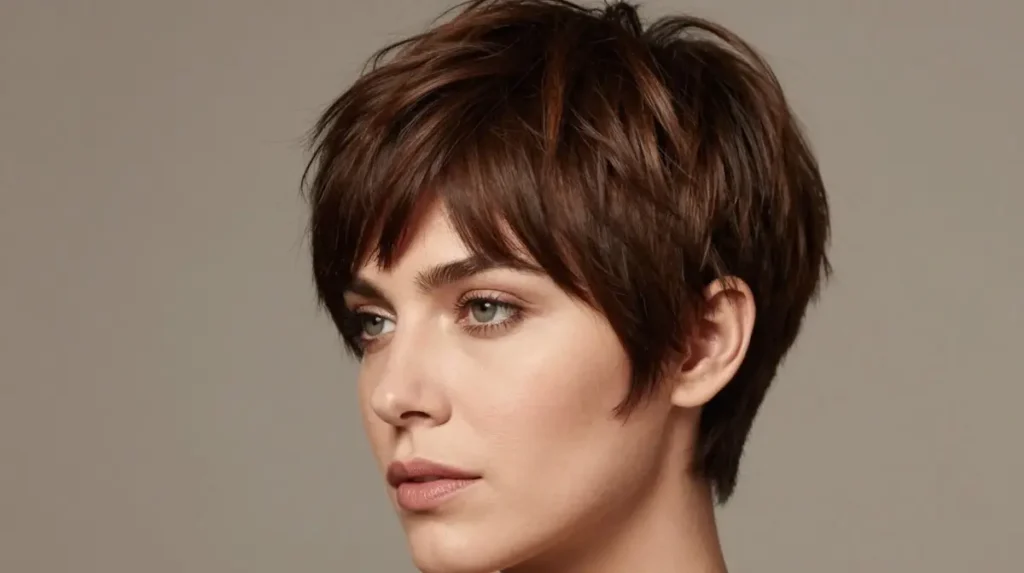
This is the cut most people picture when they hear “pixie,” and for good reason. A classic textured pixie keeps the sides and back close to the head while leaving slightly longer, choppy pieces on top.
The texture is what matters here for fine hair — uneven layer lengths catch the light differently and trick the eye into seeing more density than is actually there.
Volumizing Crop With Root Lift
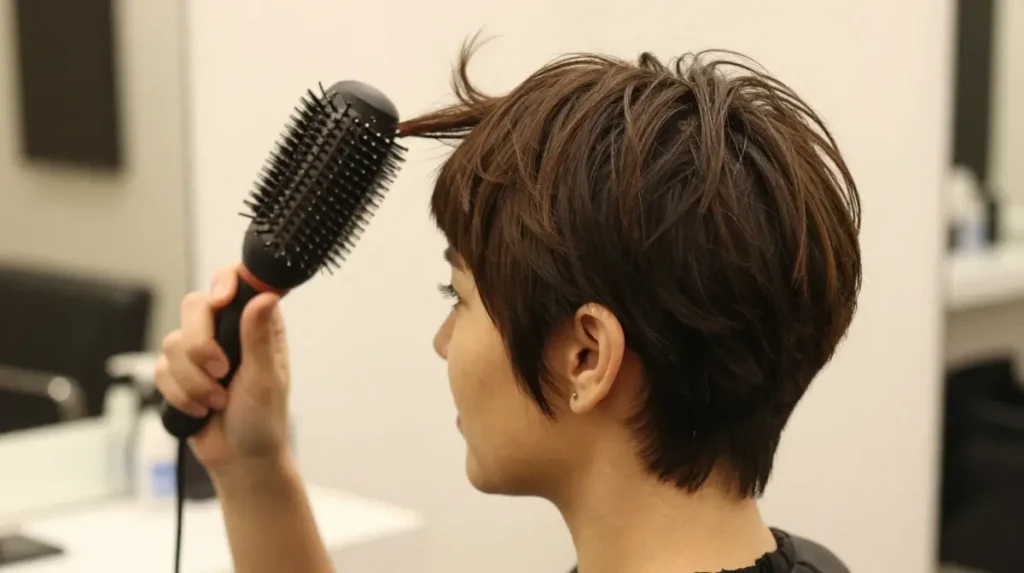
If flat roots are your biggest complaint, ask your stylist for a cut specifically designed around root lift. Shorter layers near the crown reduce weight exactly where fine hair tends to sag first.
Paired with a volumizing mousse applied at the root before blow-drying, this style holds its shape through most of the day.
Choppy Pixie With Razored Ends
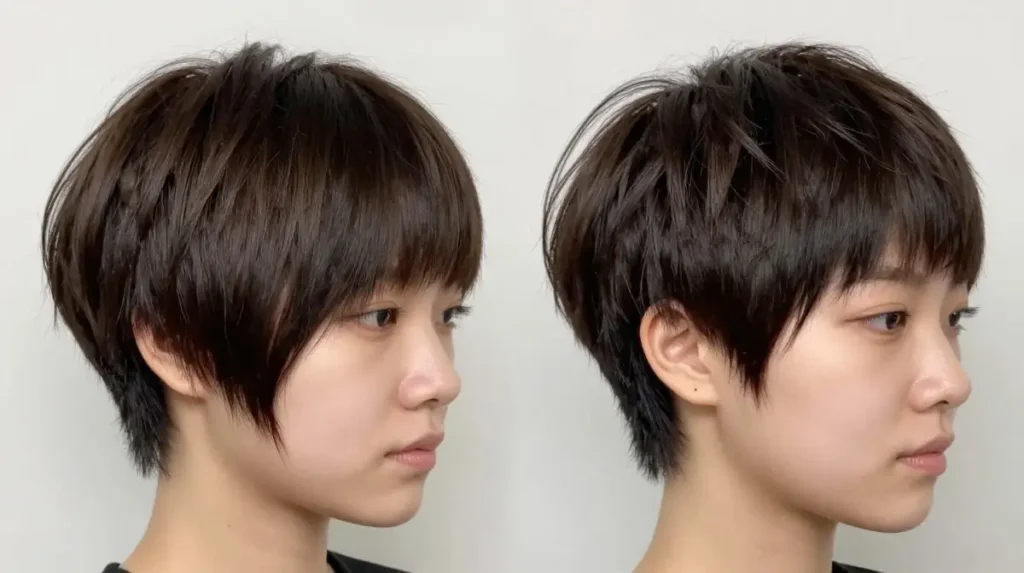
Razor-cutting instead of scissor-cutting removes some of the bulk along each strand, which sounds counterintuitive for thin hair but actually helps.
The slightly rough, piece-y ends create texture without needing extra layers that can thin out an already fine head of hair.
Tapered Pixie With Clean Sides
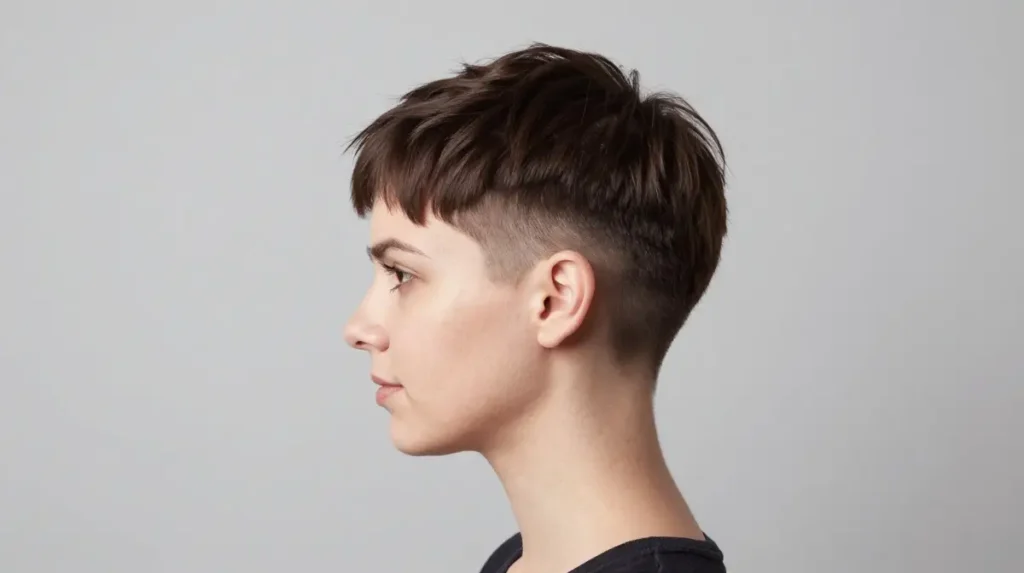
A tapered pixie cut keeps the sides close and gradually blended into the back, leaving more length and movement on top.
This shape draws attention upward, which works in your favor when the goal is to fake thickness through styling rather than relying on natural density alone.
Side-Swept Pixie With Soft Fringe
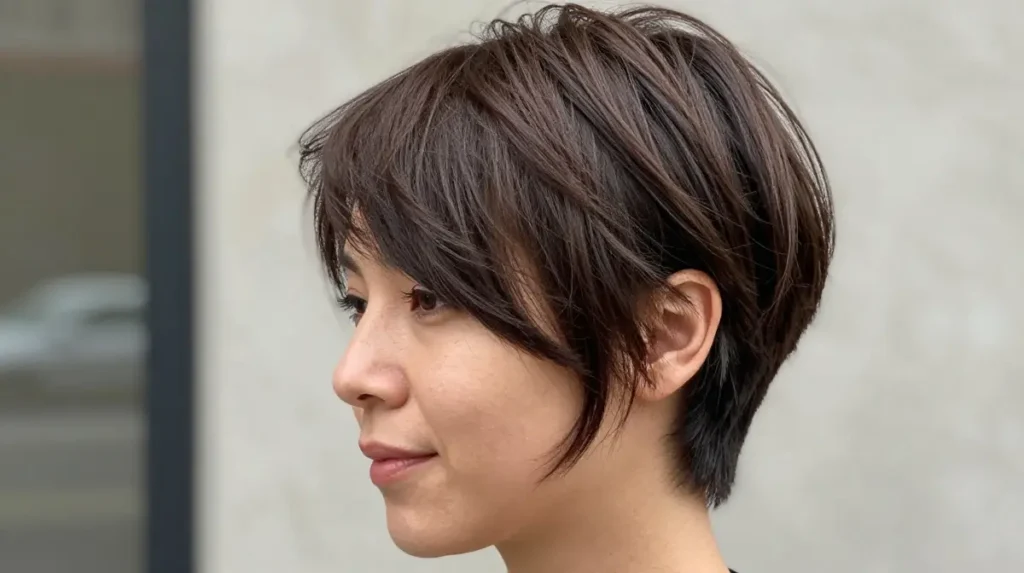
A side-swept fringe softens the whole face and gives you somewhere to direct extra hair instead of letting it sit flat across the forehead.
This version pairs well with a deep side part, since the height created on one side balances the shorter length on the other.
Pixie Cut With Bangs
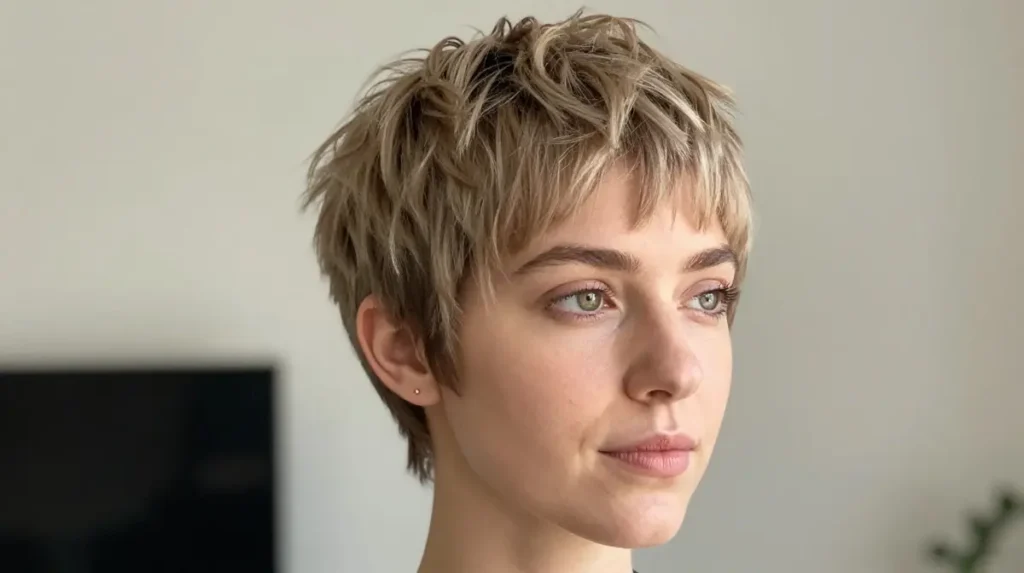
Full bangs paired with a pixie can be tricky for fine hair because too much fringe weight will fall flat fast.
The trick is to keep bangs lighter and slightly textured rather than blunt and heavy, so they sit with a bit of lift instead of sticking to your forehead.
Asymmetrical Pixie Hairstyle
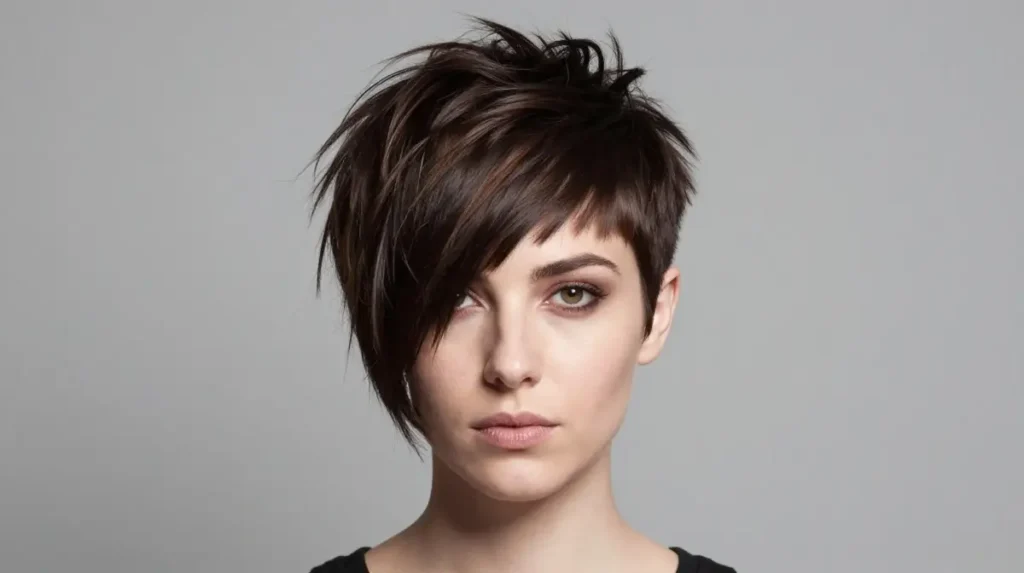
An asymmetrical pixie cut, where one side is noticeably longer than the other, creates a built-in sense of movement.
The uneven lengths give your stylist more to work with when layering for volume, and the off-center shape tends to photograph well, which matters if you’re collecting ideas for Pinterest boards.
Pixie Bob Hybrid
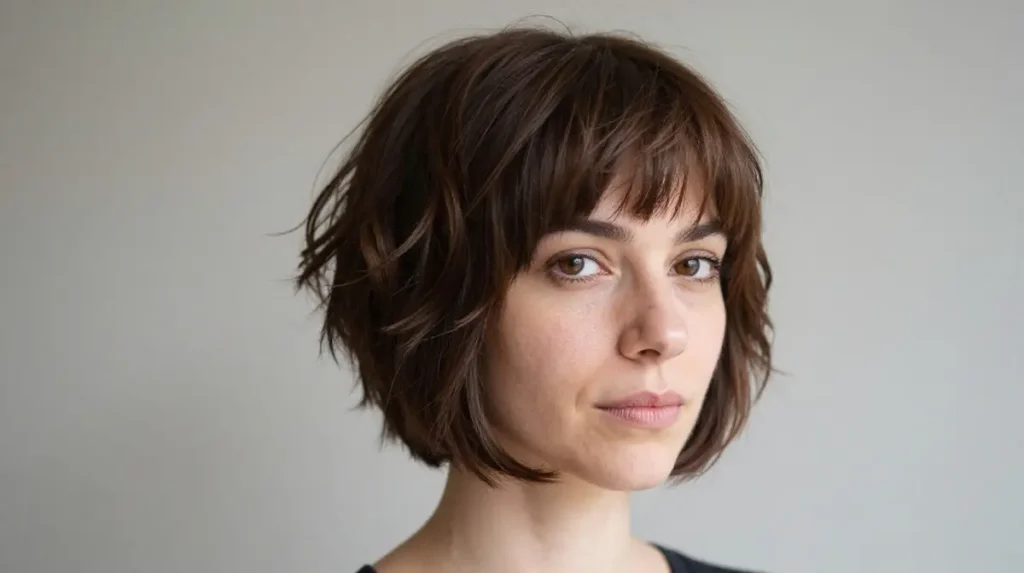
A pixie bob, sometimes called a “bixie,” sits between a true pixie and a short bob.
It keeps a bit more length around the face while staying cropped at the back. For fine hair, this style works particularly well because the slightly longer pieces can be curled or tousled for extra body without the weight becoming overwhelming.
Undercut Pixie Style
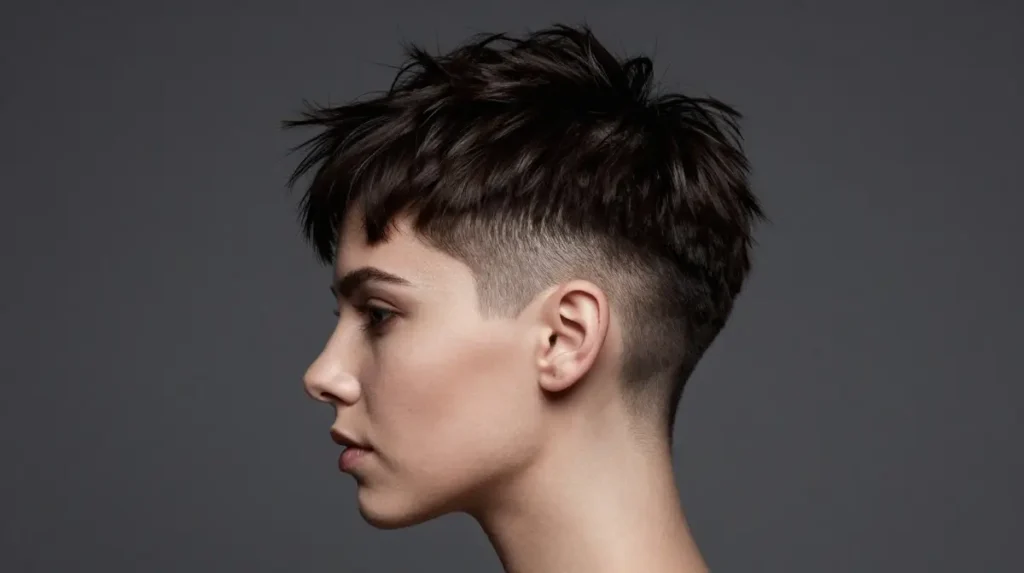
An undercut pixie shaves or closely trims the back and sides, leaving longer hair on top to style freely.
Removing bulk underneath means every bit of remaining length on top has less competition for visual attention, so even modest natural volume looks more noticeable.
Spiky Pixie Haircut
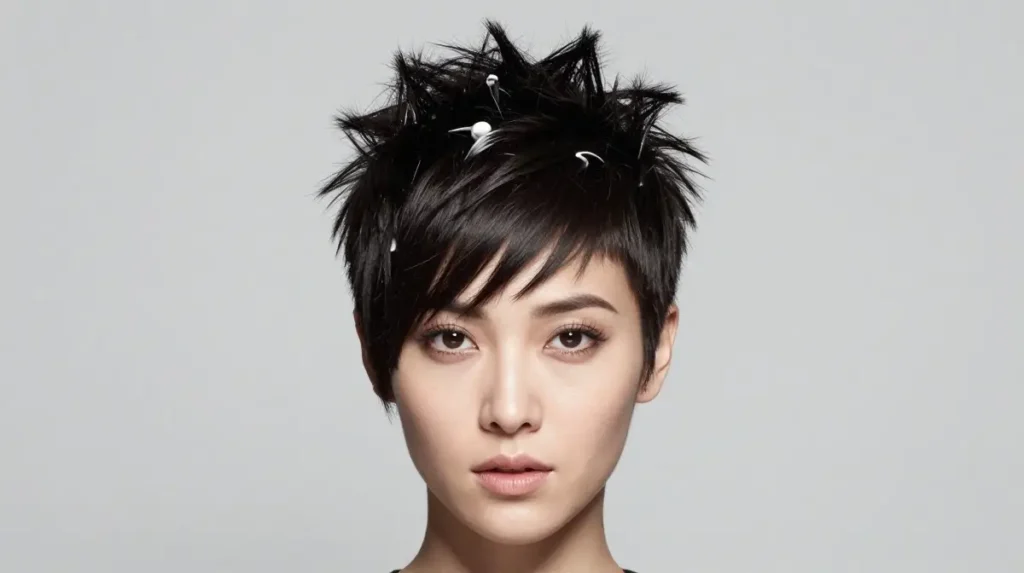
A spiky finish uses a strong-hold styling wax or paste worked into short layers on top to create defined, piece-y spikes.
This is one of the more dramatic volume tricks for fine hair since the product itself is doing a lot of the lifting, literally.
Wispy Pixie Cut
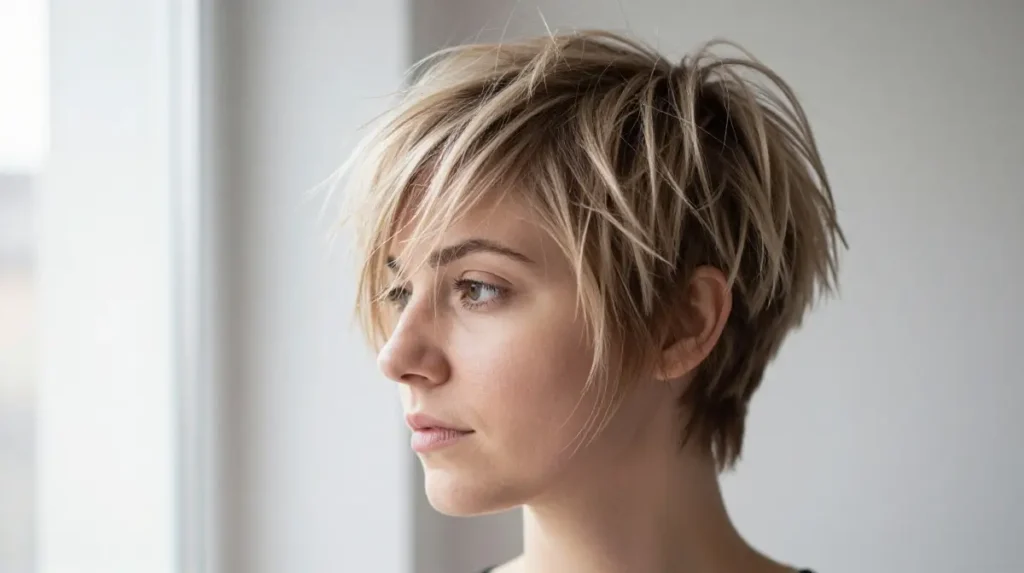
A wispy pixie keeps the ends thin and feathered rather than blunt, giving the whole cut a soft, airy quality. It’s a gentler look than a choppy or spiky pixie, suited to people who want short hair without an edgy finish.
Feathered Layered Pixie
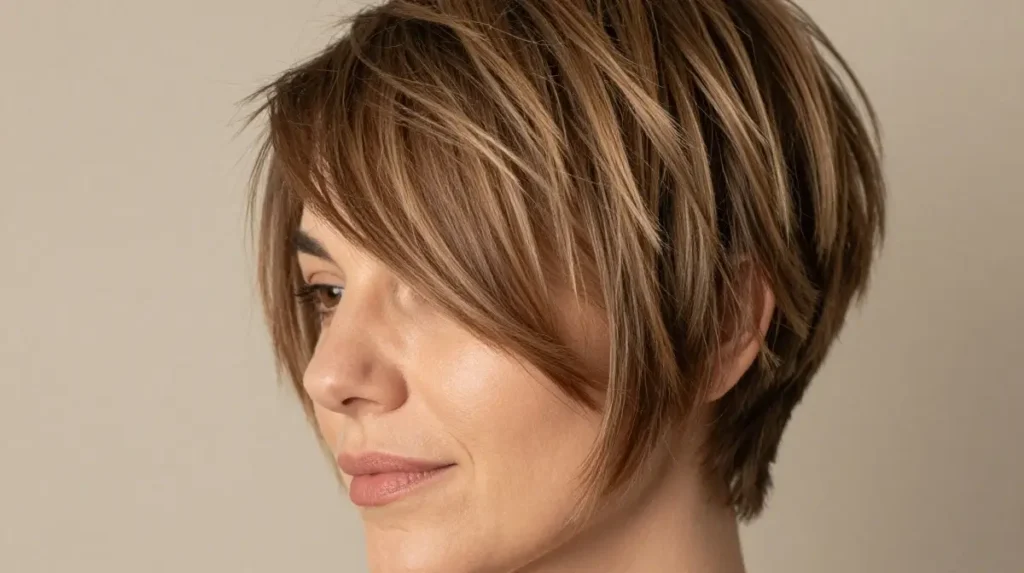
Feathered layers are cut so the ends point in slightly different directions instead of all falling the same way.
This breaks up the silhouette of the haircut and is one of the better techniques for disguising thin patches or uneven density across the scalp.
Cropped Pixie For Round Faces
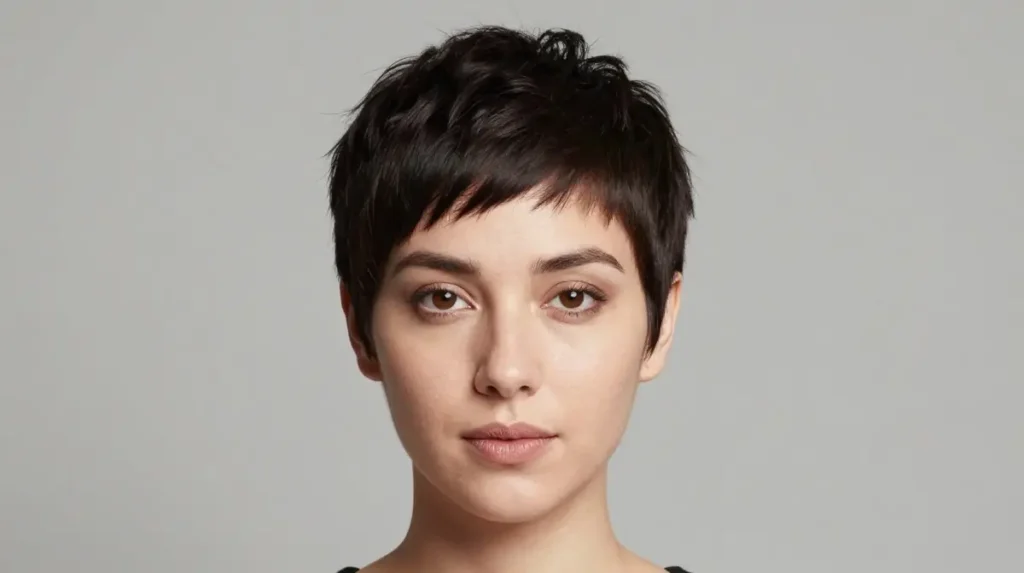
If you have a round face, a pixie with more height at the crown and shorter sides helps elongate your features rather than widening them further. Avoid styles that add width at the cheekbone level, since that can emphasize roundness instead of balancing it.
Pixie Cut For Oval Faces
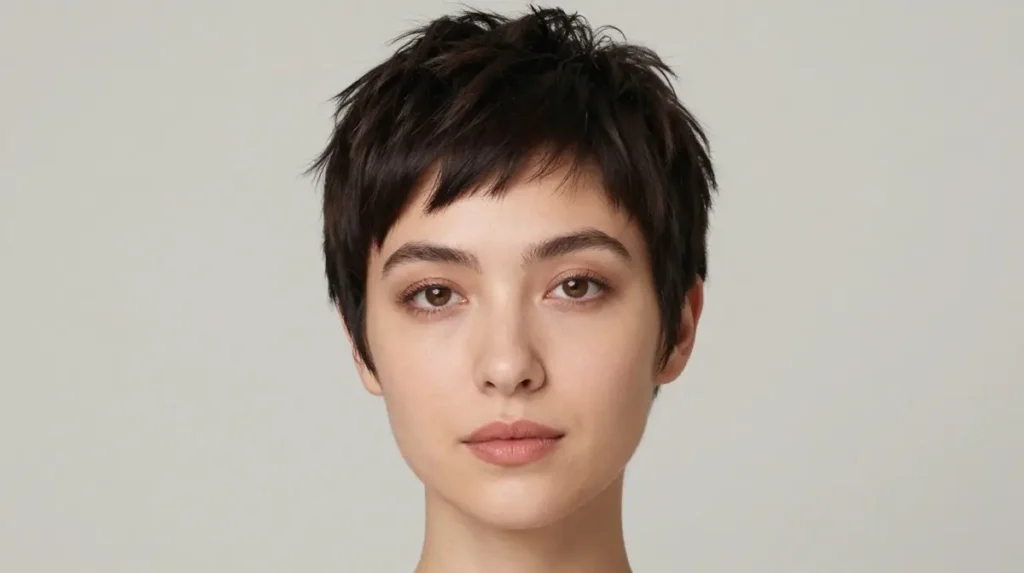
Oval faces tend to suit nearly any pixie variation, since the face shape is already balanced. This is a good opportunity to experiment with a fringe, an undercut, or an asymmetrical shape without worrying much about flattering angles.
Pixie Cut For Square Faces
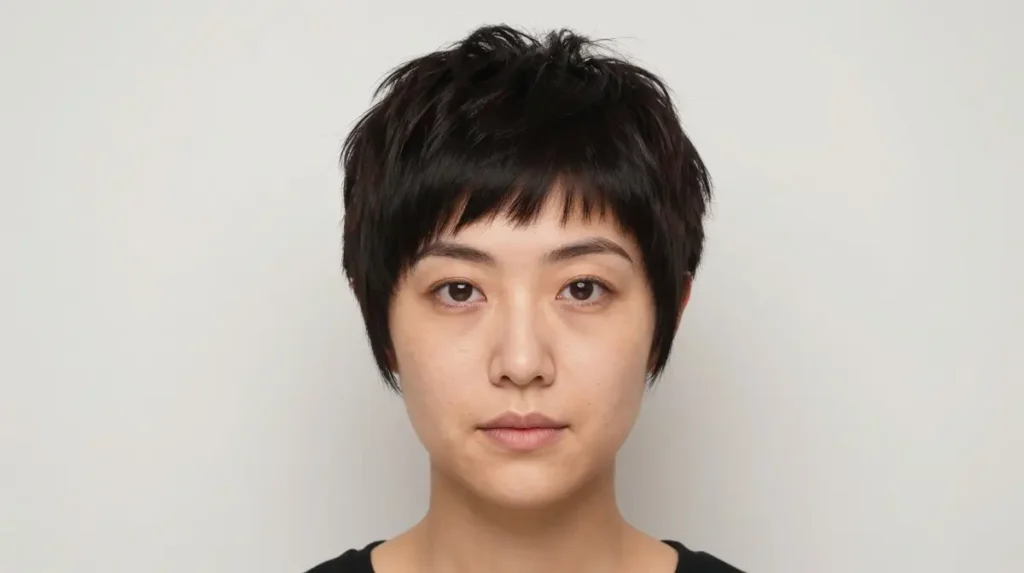
For square face shapes, a pixie with softer, rounded layers around the jawline helps offset strong angles. A side-swept fringe also works well here, breaking up a straight, heavy hairline.
Gray And Silver Pixie
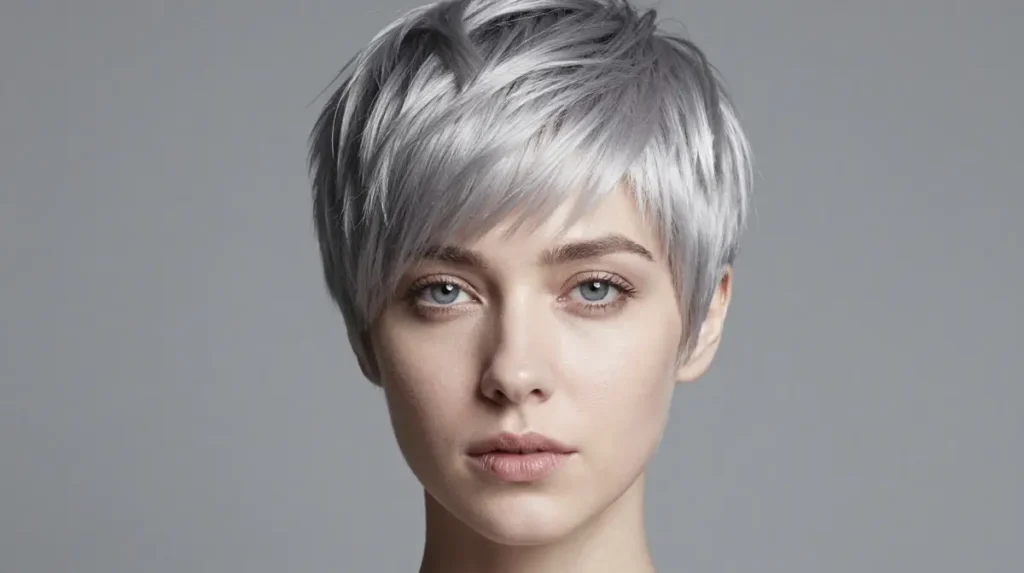
A gray or silver pixie cut isn’t just a color choice, it’s also a volume strategy. Lighter, cooler tones reflect more light than dark shades, which makes thin areas less obvious and gives the whole cut a fuller appearance under most lighting
Blonde Pixie Hairstyle
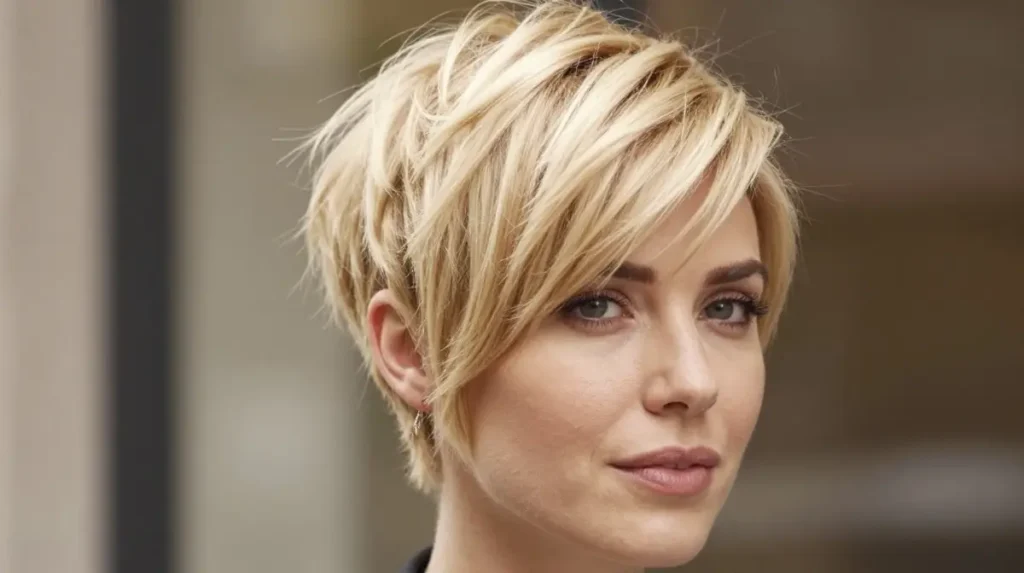
Blonde works on a similar principle to gray. Lighter color reduces visible contrast between hair and scalp, so any natural thinning is far less noticeable. A soft, warm blonde also tends to look more youthful when paired with a textured pixie cut.
Brunette Pixie With Subtle Highlights
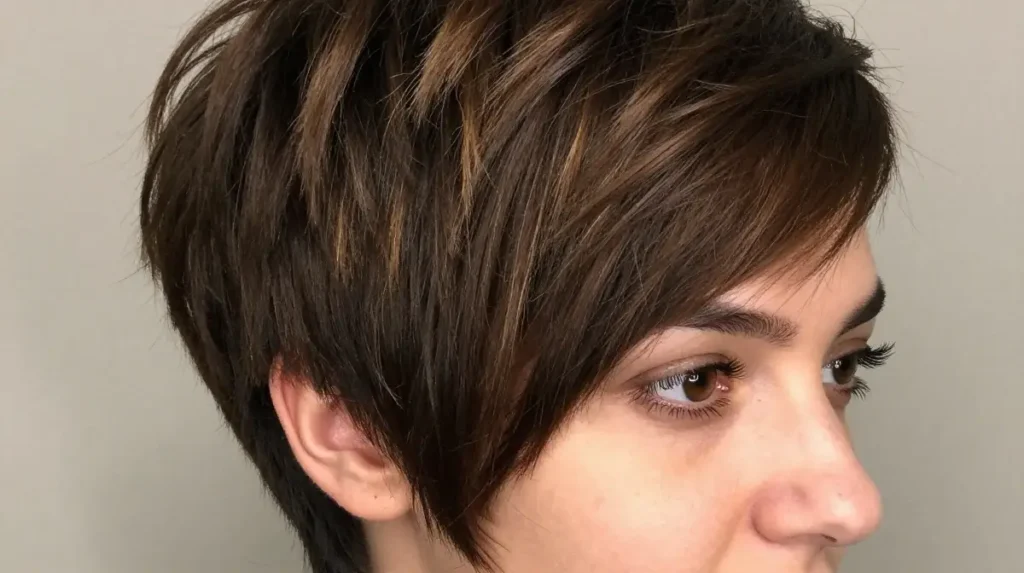
If you’d rather stay brunette, adding a few face-framing highlights gives the same light-reflecting benefit without committing to a full color change.
Highlights placed strategically near the crown and part line help fake volume in exactly the spots fine hair needs it most.
Pixie Crop With Shaved Sides
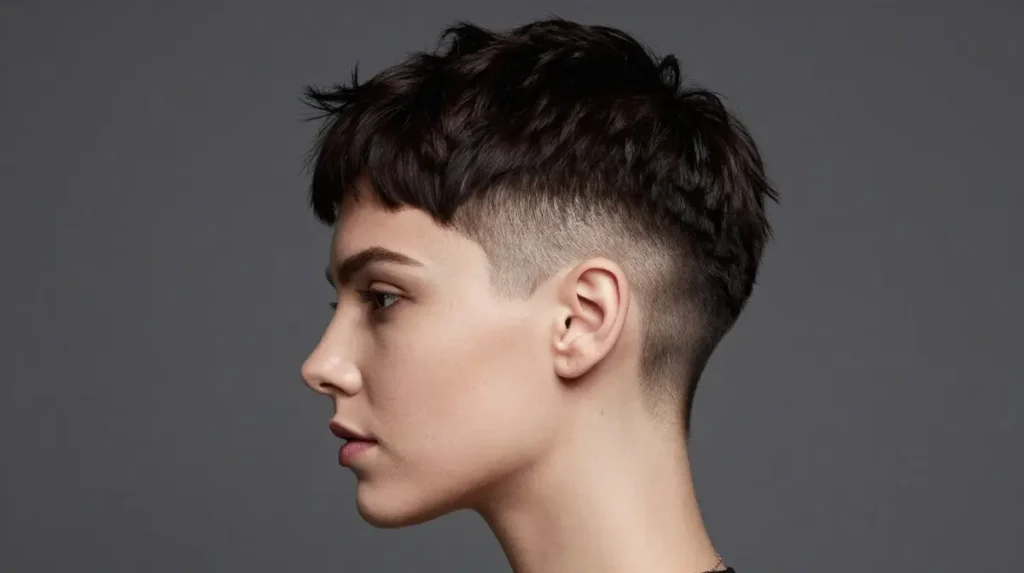
A more dramatic option, this style closely shaves or clips the sides while keeping noticeably more length and texture on top.
It’s a strong choice if you want a bold, modern look rather than a soft or classic pixie shape.
Curly Pixie For Natural Texture
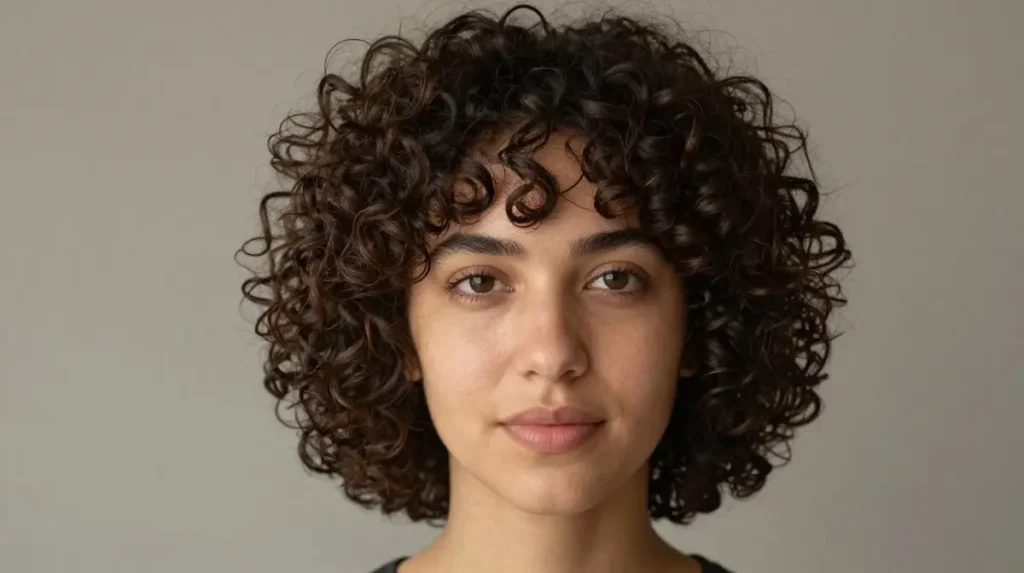
If your fine hair has natural curl or wave, don’t fight it.
A curly pixie cut that follows your hair’s natural pattern often creates volume on its own, since curls take up more visual space than straight strands of the same density.
Long Pixie With Curtain Fringe

A longer pixie variation, sometimes called a grown-out pixie, keeps a bit more length throughout while still qualifying as short hair.
Paired with a curtain fringe that parts naturally down the middle, this is a softer, low-maintenance option for anyone easing into shorter styles.
Edgy Choppy Pixie With Heavy Texture
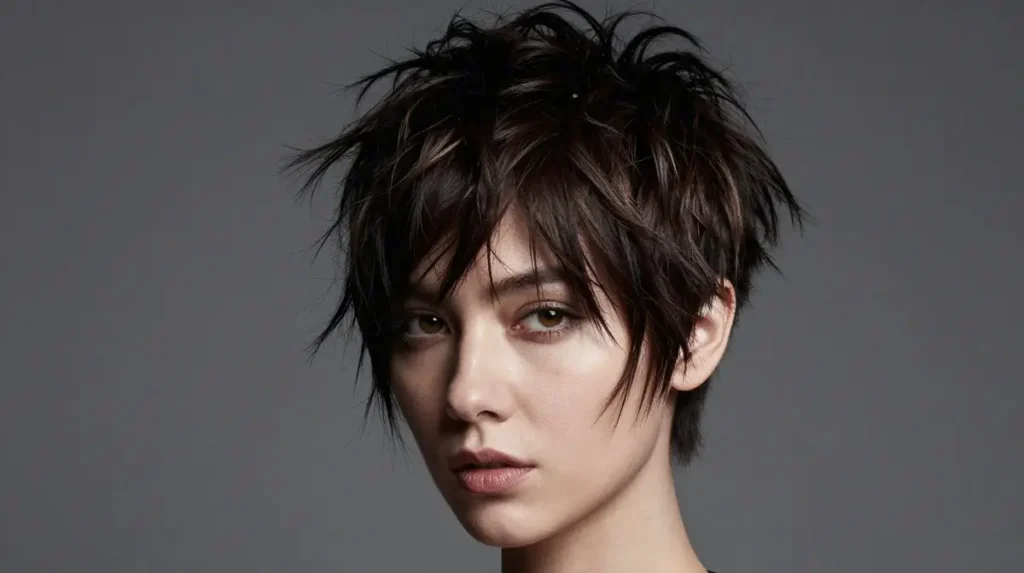
For a bolder finish, heavily textured layers cut at varying lengths throughout create an intentionally messy, lived-in look. This style relies on texturizing spray and finger-styling rather than a brush, and tends to suit people who want their pixie cut to look effortless rather than polished.
Below is a quick comparison to help you match a style to your priorities, whether that’s low maintenance, face shape, or how much volume you actually need day to day.
| Pixie Style | Best For | Maintenance Level | Key Styling Product | Volume Impact |
|---|---|---|---|---|
| Classic Textured Pixie | First-time short hair | Medium | Texturizing spray | High |
| Pixie Bob Hybrid | Easing into short hair | Low | Volumizing mousse | Medium |
| Undercut Pixie | Bold, modern looks | Medium-High | Styling wax | High |
| Spiky Pixie | Edgy, statement style | High | Strong-hold paste | Very High |
| Gray or Silver Pixie | Disguising thin areas | Medium | Color-safe mousse | Medium-High |
| Curly Pixie | Naturally curly fine hair | Low | Curl-defining gel | High |
| Long Pixie With Fringe | Low-effort daily wear | Low | Light pomade | Medium |
Styling Tips For Fine Hair Pixie Cuts
Getting a great pixie haircut is only half the job. The other half happens at the sink and with a blow dryer. A few habits make a noticeable difference for fine hair specifically.
Wash with a lightweight, volumizing shampoo rather than anything labeled moisturizing or smoothing, since heavier formulas can weigh fine strands down. Apply mousse or root-lift spray while hair is still damp, focusing on the roots rather than the ends. Flip your head upside down while blow-drying to encourage lift before flipping back to shape the top layers with a round brush.
A small amount of texturizing spray or dry shampoo at the roots, even on clean hair, adds grip that fine strands often lack on their own. Avoid heavy serums or oils near the scalp, since they tend to flatten the very volume you’re trying to build.
Common Mistakes To Avoid With A Fine Hair Pixie
A few habits tend to undo an otherwise great haircut. Using too much product is one of the biggest culprits, since fine hair gets weighed down fast and a little goes a long way. Skipping regular trims is another mistake, since pixie cuts grow out of shape quickly and lose their volume-boosting layers within six to eight weeks.
Choosing a one-length cut without any layering is also a common error for fine hair, since flat layers don’t give the cut anything to work with texture-wise. Finally, brushing styled hair with a regular brush after drying can flatten the lift you just created, so finger-styling or a wide-tooth comb is usually the safer choice for touch-ups during the day.
Conclusion
A short pixie haircut is one of the most reliable ways to make fine hair look fuller without relying on extensions, heavy styling routines, or constant touch-ups throughout the day. The right layering, a flattering cut shape for your face, and a lighter hand with styling products can completely change how thin hair reads to the eye.
Whether you go for a soft, wispy crop or a bold, spiky finish, the twenty-two ideas above give you plenty of starting points to bring to your next salon visit.
You can may also like this: 22 Tape Up Haircuts Ideas for Men Clean Fresh Looks
Frequently Asked Questions
1. Does a pixie cut actually make fine hair look thicker? Yes. Removing length reduces weight pulling the hair down, and layering creates texture that adds visual density even without more natural hair volume.
2. How often should I get a pixie haircut trimmed? Most pixie cuts need a trim every four to six weeks to keep the shape and layering that create volume for fine hair.
3. What styling product works best for a fine hair pixie cut? A lightweight volumizing mousse applied at the roots, combined with a small amount of texturizing spray, usually gives the best lift without weighing hair down.
4. Is a pixie cut suitable for older women with thinning hair? Yes, pixie cuts are often recommended for thinning hair since shorter layers and lighter color choices like gray or blonde help minimize the appearance of low density.
5. Can fine, straight hair hold a pixie cut without looking flat? It can, especially with the right layering technique and a deep side part, though regular root-lift styling is usually needed to maintain volume throughout the day.
1 Comment