
Introduction
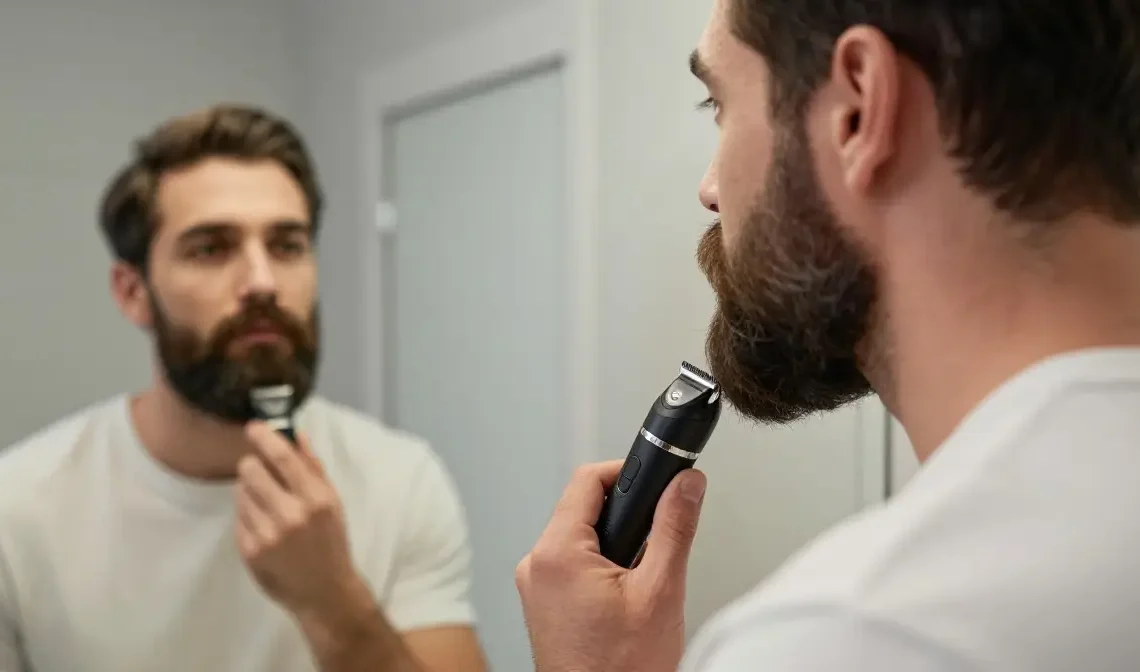
There is something genuinely frustrating about standing in front of the mirror with a trimmer in hand and not knowing where to start. One wrong move and suddenly your beard looks uneven, your neckline is too high, or one side is noticeably shorter than the other. Most men have been there at least once.
Learning how to trim beard properly is one of those skills that feels complicated at first but becomes second nature once you understand the basics. Whether you are working with a short stubble or a full beard, the process is mostly the same — patience, the right tools, and a clear plan.
This guide covers everything from beginner-friendly techniques to style-specific tips so you can walk away with a clean, sharp, well-groomed beard every single time.
Start With a Clean, Dry Beard

Before you pick up any tool, wash your beard thoroughly. A clean beard is easier to trim because the hairs sit more naturally and you can see the true shape without product buildup weighing things down.
After washing, dry it completely. Wet hair appears longer than it actually is, which means you might trim more than intended. Pat it dry with a towel and let it air out for a few minutes before you begin your beard grooming routine.
Gather the Right Beard Grooming Tools
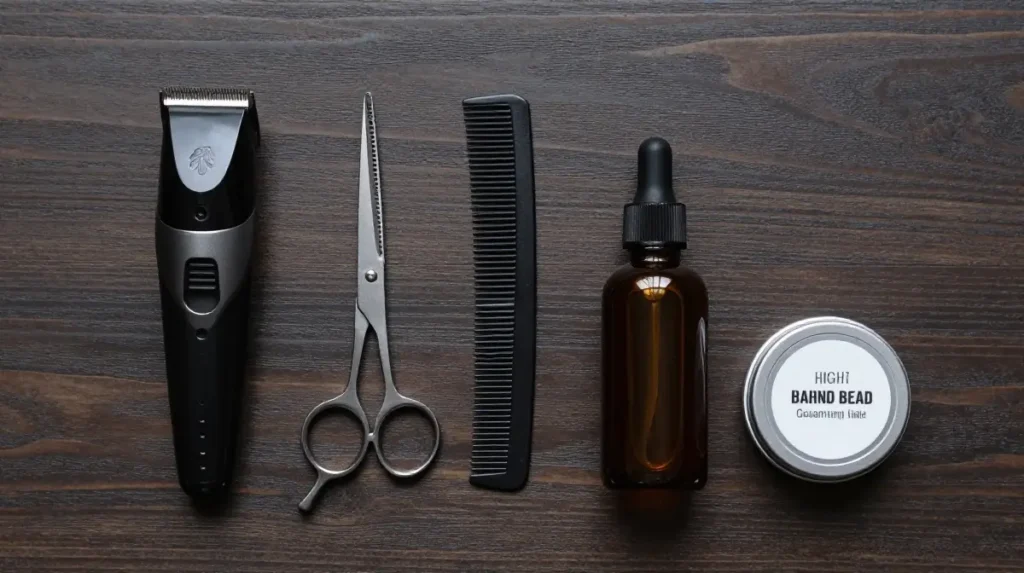
Having the right equipment makes a real difference. You do not need an expensive kit to get professional results, but a few essential items are worth having on hand.
A quality electric beard trimmer with adjustable guards is the foundation. Pair it with a pair of beard scissors for detail work, a beard comb for lifting and separating hair, and a handheld mirror to check the back and sides. These four items alone will handle most of your beard shaping needs at home.
Choose Your Beard Length Before You Start
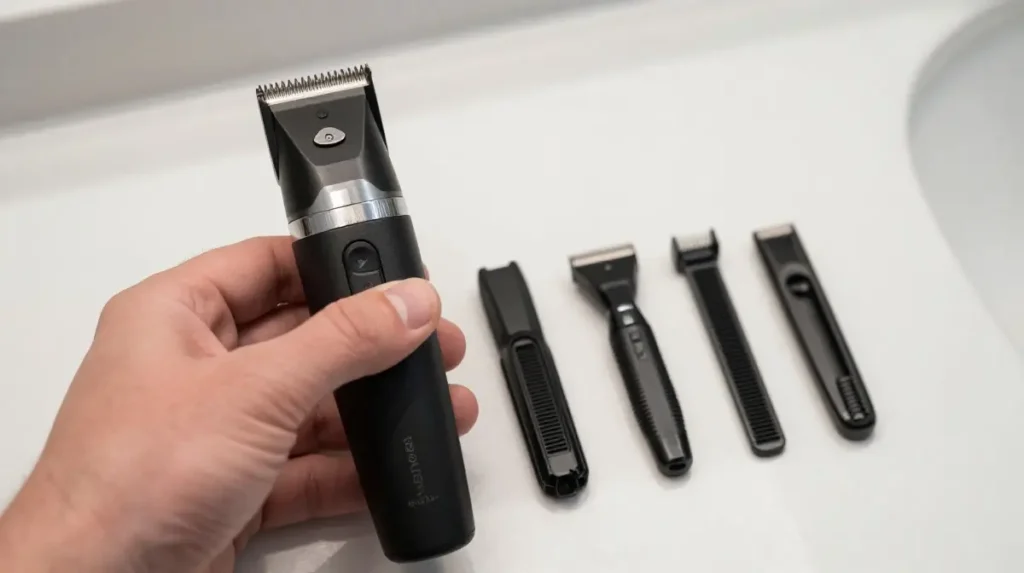
One of the most common mistakes men make is picking up a trimmer without deciding on a target length first. Knowing your goal length helps you select the right guard and prevents you from accidentally taking off more than you wanted.
Most trimmers use numbered guards. Guard sizes typically range from one to eight, with each number representing a longer length. If you are unsure, always start with a longer guard and work down gradually. You can always trim more, but you cannot put hair back.
Comb Through Your Beard First
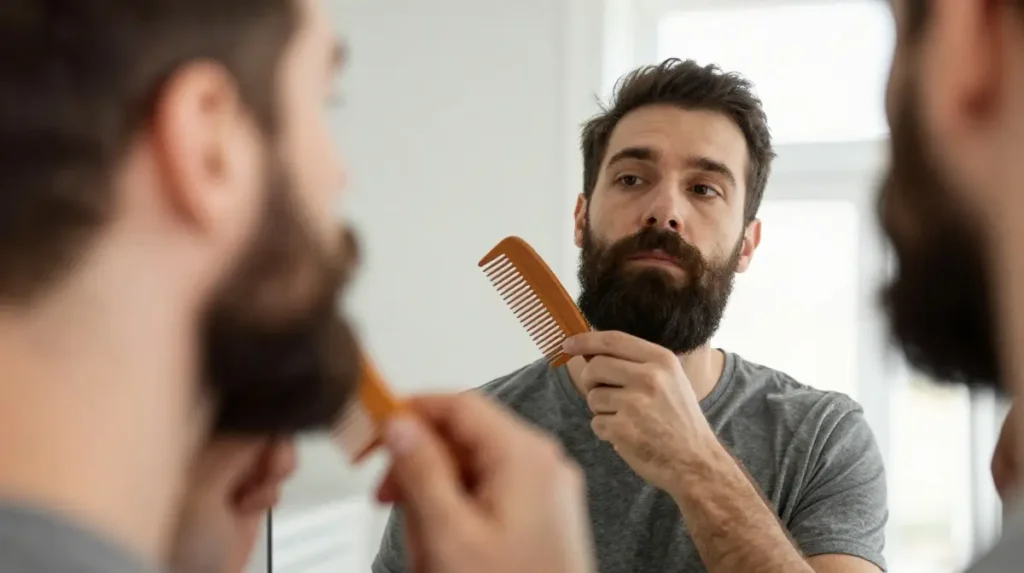
Run a beard comb through your facial hair before trimming. This lifts the hairs away from the skin and makes it much easier to trim evenly. It also reveals any tangles, stragglers, or sections that have grown longer than the rest.
Combing also helps with beard symmetry. When your hair is lifted and sitting uniformly, you can see the natural shape more clearly and spot where the trimmer needs to go.
Trim With the Grain First, Then Against If Needed
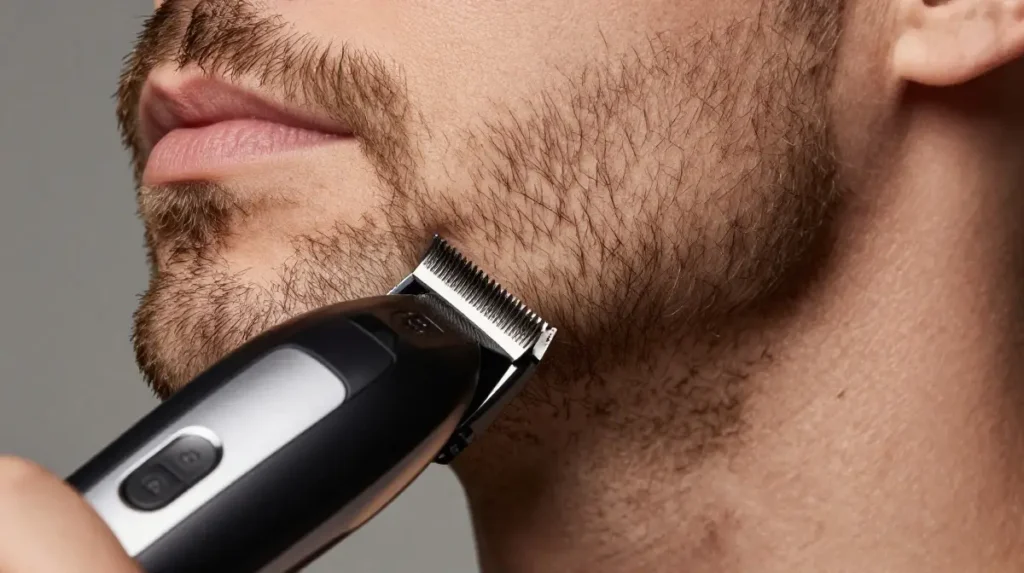
Always begin trimming in the direction your hair grows. This is called trimming with the grain, and it produces a natural, even result without irritation.
Once you have gone through the whole beard with the grain, you can make a second pass against it if you want a slightly shorter or more polished finish. This technique works well for thick beard grooming because it catches hairs that the first pass may have missed.
Shape the Cheek Line Carefully
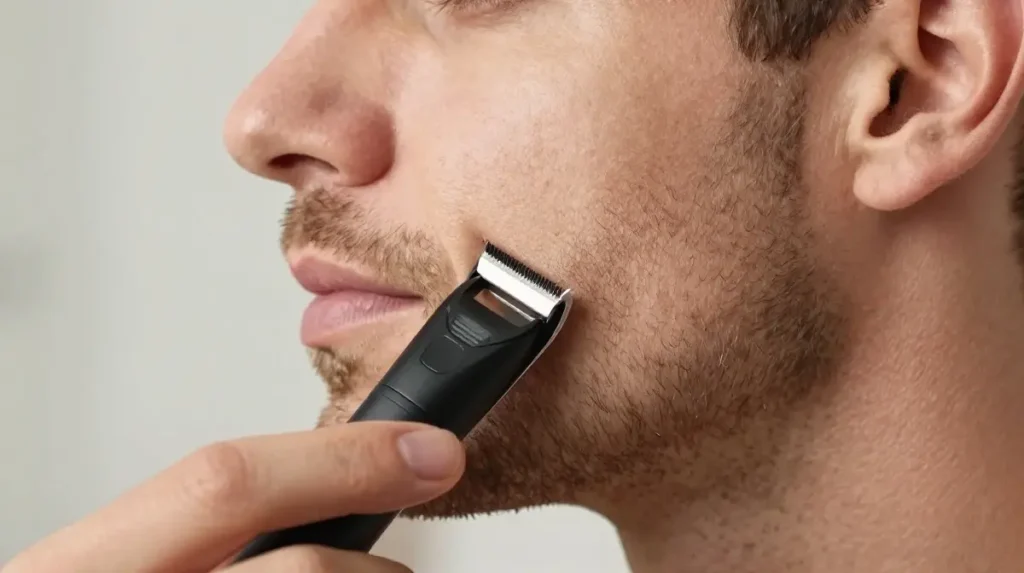
The cheek line is one of the most visible parts of your beard, so it deserves careful attention. A sharp, clean cheek line instantly makes a beard look more intentional and well-maintained.
Use the trimmer without a guard, or switch to scissors for more control. Some men prefer a natural cheek line that follows their hair growth pattern, while others like a defined, straight edge. Either works — just keep both sides matching. The key is consistency.
Trim the Beard Neckline the Right Way
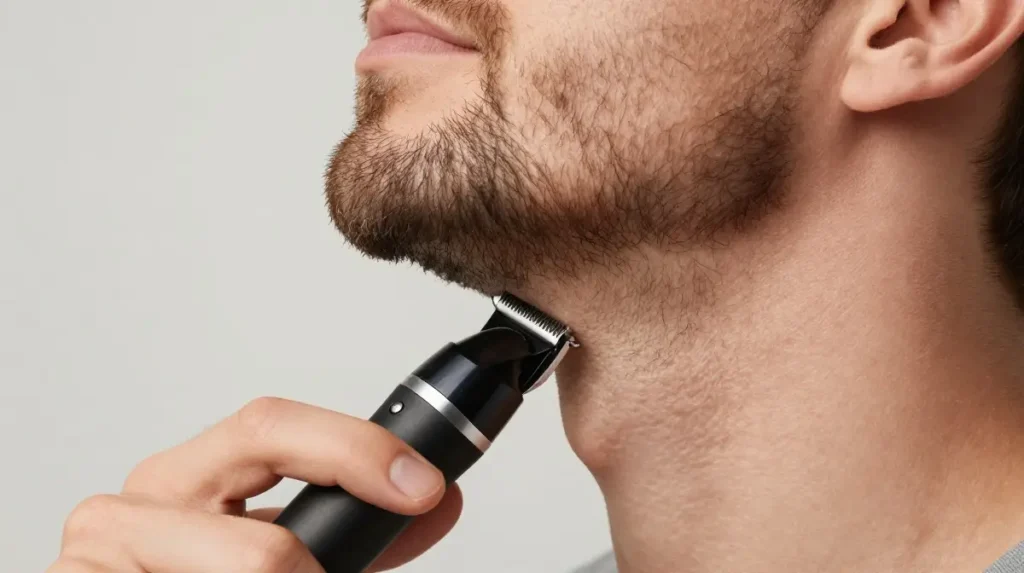
This is where most beginners go wrong. The neckline sits lower than people expect. A good rule is to place two fingers above your Adam’s apple — that is roughly where your neckline should sit.
When learning how to trim beard neckline correctly, think of it as a soft U-shape that curves from ear to ear. Anything below that line gets removed. Keeping the neckline too high makes the beard look small and unfinished. Getting this one detail right changes the entire look.
Define the Beard Line Along the Jaw
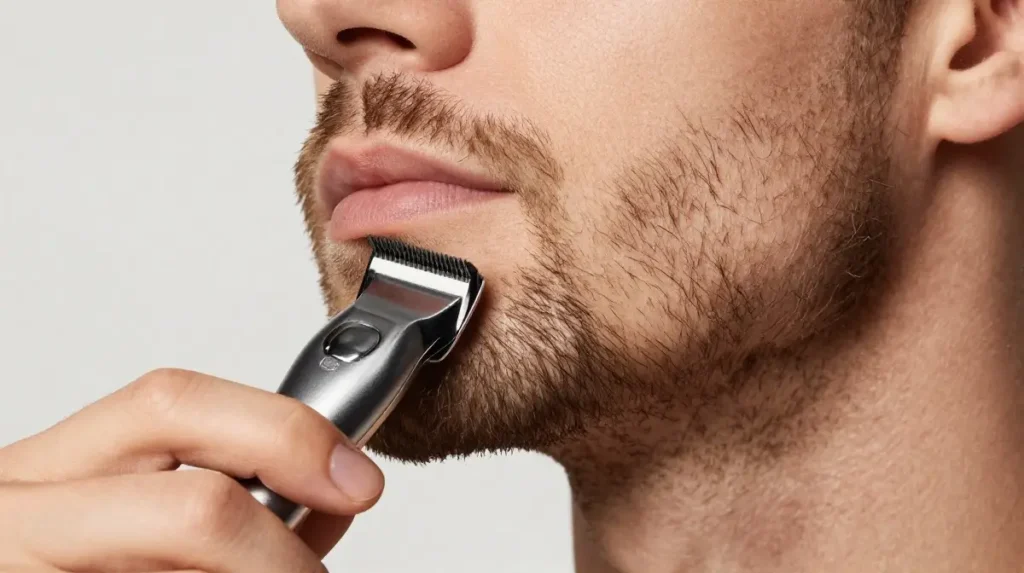
After the neckline, move to the jaw and chin area. The goal here is to create a clean outline that frames your face without looking overly sharp or artificial.
Use slow, confident strokes along the edge. Take your time with this part because removing too much along the jaw can change the shape of your beard style completely. Step back from the mirror occasionally to check the overall shape from a distance.
Use Scissors for Precision Work
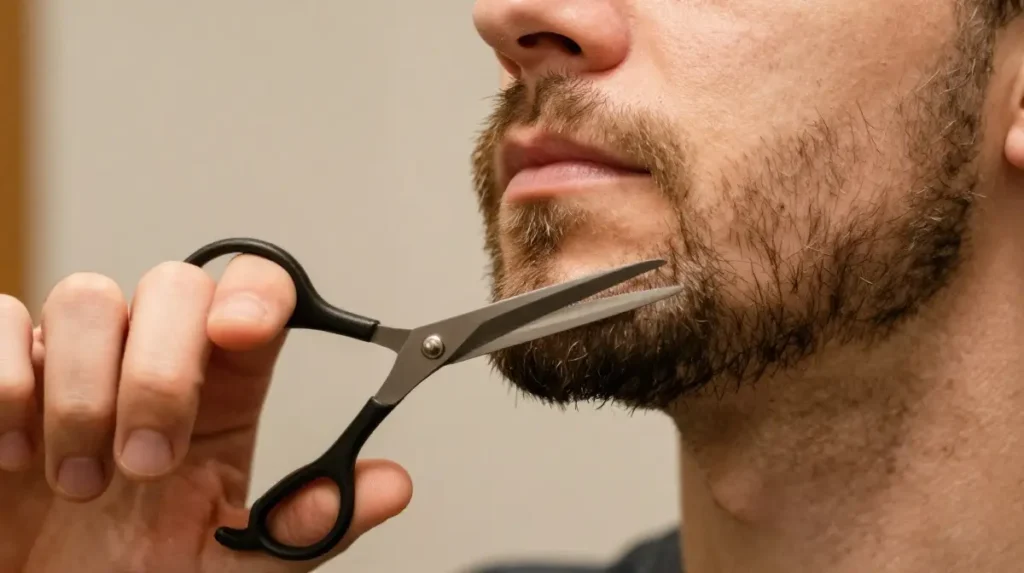
An electric trimmer handles bulk trimming well, but scissors give you control in tight areas like around the mouth, mustache, and chin. Learning how to trim beard with scissors is a skill worth practicing.
Hold the scissors parallel to your beard, comb up a section of hair, and snip just the tips. Never close the scissors all the way — use small, controlled snips. This method works perfectly for detailing without accidentally removing too much length.
Groom the Mustache Separately
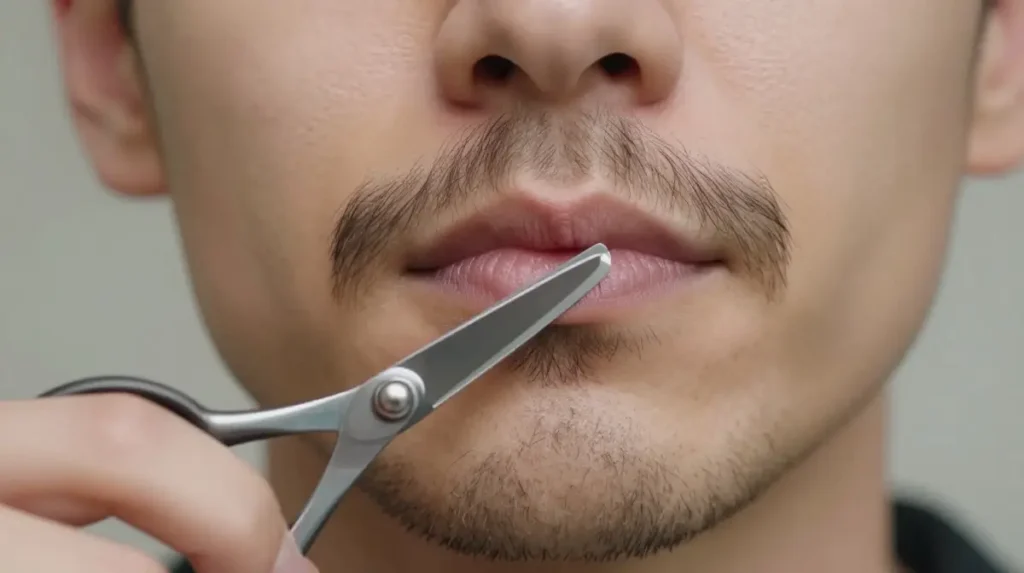
The mustache is its own territory and needs separate attention. Comb it downward over the lip and trim any hair that falls past the lip line using small scissors.
For mustache grooming style, you can keep it connected to the beard for a full look or define it separately for styles like the Van Dyke beard trim or a beardstache. Either way, take your time here because the mustache sits right in the center of the face and is immediately noticeable.
Fade the Beard for a Modern Look
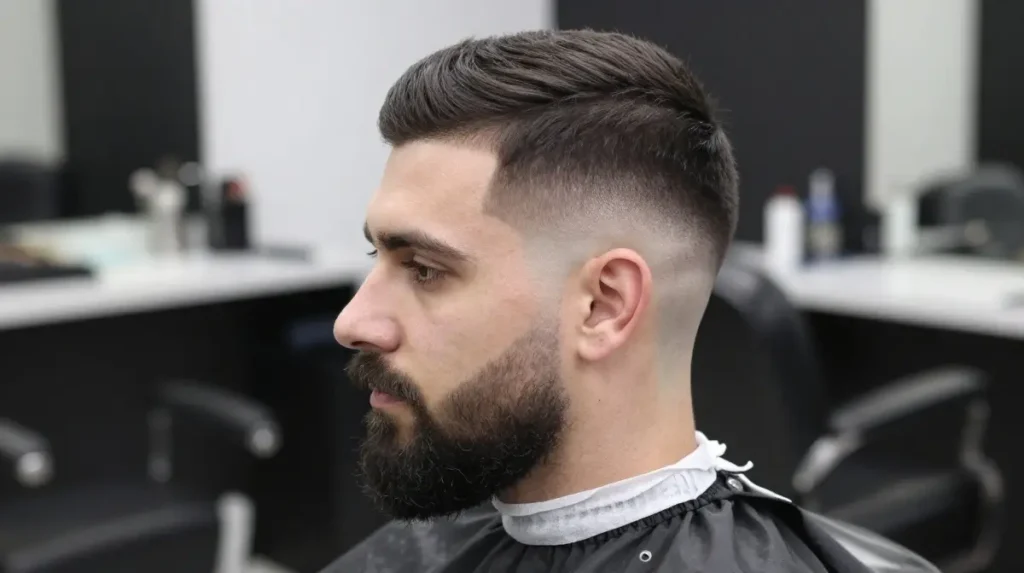
A beard fade transitions the hair from shorter at the bottom or sides to longer on the chin and jaw. This style is popular because it blends the beard into the hairline naturally and looks polished without being high-maintenance.
To achieve a beard fade at home, use at least three different guard sizes. Start with the shortest guard near the neck and sideburns, then blend upward with the next size, and finish with your main length guard on the body of the beard. Blend each section with overlapping strokes for a smooth transition.
Keep Both Sides Even and Symmetrical

Beard symmetry is one of the biggest challenges of home beard grooming. The trick is to check your progress from multiple angles and use reference points on your face.
A helpful method is to identify a point on each side — like the corner of your mouth or the edge of your cheekbone — and use those as guides. Trim one side, then match the other side to it. Avoid just going by feel because that is usually what causes the uneven beard problem in the first place.
Style a Short Beard With Clean Edges
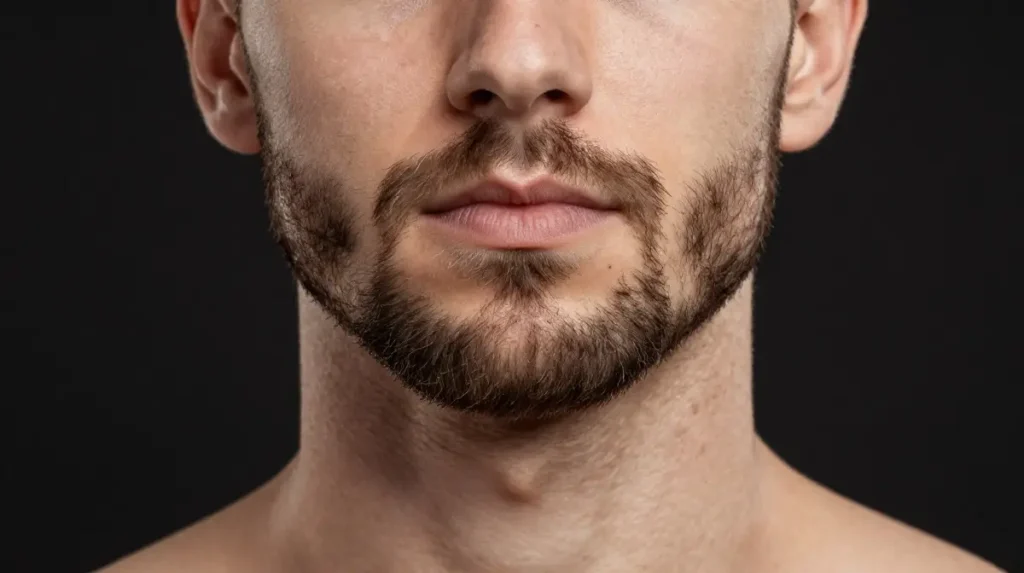
A short beard trim is all about sharpness. The hair itself stays close to the face, so the edges and neckline do most of the styling work.
For a designer stubble look or a clean short beard, use a low guard number for overall length, then switch to no guard for edging. The contrast between the trimmed hair and the sharp outline is what makes short beards look intentional and well-groomed rather than just unshaved.
Shape a Goatee With Careful Symmetry
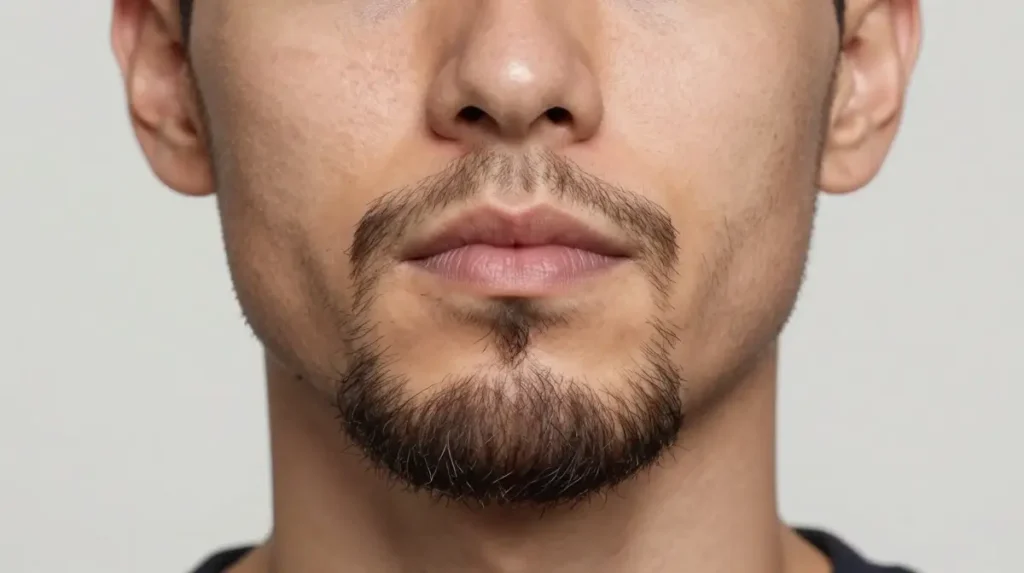
The goatee is a classic style that requires a steady hand. Whether you want a standard goatee or a circle beard style, the process starts with defining the outer boundary.
Use a trimmer without a guard to trace around the goatee shape, then clean up the rest of the face. Use a small comb to keep the inner hair even as you trim. For a polished goatee, the chin and mustache sections should visually connect in a balanced way.
Manage a Long Beard Without Losing Shape
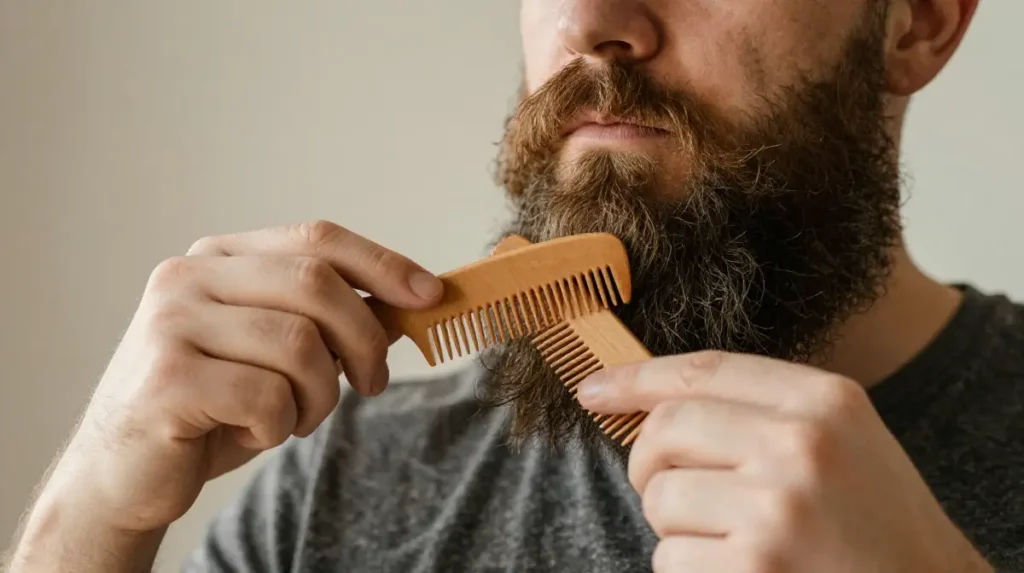
Long beard shaping is about control, not just length. A long beard that is not properly shaped can look unkempt even if it is technically well-grown.
Trim the sides to remove bulk and maintain a tapered look. The chin should be the longest point, with the sides gradually shortening toward the ears. Use a wide-tooth comb to work through tangles before trimming and always finish with a beard comb to check the final shape.
Trim a Thick Beard Without Losing Volume
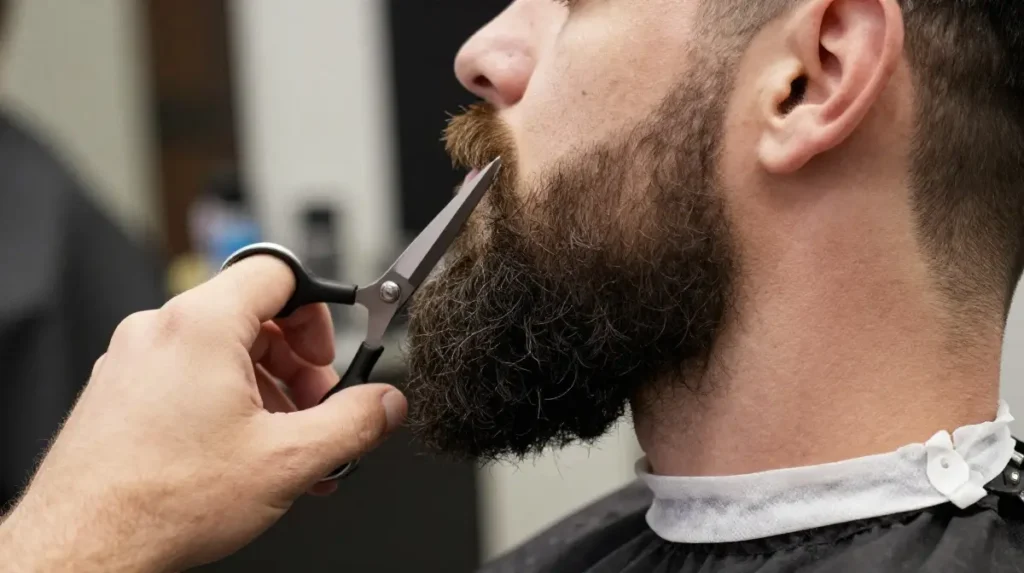
Thick beard grooming requires a slightly different approach. Thick hair tends to puff outward, which can make the beard look wider than intended.
Use a comb to lift sections and trim the outer edges to reduce width. Do not trim down into the beard from the outside — instead, point-cut by angling your scissors into the beard and snipping. This removes bulk without sacrificing the appearance of fullness.
Apply Beard Oil After Every Trim

Post-trim care is just as important as the trim itself. Beard oil application after trimming conditions the hair, keeps the skin underneath moisturized, and helps the beard look healthy rather than dry and frizzy.
Apply a few drops of beard oil to your palm, rub your hands together, and work it through the beard from root to tip. Finish with a beard comb to distribute it evenly. This step takes less than a minute and makes a visible difference in how the beard looks and feels.
Use Beard Balm for Shape and Hold
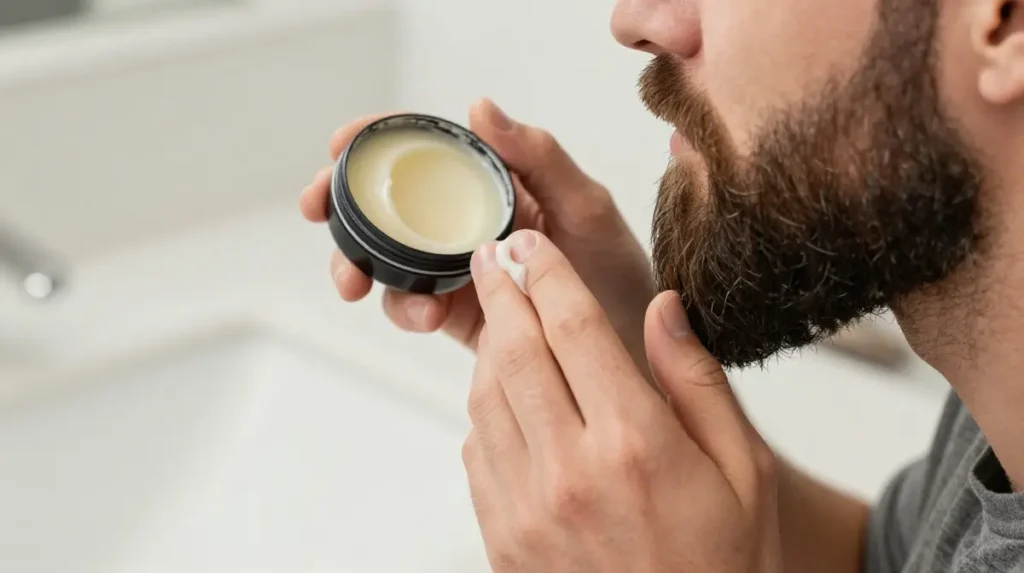
If your beard needs a bit more structure after trimming, beard balm use is the answer. Unlike oil, balm has a light hold that helps keep flyaways in place and adds a slight definition to the shape.
Warm a small amount between your fingers, work it into the beard, and then comb or brush it into your preferred style. This is especially useful for medium to long beards that tend to lose their shape throughout the day.
Quick Comparison Table
As a general reference, here is a quick-comparison table to help:
| Face Shape | Best Beard Style | Length to Aim For | Where to Add Volume | What to Avoid |
|---|---|---|---|---|
| Oval | Most styles work | Short to long | Balanced all around | Over-trimming sides |
| Round | Angular styles, chin strap | Medium to long | Chin and jawline | Full round beards |
| Square | Short box beard, fade | Short to medium | Chin area | Harsh straight edges |
| Oblong | Full beard, wide styles | Short to medium | Cheeks and sides | Long, narrow chin styles |
| Diamond | Circle beard, short goatee | Short | Chin only | Removing cheek hair entirely |
| Heart | Goatee, short full beard | Short | Chin and jaw | Heavy volume on cheeks |
| Triangle | Full beard, rounded chin | Medium | Cheeks and upper jaw | Sharp, narrow chin shapes |
Use this as a starting point and adjust based on what you personally find comfortable and confident.
Trim Regularly to Maintain a Fresh Look

One session will not keep a beard looking sharp for long. Depending on how quickly your hair grows, a maintenance trim every five to ten days is a reasonable routine for most men.
A full shape-up does not need to happen every time. Sometimes you just need to clean up the neckline, remove a few stragglers, and re-oil. Keeping up with small, regular sessions is far easier than trying to reshape a beard that has grown out unevenly.
Avoid These Common Beard Trimming Mistakes
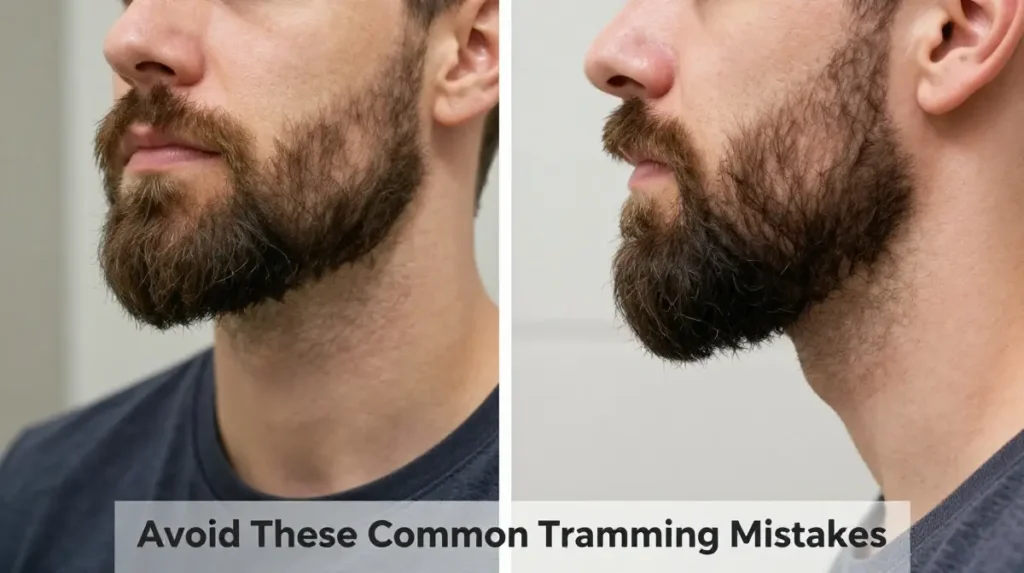
Most grooming problems come from a handful of repeatable errors. Knowing what they are helps you avoid them before they happen.
Trimming too quickly is the most common one. Rushing leads to uneven lines and over-trimming. Another mistake is setting the neckline too high, which shortens the beard visually and makes the neck look wider. Skipping the comb before trimming leads to uneven results because the hair is not lifted and sitting at its true length. And not checking both sides frequently enough leads to asymmetry that gets worse the further into the trim you go.
Keep Your Grooming Tools Clean and Sharp
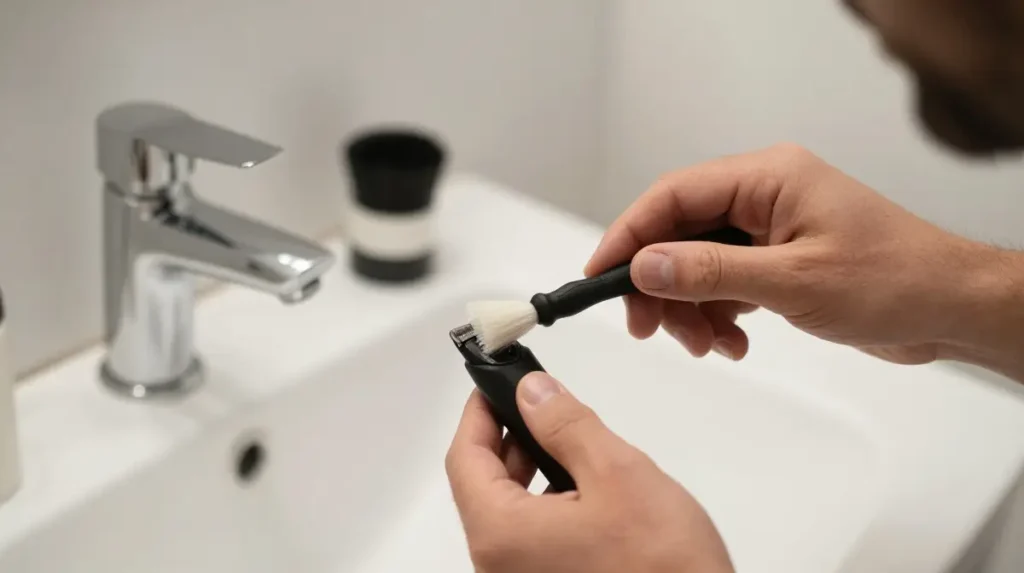
A dirty or dull trimmer does not cut cleanly — it pulls hair, misses strands, and creates an uneven finish. After each session, brush the hair out of the blade and apply a drop of blade oil.
Replace trimmer blades when they start to feel like they are tugging rather than cutting. Beard scissors should also be kept clean and sharpened periodically. Good tools last years when they are maintained properly, and they consistently produce better results than cheap or poorly kept ones.
Know When to Visit a Barber Instead
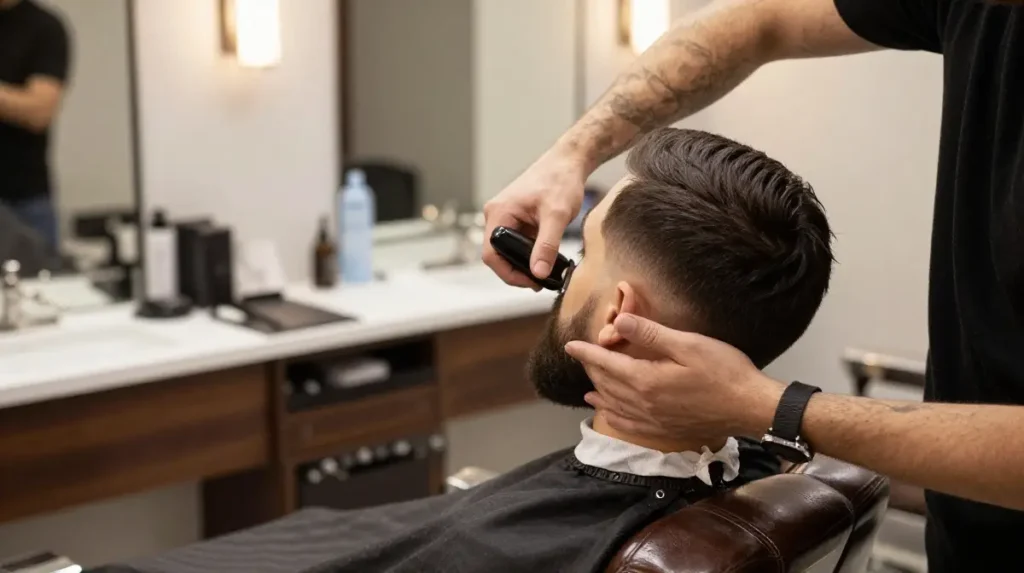
Home beard grooming works well for regular maintenance, but there are moments when a professional barber is genuinely worth the visit. If you are trying a completely new beard style for the first time, a barber can set the initial shape for you. From there, maintaining it at home becomes much easier because you already have a clean template to follow.
Same goes for fixing a badly uneven beard. When one side has been trimmed significantly shorter than the other, or the neckline has been set too high by accident, trying to correct it yourself can sometimes make things worse. A skilled barber can assess the damage and find the best solution without removing more length than necessary.
Conclusion
Learning how to trim beard well is one of the most practical grooming skills you can build. It takes a little practice at the start, but once you understand your face shape, your preferred style, and the basic techniques covered here, the process becomes genuinely straightforward.
The goal is not perfection on day one. It is building a beard grooming routine that works for your lifestyle, your tools, and the style you want to maintain. Start simple, be patient with yourself, and trim regularly. A clean, well-shaped beard always makes a strong impression — and now you have everything you need to get there on your own terms.
You can may also like this: 22 Medium Length Hairstyles with Bangs Ideas for Chic Style
Frequently Asked Questions
How often should I trim my beard to keep it looking neat?
For most men, trimming every five to ten days keeps the beard looking clean and maintained. If you have fast-growing facial hair, you may need to touch up the neckline and edges more frequently, even if the main length stays the same.
What is the best beard trimmer for home use?
A trimmer with adjustable guard lengths, a sharp blade, and a cordless option works best for home grooming. Look for one with at least five guard settings so you have flexibility for different styles and lengths.
How do I fix an uneven beard after trimming?
The safest fix is to trim the longer side down to match the shorter side. Avoid trying to add length to one side — that is not possible. Going forward, check symmetry more often during the trim using both a large wall mirror and a handheld one for side views.
Should I trim my beard wet or dry?
Always trim dry. Wet hair stretches longer and snaps back when dry, which means you will likely trim more than planned. Wash and dry the beard first, then trim once it has returned to its natural state.
What is the correct neckline position for a beard?
Place two fingers horizontally above your Adam’s apple. The top edge of your upper finger is roughly where your neckline should sit. From there, create a soft curve that runs up toward the back of each ear. This placement looks natural and keeps the beard looking full rather than cut short.
1 Comment